We made a lot of strides - Interview with Gladstone Dainty
2010 Dec 09 by DreamCricket USA
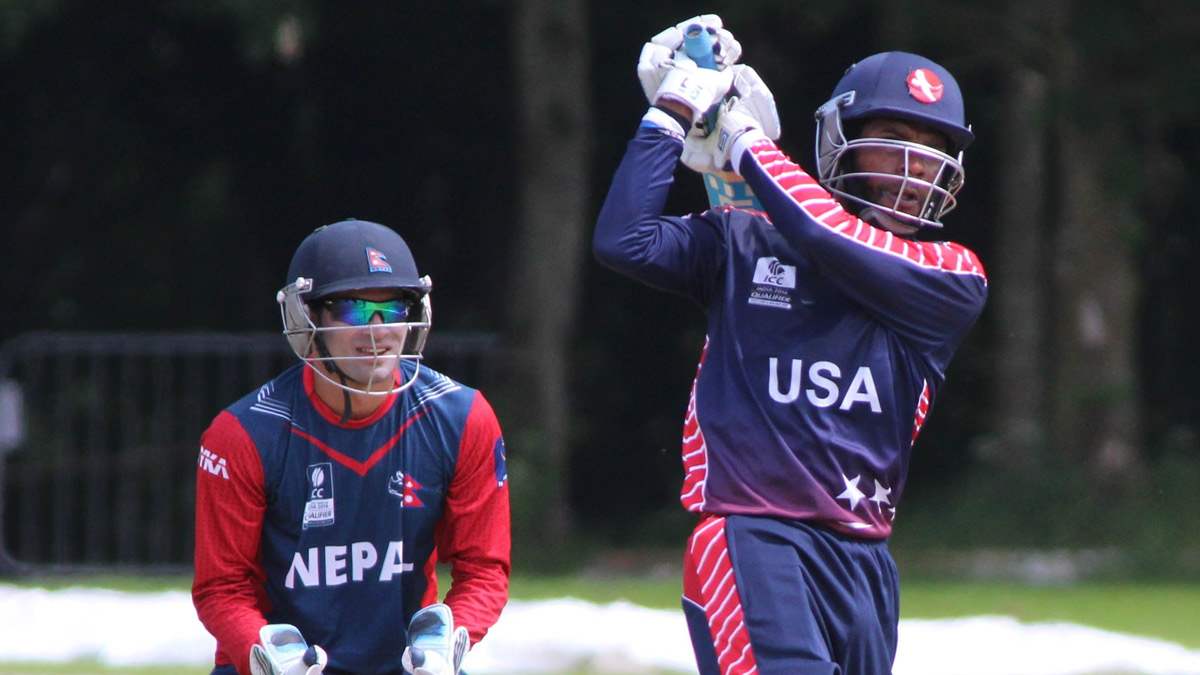
Gladstone Dainty sat down to discuss some of the current topics and issues relating to USA Cricket.
Now, you can get all the USA Cricket updates via Facebook. Also follow us on Twitter via @dreamcricket
By Peter Della Penna
After a banquet held by USACA at the 2010 Senior Nationals in Lauderhill, Fla., Gladstone Dainty sat down with Peter Della Penna for 30 minutes to discuss some of the current topics and issues relating to USA Cricket.
PDP: What can you tell us about what’s happened in the board meeting so far today?
GD: I would say that it was a very productive meeting. We had some issues like the commercial opportunities. We made a lot of strides on a lot of issues.
 PDP: What other issues would you say you made strides on?
GD: Well, the commercial opportunity for one. We made a lot of strides on that. The board approved or ratified the actions of the commercial committee. I would say that was the key thing because it’s been occupying many of us for a while now. We see it as something that is key to the survival of United States cricket at that level, the high that we’re trying to take it to.
PDP: I know all the people here would have noticed that Don Lockerbie’s not here. Why is he not here? He wasn’t at the stadium yesterday and he’s not here today obviously.
GD: Well I’m sure you got a press release from the secretary that Don and us have parted ways and we wish him well.
PDP: Why? Was this a mutual thing or why is he no longer part of the organization?
GD: Well you know getting into details about personal issues, that’s not my style and I don’t think that should be discussed of anybody that’s professional. That was a personal issue and there’s a confidential aspect of that that I won’t get into that. But we’re not together anymore. He’s not together with USACA.
PDP: But what I’m asking is was that a USACA decision or was it that he left on his own. Was he fired, was he dismissed or was this mutual?
GD: We’re just not together anymore.
PDP: When did this take effect? When was this decision made?
GD: Well that, we parted ways on November 19, yesterday.
PDP: Friday?
GD: Friday.
PDP: What does that mean then in terms of the CEO position? Is there now going to be a search to replace him with a new CEO?
GD: Absolutely.
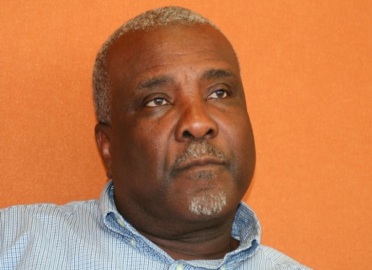
 Pic: A search will commence to replace Don Lockerbie (Right).
PDP: And what will you be expecting from the new CEO?
GD: Well, we are expecting to have somebody who would lead the organization. We’ve got a lot of developmental issues to address. We have a lot of financial issues to address, creating a good revenue stream, and to… those are the key because we are trying to get that conveyor belt type of operation going where things are going so development is very key. It costs a lot of money and administratively with Don being there we realized that having a full-time person is very important so we’re trying to get not only a CEO but hopefully we can get resources to increase our professional staff.
PDP: And by how much would you be looking to increase your professional staff by?
GD: Well it depends on the type of funding we are able to put together and the convincing we are able to do to our stakeholders. The regions, etc., are important in this that this should be a full-time job or a part-time job for people rather than a volunteer some time situation.
PDP: The situation regarding the Western Region position. I know I’ve seen emails that have been passed along and there have been reports put out online in terms of who is the representative. We saw here tonight when Manaf [Mohamed] got up and asked the board members to recognize themselves, Raj [Padhi] got up and recognized himself as the board member from the Western Region. Has that issue been resolved? Is he official the board member from the Western Region? What is Gangaram Singh’s status?
GD: Well Raj Padhi is the board member for the Western Region. That is what was decided by the board. What has also happened is that at this meeting we had planned to split that region anyway. So effective tomorrow night, we will put into place a mechanism to have the North West Region and the South West Region.
PDP: That’s official? There will be two?
GD: There will be two regions, but in terms of the issue with Gangaram and Raj, Raj Padhi is the director of the Western Region and he sat in the meeting and represented the Western Region.
PDP: Did Gangaram Singh sit in the meeting?
GD: No.
PDP: He did not, at any point in time?
GD: No.
PDP: With the two new regions being created, when will there be… what is the process that’s going to take place?
GD: There’s going to be within 60 days, USACA is going to have, these two seats will be… we have a process with elections. It’s going to be 60 days before because we don’t want this to be a closed situation. It’s going to be just what’s advertised. Everybody’ll know that there’s two vacant seats that they have the opportunity.
PDP: Two vacant board seats?
GD: Yes.
PDP: And then the positions regional secretary, regional chairman, all those positions.
GD: Yeah, all of those are gonna be.
PDP: So does that mean then the positions in the current Western Region, all of those people will have to run in the next election within those regions. So there’s people currently in the Western Region from the South West territory and there’s people on the Western Region board currently from the North West section of the territory, those people will all still have to run again within their own region territories?
GD: Yes.
PDP: And Raj will have to run again if he wants to get the North West position?
GD: Yes.
PDP: What is being done in terms of the Under-19 tournament? What is the status of that? Has that been discussed at all at the board meeting?
GD: We’ll discuss that tomorrow but what is in place, we’re keeping that date. You know Christmas… It’s in December, I think the 18th or the 11th, something like that, we’re having that tournament in December.
 PDP: In terms of camps for the men’s team before Hong Kong, how…
GD: We’re gonna have a camp. I don’t know the date, we haven’t set a date yet. We’re gonna have a camp. We’re having some issues with cash. We plan to solve that problem within the next day or two but it’s part of it, we’re going to have a camp.
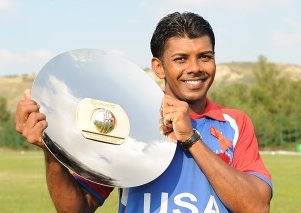
Pic (Right): File photo of Steve Massiah holding the Division IV trophy
PDP: When, you mentioned within the next 60 days the Western Region will have a set of elections for the two new regions that are going to be created, what about the broad USACA elections. Do you know when that will be, the next set of elections?
GD: Quite possibly we’ll discuss that tomorrow. Our governance issues are going to be discussed tomorrow. Quite possibly we’ll discuss it.
PDP: Is there anything else you didn’t get to today that is of major relevance that is going to be brought up and discussed tomorrow?
GD: Governance encompasses a lot of things. The board members might have stuff. I try not to be judge or whatever, I chair the meeting and that’s what I do. Everything we discuss is important and they might have things but we have governance. We need to talk about the constitution, the way it’s structured, etc. That’s the important, that’s what it is.
PDP: Was anything resolved in terms of deciding if Nabeel [Ahmed]’s 1st Vice President’s position will be left vacant?
GD: We’ll deal with that tomorrow. We did read his letter of resignation. There was no objection to his resignation.
PDP: Are you concerned that because of Nabeel’s resignation and Don Lockerbie no longer being a part of the organization, are you concerned that that might present an image to the ICC and to other countries and to other people involved in potential commercial opportunities and future commercial opportunities, that that might present an image of instability?
GD: Well, you’re always concerned about your image, especially when people leave. But in any organization, you have change and I mean to say that change for better or for worse sometimes people are uncomfortable with it. But once you know the facts surrounding these departures, then… you know it’s not as… the organization will continue. We’re moving… a lot of decisions we had today were unanimous decisions. The board is moving forward and the departure of those two gentlemen certainly doesn’t put us in a position of crisis. We wish both of them well and we will continue to function and make great strides. We made great strides. We’ve made great strides over the last few years and especially this year so we’ll continue to make great strides.
PDP: How would you consider, how would you evaluate the whole current status and the whole current state of affairs within USACA both on and off the field? I know you mentioned talking in your speech to everyone who was gathered here tonight that progress on the field has been better than the progress off the field. How would you assess the whole state of affairs within US cricket?
GD: I would say that we are a maturing organization. We are not quite matured. I feel confident that maturity will come sooner rather than later. I feel that for many of us this whole cricket thing and the way we are doing it is that we are addicted. It’s certainly not about the money, it’s not about the glory, it’s not about the power. Sometimes when you have addiction, it’s like it makes you a little irrational. Sometimes we can be very irrational. But with all of this, we’ve been improving on the field in terms of our on field capability and with additional administrative capability and financial capability, it will provide the remedy for some of the immaturity.
PDP: When you said what you said earlier about on the field has been ahead of off the field, what needs to happen for the off the field administrative things and performance to catch up to the performance of the team on the field.
GD: Well what needs to happen off the field, we need to have more cricket. We need to improve our facilities and certainly we need to create an organization that’s kinder and gentler to the volunteers who are trying to do a job. I mean to say we should strive for perfection but we know how difficult that is and especially with the sacrifice people are making, we should be more appreciative of that rather than trying to create an atmosphere or have a development mentality where it’s the last man or the last woman standing rather than a lot of people standing and holding hands and laying a foundation for things to come.
I would say last but not least, this is a United States of America organization and you look around, we have a lot of United States citizens but our foundation is still immigrants in developing immigrant cricket. We’ve got to be more aggressive in terms of getting Americans to participate and to share the joys of this great game.
PDP: For the youth level, you mentioned about trying to get more Americans involved. We saw a lot more American-born talent for the 2010 U-19 World Cup. For the USA as part of that team, half that squad was born in the US and the other half of the squad mostly was raised in the US. Some of those players, even though they weren’t born here they are citizens now.
With the U-19 Americas Tournament coming up that’s supposed to be in February, a lot of people feel that, fans and players and some administrators, that there has not been a lot of attention paid to help the Under-19 players and help people at that level out and help that team out in order to improve on the performance from the 2010 World Cup team to improve for the 2012 cycle. Do you feel that enough attention has been paid to the Under-19 squad especially considering that this tournament has been postponed?
GD: We’re paying attention, but we do not have the resources to give full attention. A lot of attention, but we do not have the resources to develop the talent and to do all of the things which are necessary. We’re certainly very short in that because we don’t have the resources, but we’re paying attention. I mean to say the tournaments, we’re still having national tournaments. We’re still trying to encourage regions to play the Under-19 talent and groom the young kids because it ties with the regional tournaments. So hey, we’re paying a lot of attention so I don’t know how people can say we’re not paying attention.
PDP: But are you concerned that because these resources that you say have been holding the team and the development of the team back, are you concerned that that might affect the performance of the team should they qualify for 2012 or do you think that it would cause them to not qualify for the 2012 Under-19 World Cup so that instead of building on the progress of the team making it in 2010, do you think they would be taking a step back?
GD: Well a couple of things, let’s get a couple of things straight here. Now we’re not satisfied with the amount of resources we happen to be giving to the team. But this year we have dedicated or we have spent more, we have provided more resources than we’ve ever provided for youth cricket, okay. So it’s all relative. Are we providing as much resources as India and Australia and the West Indies? No. But we’ve provided more than we’ve ever provided but still we need to provide more.
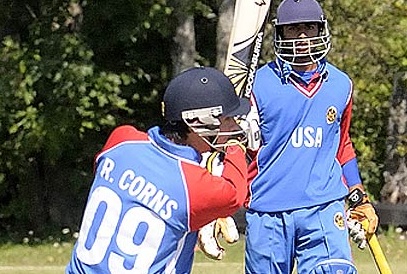 Pic (Right): Ryan Corns (pictured right) awaits his turn to play for USA. President Dainty said that USA had made 'significant progress in terms of having young people play with the seniors'.
PDP: What have you? What has been provided this year then compared to the past?
GD: Well first of all we had the Under-19 team go to New Zealand. We’ve been very… we had our Under-19 tournament you understand. We’ve fought and made significant progress in terms of having young people play with the seniors, okay, so that in itself… And over the past year we also had the qualification. The tournament is not like before when you win and you automatically go. Remember we had the 10-nation qualification and then we had to go to the World Cup. So we have been providing that.
PDP: But those are ICC events, the Americas and then the World Qualifier that was also in Canada.
GD: No, but although they are ICC events, they cost us money. With the camps, you understand what I’m saying. The cost for camps, the ICC when they provide resources they provide for instance they would say, ‘Hey, you get a ticket out of New York. You pick one place,’ and with a country like a United States of America, we gotta get hotel rooms and fly players to that. So although the ICC would say that they pick up all the costs, it can still cost us $10,000-12,000 or more just for that additional thing. So just like I said tonight, we’re not complaining. The more you win, the more you have to put up, but then it lifts the profile and we’ve got to take advantage of that and get more resources. So we’ve been winning. Now the idea whether the team will outperform or we build up on that, to me it’s like college sports. Something like Under-19 because of the restrictive nature, it’s not like you’re having the same players.
You have a period where you recruit and not recruit. Now as you would notice, we only maybe have about four kids, four or five kids from that team who are eligible for this year. So we’ll be bringing new kids. Their level of performance or whatever, we don’t know. But it will be certainly a very young team in terms of experience we’ll be sending there. We will prepare them to the best of our ability, or even beyond our ability, but to say that… this is not like the Dallas Cowboys or the Redskins where you can use the same people. We are restricted by who we play so it’s not the same guys going back there to play.
PDP: In saying you’ve spent a lot more on resources for last year’s team and the money that’s been spent you’ve raised the bar, do you feel that because the bar has now been raised, it’s difficult to get back up to that level again?
GD: Oh no. The bar has been raised. I’m not trying to put unnecessary pressure on these kids because at that age, we would like to win and win everything. But we are also very committed to is producing well balanced young people. We’re not going to play a kid only to win, you understand. Part of it is a teaching process. So the expectation, we’re going there to qualify for the World Cup. So is Canada, so is Bermuda, so is Cayman or whoever else and I feel sure that we will qualify but hey we’re not putting pressure and say we’ll this is the only thing. That’s win at all costs. We’re committed to winning and that’s it but we don’t expect not to be among the top two. The last two Under-19 World Cup elimination tournaments we participated in, we actually went to the World Cup, the last two. We missed one of them because of the issue there with the ICC, but we’ve done well. The last time was not the first time we went to the World Cup. We went to the World Cup before.
PDP: Last time I talked to you, you mentioned the women’s team too. You’re trying to prepare them by potentially getting Pakistan. How realistic is that?
GD: Well, Pakistan are now apparently not going to the West Indies until August or September so we’d have to do something before. We’re working on that. We’d certainly still like to get them, but we’re not going to have [the USA women’s team] waiting until August or September. We’re gonna have our tournament and we’re talking about having them have a tour. We want them to be active.
PDP: In terms of the partnership and having New Zealand come here in May and talking with John Thickett in the article that I had his quotes where he said there’s potentially this commercial partnership that will involve New Zealand, you just mentioned the West Indies. Canada got to participate in the West Indies domestic Twenty20 competition this past summer and not the US. What is being done, or is anything being done, to improve the relationship with West Indies which is the Test playing team within the Americas region? What is being done?
GD: We have a great relationship with the West Indies.
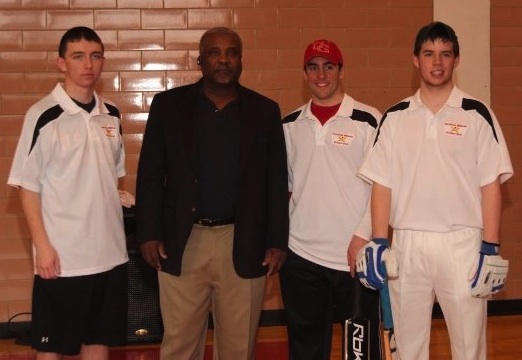 Pic (Right): Dainty said that his board would work more 'aggressively' with organizations such as USYCA which was approved as an affiliate member of USACA. In the picture, Dainty on a visit to the now discontinued Cardinal Gibbons cricket program begun by Jamie Harrison [Picture Courtesy USYCA]
PDP: Why is Canada then getting opportunities and the USA not?
GD: I speak with the President of the West Indies board very frequently and the CEO of the West Indies board, a great man. That thing with Canada and the T20 or whatever, once again we were preparing to go to Italy at the same time so it made the West Indies board easier, made the decision easier to invite Canada rather than the United States. At the time, we were contacted and we didn’t necessarily decline, but they knew that it would present a financial hardship because you gotta remember the players we have, they’ve got jobs.
PDP: Next year, they’re talking about inviting teams from England and also inviting Canada back again. Is USA potentially, has USA been approached to be included?
GD: Potentially they are discussing.
PDP: How realistic would that be?
GD: I don’t know. I know they’ve already announced those teams that are coming. That tournament is in January. You know what we’re doing in January so once again it’s going to be difficult.
PDP: I know [USA] had the matches against Jamaica in May. Are there any other things potentially in the future in terms of playing with West Indies domestic teams, Barbados, or Jamaica or Trinidad & Tobago?
GD: Well from time to time if only because of proximity, we can play any teams from the Caribbean. But do we have something definitely? Do we know who we are playing next year? No, but we definitely we’re playing somebody.
PDP: What about, one last thing, the teams within the Americas Region, I know I remember reading stuff in the last year or two about trying to build a better relationship in terms of playing more consistently against Canada or Bermuda in 50-over matches, scheduling 50-over matches and scheduling an annual series outside of the Americas competition. Is any progress being made with that or is that a possibility?
GD: Well, like I said, we’ve been playing a lot of cricket and playing a lot of cricket with guys who are not professional cricketers, a lot of these guys got jobs and you know that in this country it’s one or two weeks vacation. In one tournament they can use that up. Until we maybe have the resources where we put people there professionally and we know that they’re there and we can play every week or every day, but at this particular time we’ve got just like the full Test playing countries, their future tours tournament or whatever, they’re complaining about their schedule, etc. So I would say our first obligation is to meet the ICC mandated participation tournaments which also gives us the opportunity to raise our standing, and then of course we have to be very selective with what else we participate in if only because we don’t have the resources to make these guys professional.
Coincidentally, one of the major decisions we made today is that a couple of youth organizations, one of them in Atlanta led by Lada Bedi, also Jamie Harrison’s group, they made an application for affiliate membership. We approved it and we will be working very aggressively.
What we need to do if only because of the numbers they’re claiming, we will work aggressively with them to convert that into more active participation in mainstream US cricket.
Title Cricket Challenges & Opportunities

2018 Sep 25
Dearth of a Salesman
2018 Sep 07
Willow CEO Excited about USA Cricket Future

2018 Aug 06
New Board Taking Shape