USA Cricket News
USA Cricket: 2023 MLC Draft – Looking Back at the Best Values and Biggest Busts
2023 Aug 07 by DreamCricket USA
By Peter Della Penna (Twitter @PeterDellaPenna)Now that season one of Major League Cricket has wrapped, here's a chance to look back at the best and worst draft picks from the 2023 MLC Draft.
Photo credit: Peter Della Penna
Round 1 ($75,000) – Collectively the franchises all made reasonable picks here. Five of the six players (Harmeet Singh, Andries Gous, Ali Khan, Corey Anderson, Rusty Theron) performed respectably for their franchises, though their performances were perhaps not commensurate with the dollar value that their price tags commanded especially compared to later rounds.
Best Value: Corey Anderson (Unicorns) – Taken fourth overall, Anderson led his team in scoring with 190 runs at an average of 47.50 and a strike rate of 145.03. He also chipped in with two wickets in the four overs he bowled in the tournament.
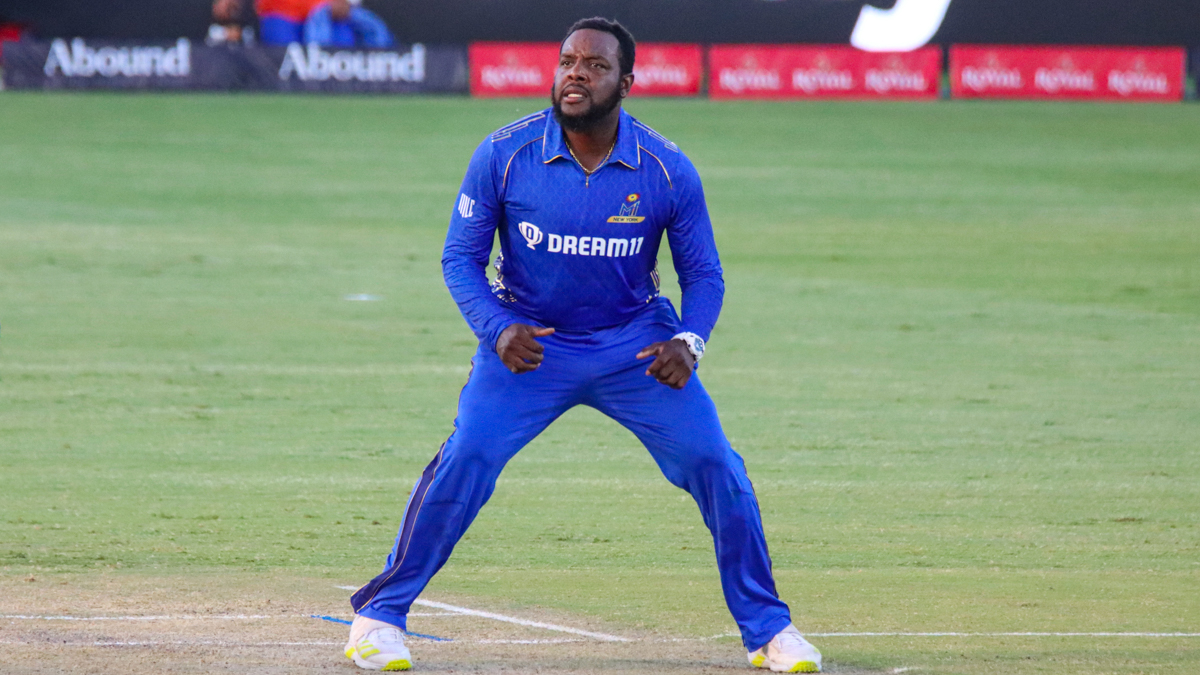
Biggest Bust: Steven Taylor (MI New York) – Nobody got worse value from their first round pick than MI New York. Taylor started the event as an opening bat and ended it as primarily a non-wicket taking offspinner. He was out for a first-ball duck in MI New York’s opener and immediately dropped for match two, unprecedented in pretty much any league around the world involving a player taken in the first round of a draft. Taylor’s overall returns for the tournament: 30 runs off 37 balls with an average of 10 (including two ducks); and 1 wicket for 86 runs across 13 overs with the ball. Looking at it another way, he was paid $2,500 per run scored.
Round 2 ($65,000) – This was easily the worst value round in the draft. Four of the six players taken in this round (Calvin Savage, Unmukt Chand, Hammad Azam, Mukhtar Ahmed) severely underwhelmed. The other two (Liam Plunkett and Shehan Jayasuriya) look like world-beaters by comparison.
Best Value: Liam Plunkett (Unicorns) – Taken ninth overall, Plunkett took a team-best seven wickets at an average of 19.57 and an economy of 7.98. He didn’t set the world on fire, but did well on a bad team where he lacked bowling support.
Biggest Bust: Unmukt Chand (Knight Riders) – Taken with the second pick in the round and eighth overall, Chand gets the nod here – despite stiff competition from Savage (2 wickets at 64.50), Hammad (25 runs at 8.33 and a strike rate of 67.56) and Mukhtar (78 runs at 13.00) – because he did less with more opportunities and was a significant factor behind his team not making the playoffs, whereas the other three aforementioned players did not hold their team back from making the playoffs. Chand opened the batting in all four appearances – the most premium real estate position in T20 cricket – and managed just 68 runs in four innings at an average of 17.00 with a strike rate of 97.14.
Round 3 ($50,000) – The production in this round was almost as bad as those taken in round two, but the value wasn’t as bad purely because the players cost less. Only two guys made significant or consistent contributions (Obus Pienaar and Shubham Ranjane), one started every match as his side’s wicketkeeper (Jaskaran Malhotra) though his batting output was negligible, while the other three picks in the round (Ehsan Adil, Lahiru Milantha, Tajinder Singh) fell on their faces outright.
Best Value: Shubham Ranjane (Orcas) – Ranjane had a very specific role as a finisher and did what was asked in very limited opportunities. He only made 62 runs, but faced just 41 balls in the tournament due to guys like Heinrich Klaasen and Quinton de Kock scoring heavily and occupying the crease for lengthy stays above him. Do the math and his strike rate was 151.21 and he averaged a decent 20.67 for the team that went to the final.
Biggest Bust: Tajinder Singh (Unicorns) – Tajinder’s total output was 22 runs off 21 balls at an average of 5.50 with a best of 18 not out off 10 balls in his first innings. But he failed badly in his next four outings. Often entering at No. 7 with plenty of time remaining to shape the outcome of the innings or the game (entering with with 66 off 38 needed; entering with 7 balls left in the first innings and out first ball; entering with 69 off 44 needed; entering with 10 balls left in the innings and out second ball), he made scores of 1, 0, 1 and 2. Looking at it another way, he was paid $2272 per run scored, almost as poor value as Taylor was for MI New York.
Round 4 ($40,000) – This was by far the best round of talent in the draft, not just in terms of value for the paycheck but in terms of overall production as the three best domestic bowlers – Nosthush Kenjige, Saurabh Netravalkar and Cameron Gannon – all went in this round. Interestingly, those three players were taken with the final three picks of the round, meaning that the three franchises above them may be regretting a missed opportunity regardless of the varying levels of production put out by the first three picks of the round (Milind Kumar, Nitish Kumar, Chaitanya Bishnoi).
Best Value: Saurabh Netravalkar (Freedom) – Taken one pick after Kenjige and one pick before Gannon, Netravalkar narrowly shades both players out to arguably be the best value selection of the entire draft. Though Gannon may have won the Bart King Award for best domestic player after finishing with one wicket more than Netravalkar, scratching beneath the surface tells a different story in context. Gannon had much better productivity from the bowling support around him (Harmeet Singh, Andrew Tye) whereas Netravalkar’s team lacked overall bowling depth and heavily relied on him. Netravalkar’s caliber of differentiating wickets taken (Faf du Plessis, Jason Roy, Matthew Wade, Marcus Stoinis, Nicholas Pooran, Chaitanya Bishnoi, Haris Rauf) were also far superior to Gannon (Glenn Phillips, Corey Anderson, Mitchell Santner, Devon Conway, Jaskaran Malhotra, Gajanand Singh, Adam Zampa, Carmi le Roux).
Biggest Bust: Chaitanya Bishnoi (Unicorns) – Bishnoi was taken 21st overall immediately before Kenjige, Netravalkar and Gannon all went bang bang bang with picks 22 through 24, underscoring what a colossal blunder this was. He very nearly carded a thanks for coming in the Unicorns first match, getting a “Did Not Bat” on a day when his team played to No. 7, then bowled 1 over for 15 runs in the field. He didn’t bowl and made 1 off 3 in match two; out first ball (last over of the first innings) and bowled one over, taking 1 for 4 in match three; entered at No. 8 again with 68 off 40 balls needed and scratched out 16 off 16 runs before getting out in the final over to Netravalkar in a loss to Freedom; and finally made 35 off 21 at No. 6 in his side’s last match, which wound up being not enough as Super Kings won to eliminate Unicorns from playoff contention.
Round 5 ($35,000) – This is the last round for value & bust evaluations, being that it looks bad if you’ve taken a player within the first five rounds in a league where five domestic players must play in the XI, but with few expectations for anyone in rounds six through ten to get many if any opportunities. There were three such outright busts in that regard as Aaron Jones, Saad Ali and Sami Aslam never made it into franchise’s respective XIs. The other three picks in the round (Monank Patel, Carmi le Roux, Corne Dry) all had modest impact.
Best Value: Carmi le Roux (Unicorns) – The tall left-armer only took 3 wickets at an average of 47.00 across 18 overs playing all five matches for his side. However, he had a team-leading 7.83 economy rate, which was good enough to be 19th overall in the tournament.
Biggest Bust: Aaron Jones (Orcas) – Someone who demonstrated at the 2022 ICC T20 World Cup Qualifier in Zimbabwe that his game is ill-suited to T20 cricket and should never have been drafted anywhere near this high, this pick was even more bizarre because Seattle had first crack in the round at 25th overall and took Jones anyway with several more appealing options available both on the batting and bowling side. It was no surprise that he never made their starting lineup.
Best Value Batter Rounds 6-10: Nauman Anwar (Orcas) – After dropping the ball by picking Jones, Seattle had to sweat out 10 more picks with the snake order of the draft before they pounced on Nauman Anwar with the final pick of the sixth round at 36th overall for a price tag of $25,000. He wound up finishing as the highest scorer in the domestic draft with 191 runs for the tournament runner-up.
Best Value Bowler Rounds 6-10: Mohammad Mohsin (Super Kings) – Taken with the first pick in the final wildcard round of the draft at 55th overall at a price tag believed to be $2,500, legspinner Mohsin made an immediate impact on opening night, taking 4 for 8 in a win over LA Knight Riders. He played every match and ended as the leading wicket-taker for the Super Kings, claiming nine scalps at an average of 19.88 and an 8.52 economy rate across 21 overs.
Recent USA Cricket Stories