USA Cricket News
USA Cricket: 2025 Cricket Impact Summit & Expo provides insights, innovation, and a bit of backslapping
2025 Oct 25 by DreamCricket USA
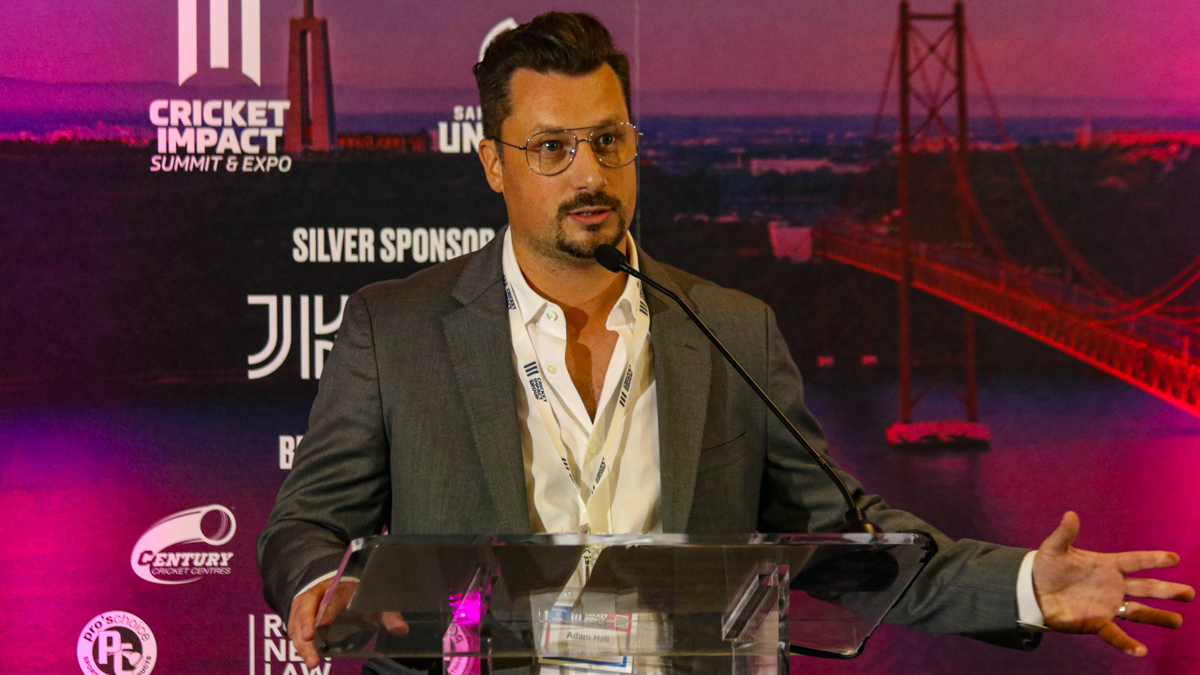
By Peter Della Penna in Santa Clara, CaliforniaThe inaugural Cricket Impact Summit & Expo, hosted by Cricket Impact Group founder Adam Hall, provided a gateway into the psyche of those firmly entrenched in the sport and those still desperately trying to help it make a breakthrough in America.
Photo credit: Peter Della Penna
How many cricket fanatics in America does it take to change a lightbulb? Well, first, it depends on who wins the toss and what the wicket looks like, but the change can’t happen before someone shows up who needs to tell you, “in India, cricket is like a religion”; and another one who needs to tell you, “T20 is what will bring new fans to the game”; and another one who needs to tell you “we need to take the sport of cricket to the mainstream”; and another one who needs to tell you, “we can convert mainstream American sports fans to cricket by telling them that cricket is just like baseball”; and another one who needs to tell you, “is cricket really just like baseball? Because I went to a Yankees vs Dodgers game and man was it boring because for the first nine innings, nobody scored a run!”; and another one who needs to….
The inaugural Cricket Impact Summit & Expo assembled many of the usual suspects – about 250 of them at the Santa Clara Marriott in the San Francisco Bay Area – that populate the American cricket landscape. And with the usual suspects, came many of the usually regurgitated and cliched lines about cricket and its role within the American and global sports landscape. But there were also some wonderfully refreshing newer personalities that emerged from the event, ones who hopefully opened some eyes and ears to different ways of tackling some of the sport’s most pressing issues in terms of engagement, participation, commercialization and governance, whether it be domestically or internationally.
As a disclaimer, I will disclose that I received multiple offers for a free ticket to the event from various individuals. I accepted one of the invitations that came my way. Quite simply, there’s no way I would have been able to attend or cover the event otherwise considering that the entry ticket came with a $600 price tag. Basically, you had to be rich – or know somebody who was – to get in. It was a barrier to entry that can hopefully be addressed in future years because there were some very important voices in the US cricket community who unfortunately missed out as a result. Another hurdle was that the event was scheduled for a Wednesday through Friday. Anecdotally, that forced some people to say no when they might have been able to pull some strings to get in had it been over a weekend that would not force them to miss three days of work. However, you get what you pay for, and there is no doubt that the quality of the event organization, networking and speakers at the event was commensurate with the entry fee.
To slightly ease the financial load, the Santa Clara Marriott had an event discount offer to knock their $400/night rack rate down to $300 for attendees of the expo. But yours truly came to the conference booking a free plane ticket burning 35,000 frequent flyer miles, and booked a room at an Airbnb a mile away from the Marriott at the low low price of $135/night. This ugly duckling also managed to stick out among attendees for breaking the “business casual” dress code by showing up daily wearing my standby carry-on khaki cargo shorts and blue/pink Hawaiian polo shirt plus a subsequently purchased Coca-Cola logo t-shirt for $14 from a nearby Target on account of my checked luggage never arriving. But thanks to a 16-year reputation in cricket circles of pissing off people in authority, my flouting of the rules was mostly met with accepting shoulder shrugs from those in attendance, including the organizers themselves.
One of the first things that was apparent in the build-up to the Cricket Impact Summit & Expo was how well-organized it was, and this was no different upon arrival for the opening night registration and drinks reception/networking event. Consider that the dates for the CISE were announced by the start of MLC this past June (if not earlier) when I first became aware of it upon meeting the organizers led by Cricket Impact Group founder and event host Adam Hall, a British entrepreneur now based in New York, during the 2025 MLC’s opening slate of fixtures at Oakland Coliseum. Contrast that to USA Cricket’s method of communication: issuing a press release on the afternoon of Friday October 24 to announce a touring squad to Dubai that had already been in Dubai for close to a week ahead of their first ODI vs Nepal on October 26.
Upon showing up, I met familiar faces like former USACA board member turned commentator Brian Walters, MLC co-founders Sameer Mehta and Vijay Srinivasan, Seattle Orcas co-owner Sanjay Parthasarathy, San Francisco Unicorns co-owner Venky Harinarayan, San Francisco Unicorns stars Corey Anderson and Liam Plunkett, and former USA Women’s captain Sindhu Sriharsha.
But among the new people I got to meet in the first hour was Tanusri Jammalamadaka, who works in a tech role for the National Football League. There was also Sid Joshi, founder of CricBaby, a company specializing in selling baby products (rattlers, teethers, soft toys, etc.) with cricket themed shapes and designs; Lynn Lashbrook, a sports agent from Kansas City and founder of Sports Management Worldwide; and Elijah Taitel, a fellow New Jerseyan who serves as founder and president of ProVelocity Cricket, an offshoot of his ProVelocity Bat company originating in the baseball world whose core swing training product aimed at increasing bat speed and exit velocity has attracted the endorsements of Arizona Diamondbacks All-Star Corbin Carroll and Athletics All-Star Brent Rooker. Among the users/endorsers of the cricket version of the product are England stars Jos Buttler and Sam Billings as well as USA’s Aaron Jones, who was featured on a stand-up display set up by Taitel to showcase his product. So not only were there the usual high-profile movers and shakers within the American cricket community, but also plenty of newcomers looking to connect and explore.
Day two brought forth a series of five panels plus a choose your own breakout session with one of three options. To be clear, it’s hard to say that there was a single bad speaker throughout the event. Everyone who took the stage brought insightful perspectives from their sphere of influence, whether it was as a franchise owner, franchise league administrator, international cricketer, tech innovator or media mogul/influencer. However, at times, the dialogue skewed too much in favor of the cricket community diaspora majority preaching to the choir.
Enter the main ballroom at the Santa Clara Marriott and the demographics were no different to what one usually experiences at any given cricket gathering in America: 90% of the people in attendance were of South Asian descent. Out of the more than 250 people in attendance, my hand count of females in the crowd reached 28. Out of that group of females, nearly half were staff members or freelancers brought in by the Cricket Impact Group, the organizers putting on the event.
It underscored one of goals of having the event in the first place: get some of the game’s sharpest minds together to figure out solutions to the dilemma of growing the sport in America, and beyond. No doubt there were plenty of people who fit that bill. The first panel was headlined by Pete Russell and Johnny Grave, the CEOs of the CPL and MLC respectively. Each shared their experiences of what has gone right and wrong for them over the years in their respective roles.
Arguably the strongest panel on day one was the third of five and titled, “Growing Cricket’s Opportunity in the Americas: Owner’s Perspective”. Hosted by former England Women’s World Cup winner Ebony Rainford-Brent, it featured Seattle Orcas co-owner Sanjay Parthasarathy, San Francisco Unicorns co-owner Venky Harinarayan, MLC co-founder Vijay Srinivasan and Major League Rugby franchise Chicago Hounds co-founder James English.
Over the course of the event, there was no shortage of self-congratulatory backslapping moments from people highlighting their achievements and this was no better demonstrated by the moment when Srinivasan declared that MLC has arguably done more to grow American cricket in the last six years than anyone had done in the previous 50 years. Few would disagree with him, this writer included, that MLC has achieved some amazing feats including redeveloping Grand Prairie Stadium into America’s top cricket facility and securing a temporary lease to stage games at Oakland Coliseum, which was a truly special experience for anyone lucky enough to be there this past summer. MLC has also opened up unprecedented top-tier financial and playing opportunities for American players to get compensation and exposure to enhance their skills and demonstrate they can hang with the world’s best players.
But the moment turned semi-comedic when spontaneous (or maybe not-so spontaneous) applause erupted from one person in the back of the ballroom. Anyone who turned to look would have seen that it came from Srinivasan’s fellow ACE/MLC co-founder Satyan Gajwani, the chairman of Willow TV. The fervor with which Gajwani clapped eventually resulted in a smattering of others joining in for a few moments before the discussion on stage continued.
Ironically though it wasn’t the three cricket owners on stage who had the best contribution of that particular panel but rather English, who has spent his career in rugby. When asked what each of them had learned about managing a franchise or league in a niche sport that is trying to crack the American market, English said that Major League Rugby’s big mistake was “trying to grow wide instead of growing deep”. MLR at one point had 12 franchises, but several of them have folded or merged with remaining ones so that the league currently has contracted back down to seven teams. It came on the same day as many MLC affiliated speakers spoke at different times – in discussions either new or rehashed – about the league’s conflicting priorities. They need to build infrastructure in the form of more stadiums so they’re not just exhausting the Grand Prairie/Dallas market every year, yet they are simultaneously talking about expanding to two more franchises well before any new stadiums are finalized for LA Knight Riders, Seattle Orcas, Washington Freedom or MI New York. It makes you wonder: did any of the cricket brains in the room pay attention to what English was saying about his own lessons learned from a startup rugby league in the USA that tried to expand too soon?
English also highlighted part of the reason for rugby’s successful growth on the women’s side as evidenced by a bronze medal won by the USA Women at the 2024 Summer Olympics in Paris. Rugby is now offered as a varsity sport on seven American university campuses and they are slowly making progress towards meeting the threshold of 20 to make it an NCAA scholarship sport and comply with Title IX mandates. He also mentioned the success of Ilona Maher, a member of USA’s bronze medal team and how she has built up her social media following (she was cast on Season 33 of Dancing With the Stars in 2024, eventually finishing as runner-up) and secured a professional contract in England. It offered strong, concrete evidence of how and why grassroots investment is bearing fruit for rugby, women in particular, while cricket administrators continue to only pay lip service in the form of, “we need to get cricket into colleges and universities” without understanding the administrative hurdles that need to be cleared such as the Title IX component which stresses the urgency to get more females involved if the sport is going to have opportunities open up for men too.
Arguably the most insightful panel of the weekend kickstarted the final day of the event when five women took the stage for, “Women’s Game Rising: Power, Growth & Equity Panel”. Hosted again by Rainford-Brent, it featured Sindhu Sriharsha, former USA Women’s captain; Julie Abbott, former USA Women’s administrator and co-founder of the Charlotte Edwards Foundation; Roberta Moretti Avery, former Brazil Women’s captain and current president of Cricket Brazil; and Amber Pinto, partner in Pinto Capital based out of the UK. When reflecting back on the demographics of the attendees over the whole weekend, there was a jarring juxtaposition of seeing five women sharing their insights to a room of 200+ men. While other panelists during the weekend were talking about throwing millions of dollars at stadiums and acquisition rights, Abbott asked (in paraphrased form), ‘how can those things be a priority when we don’t even have restrooms or change rooms for females to use at most US cricket grounds?’
The final panel in many ways highlighted the disconnect that remains in terms of cricket’s old guard that is content with the status quo clashing with the new guard who want to push the boat out. Brian Walters spoke about how, “anyone in this room doesn’t need to be converted. We should be asking ourselves what we can do to recruit the 320 million Americans outside of this room to show them why our sport is great” and went on to highlight the need to focus on grassroots initiatives that have forever been neglected. This was countered on the opposite end of the stage by MiLC Bay Blazers franchise owner Biju Nair, who was adamant that “we should be using a top-down approach. Commercialize the sport first and the grassroots will take care of itself.”
Except, that there has not been a magic wand waved at any point in the last 50 years in which a top-down commercial initiative resulted in grassroots development taking care of itself. That includes the various exhibitions held by Indian, Pakistani, or West Indian touring sides at New York’s Shea Stadium in the 1980s; the India A vs Australia A matches featuring Adam Gilchrist, Andrew Symonds and Harbhajan Singh among others held in the late 1990s at Woodley Park in Los Angeles; the USA vs West Indies exhibition matches held at Floyd Bennett Field in Brooklyn in the mid 2000s; the Shane Warne-Sachin Tendulkar led three-city Cricket All-Stars tour in 2015; the launch of MLC in 2023; or hosting the Men’s T20 World Cup in 2024.
Plunkett and USA Women’s captain Anika Kolan gave some basic evidence on stage during this final panel discussion to further highlight the issues faced at grassroots level which need to be addressed. For as much as people throw out a cliched line about how coaches need to get into schools to teach cricket, Plunkett rightfully asked how that could be possible when any school sports coach in America needs to pass a criminal background check before they’ll be allowed to conduct any kids program – whether paid or as a volunteer – which makes Plunkett sit in the 20% minority of cricket coaches who have passed a criminal background check compared to the 80% majority who haven’t bothered to do so. Kolan discussed the fact that at Dublin High School in her part of the Bay Area, her peers view cricket as a “weird” hobby, not a professional sport. For Kolan, the best way to counteract that is to offer cricket to students as an option to play in school rather than simply try to tell them about how they can watch on Willow TV, a subscription channel that is currently only in a few million homes of people who already watch cricket.
As if to underscore this point, perhaps the most powerful speaker of the weekend took hold of the microphone a few hours before this on-stage exchange. Flying in the face of all the high-brow talk of TV rights, stadium infrastructure, and franchise equity valuations as the lure to draw the average American’s attention toward cricket, one woman started talking about how she got into the sport. Her interest wasn’t piqued from watching the highlights of Pakistani legend Wasim Akram, who had been the event’s keynote speaker that morning. It wasn’t from watching the India v Pakistan match, or even the USA v Pakistan match, at the 2024 T20 World Cup in the USA. And it wasn’t from watching panel speakers Anderson or Plunkett or Sriharsha play during their careers with New Zealand, England, USA, IPL, MLC or Fairbreak.
This woman couldn’t get hooked on cricket by watching any of these people… BECAUSE SHE IS BLIND! Wisconsin native Abey Finklea said she got into cricket because somebody physically placed a cricket bat and ball in her hand in 2024 and asked if she wanted to play. Later this month, she is embarking on a tour of India to represent the USA Women’s Blind Cricket team. Not only has she been recruited to play, but Finklea said 14 out of the 16 players in the touring squad are from either white, black or Hispanic backgrounds compared to just two of the 16 who come from the West Indian or South Asian diaspora. In case you missed it, that means the majority of a USA Women’s touring squad was selected from a “mainstream American” background after they got into cricket because somebody took the time to put a bat and ball in their hands when they had no idea the sport existed prior to that.
In a roundabout way, Akram also echoed the spirit of Finklea’s presence when he took the stage on Sunday. Most of Akram’s time on stage was filled with “Remember when” fluff – (to quote a famous line said by Tony during a season six episode of The Sopranos, “Remember when is the lowest form of conversation”) – which served to satisfy the majority of middle-aged men in attendance who rapidly morphed back into giddy teenagers when hearing the 59-year-old Akram talk about his career. But at one point, Akram was asked about what he thought of the ICC’s mostly failed efforts to grow the sport in the USA. “When FIFA hosted the World Cup in the USA in 84 or 98 [the Men’s FIFA World Cup was in 1994], they spent millions of dollars investing in schools programs,” Akram said. “Instead of building a [New York] stadium for $45 million dollars that was torn down the day after [the last match], the ICC should have spent the money by putting it into schools.” As the kids these days say, based Akram was mega.
Akram also talked about how he got started playing cricket as a kid when someone introduced him to tennis ball cricket back in the streets of Pakistan. England World Cup winner Plunkett talked about how he first got into the game when someone gifted him a wooden bat and ball. Finklea talked about getting into the game by someone putting a bat and ball into her hand as a blind woman which offered her a gateway to play sports when she has grown up with few if any sports options available to blind people. And yet, all of this was defiantly ignored by the final person who took the stage on the day, Nair. It made you wonder how much listening vs talking was done during the event. As the old saying goes, God gave us two ears but only one mouth for a reason.
Finklea’s comments also highlighted one other aspect of the event: The glaring imbalance of the lack of American voices sharing their perspective on what they know works in the American sports culture having lived it their whole lives vs people who were visiting from overseas for the event or have migrated to the USA and are now resident or naturalized with a mixed or completely foreign perspective on how they think things should be done in America. If you want to say it’s the American bias in this journalist, fair enough, but the most insightful panelists over the course of the expo were Omar Khokhar, founder of Sportsnection trading card company; Courtney Hirsch, CEO of Jomboy Media; Zayanya de Alwis, director of marketing & communications for the San Francisco Unicorns; as well as USA Women’s blind player Finklea and the 19-year-old USA senior women’s captain Kolan.
One of the names that kept on being mentioned by panelists ad nauseum during the event was USA Men’s and MLC Unicorns player Sanjay Krishnamurthi, one of the best American-born success stories in recent memory. It would have been powerful to hear his voice and insights at CISE straight from the horse’s mouth. Unfortunately, he is currently on tour with the USA men’s team in Dubai. However, there were other American voices in the room who could have been utilized but never got hold of a microphone. That includes former USA Women’s player and Bay Area native Erica Rendler, who has an incredibly unique origin story entering cricket at the age of 29 nearly a decade after her NCAA field hockey career for the University of California, as well as Tulsea Sports Marketing executives Rohan Rangaraj and Sreesha Vaman. Tulsea was instrumental in organizing the very successful “Cricket Day” promotional gamedays at Toronto Blue Jays games over the last several MLB seasons in conjunction with Cricket Canada. Tulsea also teamed with the New York Mets for the Coca-Cola Watch Party held at Citi Field which had 8,000 people in attendance to have an alternate live stadium experience for the India v Pakistan match during the 2024 Men’s T20 World Cup that was happening a few miles away in Long Island.
Both the Mets and Blue Jays cricket-baseball cross-promotional initiatives have been wildly successful. Rangaraj and Vaman had incredible insights to share with a wide audience from their Indian-American perspective (Rangaraj is from Los Angeles, Vaman from the New York Metro area), but you only heard their story if you had a face-to-face chat with them. It was no doubt an unenviable challenge for the Cricket Impact Group organizers to pick and choose who to bring on stage for different panels when there was a surplus of highly qualified and talented people to choose from, each with their own story to tell. But it felt imbalanced with American voices in the minority rather than being given more prominent exposure. This view was echoed by attendee Raj Iyer when the Cricket Impact Group opened the floor at the start of the final day to solicit immediate feedback from attendees on what they liked and didn’t like.
To further highlight the subtle difference between how a cricket person wants to tap into the American market vs how an American wants to tap into the cricket market, take the case of Khokhar and his startup trading card company Sportsnection. During the event, he took the stage on multiple occasions, once for a panel and subsequently for a presentation to further showcase his product. Khokhar was born in Ohio to a family of Pakistani descent and has grown up/lived in the Chicago area for most of his life. He is a season-ticket holder for the Chicago Bulls and has been to the Super Bowl. He talked about how his son loves collecting trading cards for all sports but when he saw cricket for the first time and asked where he could find trading cards, there was no place that offered them. Thus sparked Khokhar’s quest to start producing and selling cricket trading cards. During his presentation, he showed an image of the national trading card expo in Illinois which portrayed a jam-packed convention center. He then also showed how he produced a limited series of USA player cards during the T20 World Cup and how an autographed Aaron Jones card suddenly went from $25 to selling for $350 on eBay after Jones’ career-defining performances against Canada and Pakistan to start the World Cup.
I’m a kid who grew up in New Jersey collecting Upper Deck, Topps, Donruss, Fleer, O Pee Chee, and various other brands of baseball and hockey trading cards. Not only did I subscribe to Sports Illustrated - the premier American sportswriting publication from the 1960s through the 2000s before sadly fading away - but also Beckett Baseball Card Monthly, the bible for trading card valuations. For many years, the holy grail was seeing if you could open a pack of cards and get your hands on a Ken Griffey Jr. 1989 season Upper Deck rookie card. Then it was seeing if you could get an Upper Deck Wayne Gretzky hockey card that had part of a game-worn Los Angeles Kings (or even rarer, a St. Louis Blues or New York Rangers) Gretzky jersey cut and embedded in the card, which was autographed. For a five-year stretch, the number one item on my letter to Santa for my Christmas wish list was getting a wax-box (a box filled with 24 or 48 trading card packs each containing 12 cards) of Upper Deck trading cards. A box purchased for $20 could be worth $1000 or more depending on the contents found once each packet of cards inside of the box was opened. I once got in trouble for taking my highest value cards into school and then selling them to other kids for their lunch money (with the goal in mind to take the profit money and then buy more cards that I could sell for an even bigger profit) only for my plan to be foiled when I opened my lunch box and the Catholic school nuns saw a big wad of cash spilling out onto my wooden desk.
The point is, I immediately understood and connected with Khokhar’s trading card vision having lived it growing up and can appreciate how it is an innovative way to help Americanize the cricket ecosystem, how it can be a vehicle for engaging casual sports fans and turn them into new cricket fans by showcasing cricket’s stars, whether they are American or overseas players. Looking around the room though, it seemed as though trading card collectibles, a staple of American sports memorabilia culture but far less prominent outside of the USA, were more of an abstract concept that went over the heads of many of the attendees despite the fact that Khokhar gave a pack of trading cards – which included trading cards of Wasim Akram (anyone who picked one up could have gotten Akram to autograph it on the spot, thus immediately increasing its market resale value), Michael Vaughan, Jonty Rhodes, Sunil Gavaskar and Michael Clarke – to everyone in attendance. It meant that many of the trading cards were left on the tables set up around the ballroom rather than taken home by attendees after being opened.
Such interactions make you wonder if the disconnect between cricket culture and American culture is widening or shrinking. Hopefully it is the latter of the two. That answer might become clearer by October 2026, when the next edition of the Cricket Impact Summit & Expo is scheduled to be held in Dallas.
Recent USA Cricket Stories