Views
MLC 2026: Final at Oakland Coliseum – Reality or a Mirage
2026 Aug 05 by DreamCricket USA
By Peter Della Penna (Twitter/X @PeterDellaPenna)The line between truth and fiction is regularly blurred when it comes to Major League Cricket, and the 2026 tournament final was yet another example showcasing the nebulous present and future of the league.
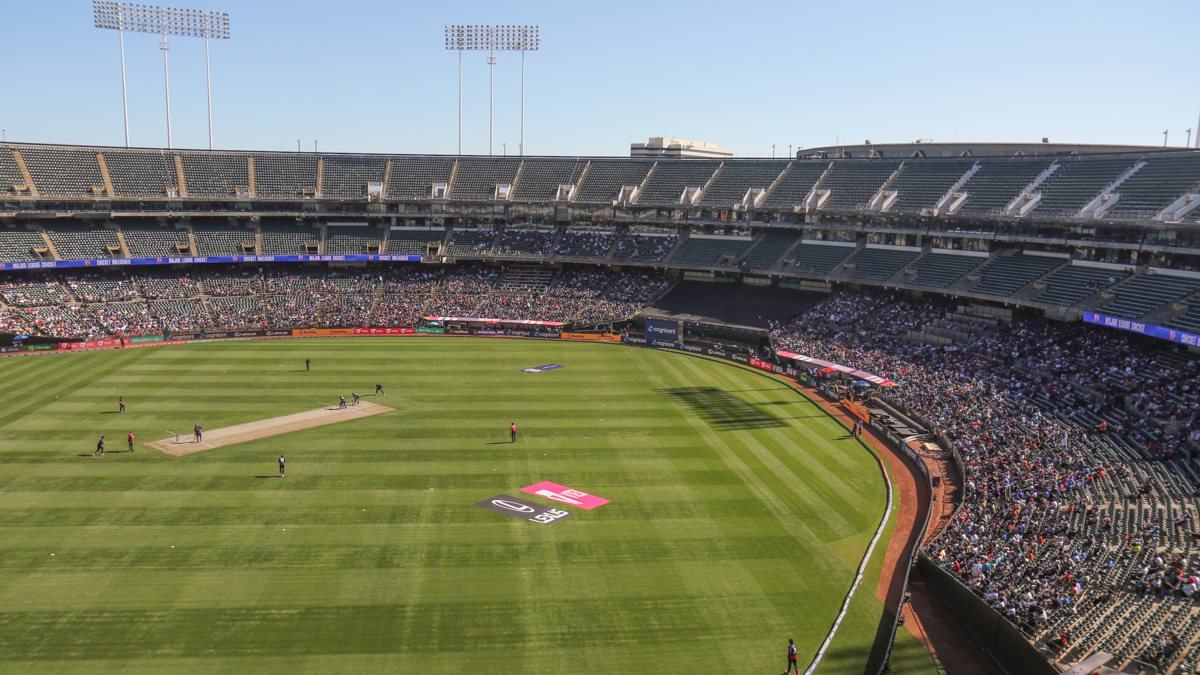
Photo credit: Peter Della Penna
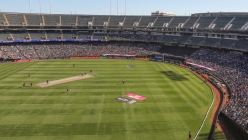
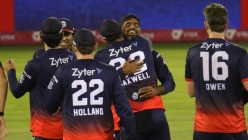
The 2026 Major League Cricket championship match between Washington Freedom and the victorious Los Angeles Knight Riders will be remembered as the best and most exciting finale in the four years of the American T20 franchise league for all 10,693 people who were there at Oakland Coliseum on Saturday July 18 to witness it. Sure, there were a few people who stayed seated, maybe because the drama was too much to bear. But the overwhelming majority of those present were on their feet for the final ball that culminated in a runout to deny Freedom a second MLC title and cap the Knight Riders unprecedented turnaround from worst to first. So what made the 2026 MLC Final the league’s best one yet?
First, it was the fact that it went down to the final ball and was decided by the slimmest possible margin. The inaugural final played between MI New York and Seattle Orcas in 2023 featured one of the most electric batting performances in T20 franchise cricket history as Nicholas Pooran made the most of an early drop to blitz 137 not out off 55 balls and in the process elevated the legitimacy of MLC in the eyes of the rest of the global cricket fraternity. But Pooran’s knock was so damn good that he clinched victory for MI New York with four overs to spare. In reality, the inevitability of the result was clear by the end of the Powerplay when Pooran had already scored a breathtaking 69 off 22 balls.
The 2024 final between Freedom and San Francisco Unicorns was a lopsided dud. But the 2025 final between MI New York and Freedom was decided by just five runs. However, Rushil Ugarkar’s final over was so magnificent that the last-ball boundary by Obus Pienaar was in fact cosmetic to the official margin of victory. Ugarkar had dismissed Glenn Maxwell two balls earlier before defeating Pienaar with a dot ball on the penultimate delivery to render the last ball meaningless with 10 needed to win.
But the contest between Shadley van Schalkwyk and the four Freedom batters he came up against during the final over could hardly have see-sawed any more than it did. With 14 needed to win off the start of the over, a six by Pienaar brought it down to eight off five balls. Then back-to-back wickets put Knight Riders one wicket away from victory, followed by a boundary by Lockie Ferguson off the hat-trick ball to make it four off two to win before the single that put Lahiru Milantha on strike for a helter-skelter dash that came up just short. According to Cricinfo’s win probability graph, the odds of victory switched seven times between the two teams over the course of the match, including from Unicorns at the end of the 18th over back to Freedom before the start of the 20th. It switched twice more within the final over after van Schalkwyk’s consecutive wickets followed by the Ferguson four. It’s hard to ask for a more entertaining and evenly contested match, all the way to the end.
Second, it was the fact that domestic players have moved well beyond being token participants like they were in year one of the league to now take center stage alongside some far more heralded overseas stars. Sure, there was a slice of it in the 2025 final with Ugarkar’s final-over heroics ensuring he walked away as the Final MVP while USA captain Monank Patel led the league in scoring for MI New York, but the collective performance by domestic players across both sides in the 2026 contest was transcendent.
Taking a look at the runner-up Freedom unit, Saurabh Netravalkar once again proved he’s not just a good USA bowler, but a good bowler in any franchise league. His 1 for 23 off four overs ended as the best economy for any pace bowler on the night. After Freedom were three down in the Powerplay, Andries Gous made 40 off 35 balls to rally his team back into the contest. It capped off an MLC-record scoring season of 547 runs for Gous.
And who could forget Obus Pienaar, who played the innings of the night with 53 off 24 balls to take the chase into the final over. Keen followers of MLC will appreciate the ironic twist for Pienaar against Knight Riders compared to his appearance against them in 2025 at Oakland Coliseum. As Glenn Maxwell turned down singles in favor of keeping the strike to bash one of his 13 sixes on the way to a century, Pienaar was the humbled non-striker who scraped 14 off 15 balls in their 116-run partnership. A year later, Maxwell was on the bench while Freedom teammates were pleading for Pienaar to farm the strike from the tail, hitting five sixes before he stumbled at the final hurdle after walking too far across his stumps to get yorked behind his legs by van Schalkwyk.
On the winning side, Sunil Narine walked away with the 2026 Final MVP award thanks to his double-strike in the Powerplay that culminated in figures of 3 for 13. His captain Jason Holder could have also made a strong claim to the award after his two wickets in four balls in the 14th over swung momentum sharply back to the Knight Riders, helping him finish with 3 for 31 to go along with two catches. Fellow West Indian Andre Fletcher fired up a vintage opening burst, spanking 47 off 27 balls as part of a 66-run opening stand alongside Colin Munro, who made 40 off 29 with four sixes.
But there were two domestic selections for the Knight Riders, both with South African roots, for which victory would not have been possible without their contributions. The Knight Riders were sitting at 3-3 six games into the 2026 tournament when 21-year-old Matthew Tromp began a personal crusade to make the Knight Riders great again. Across the last six matches of the season, Tromp made 248 runs at an average of 49.60 and a strike rate of 163.15 as Knight Riders won five of their last six games on the way to the title. Tromp wasn’t just hitting them huge in the final – three fours and three sixes in his 39 off 21 balls to give Knight Riders a desperately needed finishing kick – his 20 sixes across the event placed him ninth overall, and second among domestic players behind only Gous, to ensure he was a slam-dunk choice for MLC’s Under-23 Player of the Tournament award.
Last but not least among the standout domestic players was van Schalkwyk. Just as 2024 was the summer of Saurabh Netravalkar – who achieved cult hero status after his iconic day in Texas during USA’s win T20 World Cup win against Pakistan, and then followed it up with the wickets of Rohit Sharma and Virat Kohli against India before spearheading Freedom’s MLC title win – 2026 has been all about Shadley. Throughout this year’s MLC, he proved that his back-to-back 4 for 25’s against India and Pakistan in February were no fluke as he tied for fifth overall in MLC in wickets with 16. Even though he’d taken some punishment earlier in the final, primarily at the hands of Pienaar, van Schalkwyk held his nerve in the final over to take two wickets and complete the match-ending runout.
Reason number three that made this year’s final the best ever was that it had a record attendance. The final tally that landed just short of 11,000 was more than 3,000 clear of any match in MLC history prior to the final. Having a five-figure turnout justified moving the playoffs away from Grand Prairie Stadium after last year’s final failed to sell out, while other playoff attendances ahead of the 2025 final in Grand Prairie were similarly underwhelming to the extent that MLC staff never released official attendance data for the 2025 playoffs.
Having such a record-setting crowd at Oakland Coliseum is in a way a blessing and a curse for MLC. It leads to a multi-pronged exploration of a philosophical conundrum: was the crowd at the 2026 MLC Final a reflection of the true reality of cricket’s popularity not just in the East Bay of California, but all of the USA? Or was it a mirage obscuring myriad issues with the league?
Looking back at the attendances for the other playoff fixtures at Oakland Coliseum, the prior attendance figures were 2,103 for Thursday’s de facto semi-final featuring San Francisco Unicorns and Washington Freedom and 1,907 for the doubleheader a day earlier that also included the Knight Riders and MI New York. However, that number was revised after an MLC representative initially claimed 2,500, (and also claimed 11,000 on the night of the final before a more precise, and lower figure, was quietly included in a press release three days later). The need for smoke and mirrors for something as simple as crowd attendance is a red flag, as is the fact that MLC officials never supplied crowd attendance numbers for earlier matches held at Oakland Coliseum in 2026, nor the supposedly very well-attended debut for Knight Riders home matches in Pomona, despite repeated requests made both face-to-face and by email or text.
Many MLC apologists turned the 2026 FIFA World Cup into their favorite whipping boy when it came to placing blame for low crowds in Texas and at Oakland Coliseum for every match prior to the final. Yet MLB baseball teams had no issue recruiting those same traveling fans to get them through the gates. The Boston Red Sox gained notoriety for their outstanding cross-promotional work – with a “Scottish Celebration Night” on Sunday June 14 that included a Red Sox Tartan jersey giveaway – to rope in thousands of traveling Scotland supporters who were in the area for Scotland’s first two matches against Haiti on June 13 and Morocco on June 19 at Gillette Stadium in Foxboro. Less publicized was the fact that the Red Sox also ran a series of other soccer-themed promotions in the first week of the FIFA World Cup that went beyond targeting Scotland fans alone.
That’s not to say that MLC officials completely sat on their hands regarding outreach to FIFA World Cup travelers. There were some discount offers presented to England fans already in Dallas for their match against Croatia on June 17 to come to watch MLC at Grand Prairie, as well as a ticket offer for traveling Australia fans in the Bay Area for their match against Paraguay on June 25 to come out to Oakland Coliseum. But MLC’s 10% off discount code looked miserly compared to the 20% off or better offered by the Texas Rangers to traveling England fan groups encouraging them to come to a baseball game, that too in an indoor air-conditioned facility instead of the outdoor oven that Grand Prairie Stadium can feel like. Based on the images on TV and in person, few English and Aussie tourists were willing to bite on a 10% discount to watch MLC, if they were even aware that it was offered. Crowds at Grand Prairie struggled to crack 2,000 on a good day in 2026, let alone a bad one, and the Coliseum also struggled mightily in 2026 to draw people in prior to the final.
Blaming the FIFA World Cup for eating into the cricket fan market-share also requires everyone to not just ignore the poor attendance figures on days where there was no competition from the World Cup either on TV or at local stadium venues – see the MLC Playoff matchup involving the hometown Unicorns on Thursday July 16, which had just 2,103 people attend compared to the day earlier when 1,907 showed up for an MLC playoff doubleheader that was less than 30 minutes after the England v Argentina World Cup semi-final match had concluded in Atlanta – but it also needs everyone to memory-hole the fact that attendances for MLC have mostly gone south since year one. The crowds, or lack thereof, at Lauderhill in 2025 were such a debacle that MLC didn’t bother returning to Florida for 2026. Some of that can be pinned on weak efforts to promote and market the league, but there’s also a distinct lack of engagement from the diaspora community who are supposed to be the core fanbase.
In 2025, a person visiting the East Bay had to be blind not to notice the copious amounts of advertising driving along the various freeways for both San Francisco Unicorns and MLC as a whole making their debut at the Coliseum. Those ads were virtually non-existent in 2026 in California, barring a few that popped up on the day of the final right outside the stadium entrance, and have been similarly absent in Grand Prairie for several years now. It’s hard not to think that the lack of visibility for any MLC event advertising in the East Bay played a part in the sharply reduced turnout compared to year one in California. Instead, the strategy shifted toward tapping into social media influencers, with multiple such personalities engaged by MLC or the franchises directly, to pump out content which seemingly had a negligible impact on actually getting anyone to come into the grounds.
Going back to the 2024 T20 World Cup, MLC officials were extremely enthusiastic about catching a wave of newfound cricket fans piggybacking off of USA’s historic win over Pakistan in Texas and their subsequent advancement to the Super Eight stage to play South Africa, West Indies and England. But a month later, the same officials were moaning that the T20 World Cup was actually hurting MLC attendances and spouted an excuse that too many World Cup matches at Grand Prairie combined with a heavy dose of MLC fixtures meant that “the market had been oversaturated” and fans in the DFW Metroplex had run out of money to buy tickets by the time MLC came around.
While visiting Philadelphia and Boston for 4th of July celebrations that coincided with the FIFA World Cup, there were MLS street ads galore (think stickers with QR codes slapped onto traffic signal crossings) for “First Match on Us” promo offers to get two tickets to see an MLS match for the Philadelphia Union or New England Revolution for free on select dates in the last week of July after the conclusion of the FIFA World Cup and the resumption of the MLS schedule. It was a clever way to try to engage fans who normally wouldn’t go to watch MLS and have them give it a try if they got caught up in FIFA World Cup fever and were now curious enough to have a taste of the local soccer product. MLC is not known to have made any such similar “First Match on Us” promotional offers in the summer of 2024 to convert USA’s T20 World Cup fans in Texas into MLC fans.
Beyond that, anecdotal evidence poses questions as to how many fans were genuinely supporting MLC with their wallets from the start. During the first season of the league, officials admitted that they gave away thousands of tickets that resulted in “sellouts” both on opening night and for the tournament final because they wanted the ground to look good on TV and thus present a successful image to the cricket world. Anecdotally, many of those tickets went to families whose kids are part of private cricket academies where the fees are in the neighborhood of $500 per month. In other words, MLC gave away freebies to hardcore cricket folk who can easily afford tickets. It was reminiscent of the Cricket All-Stars clinics in 2015 when Shane Warne was handing out four free tickets to each kid who came to Dodger Stadium for a one-hour session with the legend only for the kid to hand the envelope over to a mom or dad who groaned, “Free tickets? I wish I’d known before I already paid $250 per ticket for the four of us to see Warney and Sachin Tendulkar!”
MLB, NBA and NHL teams regularly give out free tickets to summer camps, public schools, or non-profits like inner-city Boys & Girls Clubs. But the Yankees and Dodgers are not giving free tickets to prep-school kids whose parents drop them off in a Tesla. By comparison, MLC’s outreach efforts have been muddled as they’ve not only failed to engage casual sports fans, but season one created an entitlement mindset in a good chunk of the diaspora community that they didn’t need to pay, even if they had been willing to.
Speaking to many self-described hardcore cricket fans who got free MLC tickets in year one, very few have been converted into repeat paying customers in subsequent years with the justification that, “they were giving me free tickets from the start, so why would I pay going forward?” Indeed, if you were being offered free MLC tickets to watch Rashid Khan in year one, the No. 1 ranked T20 bowler in the world, why would you pay to see his less talented replacement in 2025 and 2026?
Separately, what happens if you actually paid to see Rashid Khan in year one – he was heavily featured on MLC’s advertising in 2023 – and he no-showed? That was the case for MI New York’s first few matches, when Rashid was still on Afghanistan duty. There have been far too many occasions to count where MLC has pulled a bait and switch when it comes to billing big-name signings, only to quietly reveal later on that said player will only be available for part of the season, if at all. R Ashwin is only the latest example of a player who was introduced to great fanfare only to be a non-entity, with a rotating list of excuses being communicated by Unicorns to cover for his continued non-selection until he officially withdrew from the tournament having played just one match.
There are numerous other instances of cloak and dagger roster changes in MLC for other players as well. Aside from the Rashid situation in 2023, MI New York has regularly kept quiet about other roster moves. Slade van Staden randomly showed up toward the tail-end of season one to play one game, ostensibly taking the spot of Kyle Phillip as a local after Phillip’s bowling action was banned by the ICC. Similarly in 2026, Ehsan Adil magically showed up to play for MI New York in the last match of the regular season without any advanced notice until suddenly he was shown on screen following the coin toss.
Another one that has been swept under the rug is the absence of Pat Cummins, who had been signed to a “four-year contract” according to a Unicorns press release in 2024. Cummins played a grand total of six matches in year one of his deal, that too after arriving late so that he could watch Wimbledon instead of being there for the start of the season like the rest of his teammates, and has been absent for all of 2025 and 2026 without any explanation given. Every other US pro sports league publicly announces all roster transactions, whether via the franchises themselves or through the league. But one way or another, there is a public record of it whereas MLC’s method is shrouded in secrecy.
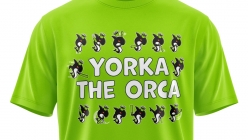
When it comes to building a community identity, some MLC franchises have also fallen woefully short. Four years into the league, only half of the six teams have a genuine home venue. Of the three that don’t, Seattle Orcas and Washington Freedom have at least made some noises about trying to get the ball rolling on a local facility, but neither has made much tangible progress. Seattle has at least bent over backwards to connect with fans through other initiatives such as the recent announcement of an Orcas driven US Women’s franchise event in August 2026 to be held in Seattle, creative Orcas merchandising that targets both males and females (check out their “Wicket” t-shirt themed along the lines of “Wicked” the movie/musical, capitalizing on the common bond of the team’s green color scheme), and a local TV deal that has enabled them to organize local watch parties for Orcas games. Though Washington Freedom regularly gave out free t-shirts and hats to MLC fans during the season, at no point did they have any merchandise available to purchase in the MLC official store, including the playoffs and the MLC Final.
But MI New York has perhaps been the league’s biggest problem child on the local development front. Not only have they not made any progress toward securing a local stadium venue, rarely if ever have they done any community engagement initiatives in the New York metro area to get the word out about the team with the lone notable exception being their local TV deal with the YES Network. All of this is in spite of the fact that Mumbai Indians ownership were adamant about hitching their affiliation in MLC to a “New York” franchise base – much in the same way that they took over a London franchise in The Hundred – because of all of the connotations that being a New York sports teams brings with it. On the field, MI New York has fit the Big Apple sports persona, winning two of the league’s first four titles. Off the field, they’ve been acting like they’re really from New Rochelle considering how small-time the rest of the operation has been. Are they actually a team from New York, or is it a mirage with them simply cosplaying as one?
So even though only half of the original six franchises have a place to call home – and that could shrink by one for 2027 depending on what the new owners of Oakland Coliseum plan on doing with the facility going forward – MLC has confidently proclaimed they will expand to eight teams in 2027. Collective attendance keeps going down, but the tournament final attendance was better than ever. The duality of MLC’s image projection continues. In the end, fans and officials will believe what they want to believe.