USA Cricket: Outlook for USA Women at the 2027 ICC U19 Women’s T20 World Cup
2026 Aug 24 by DreamCricket USA
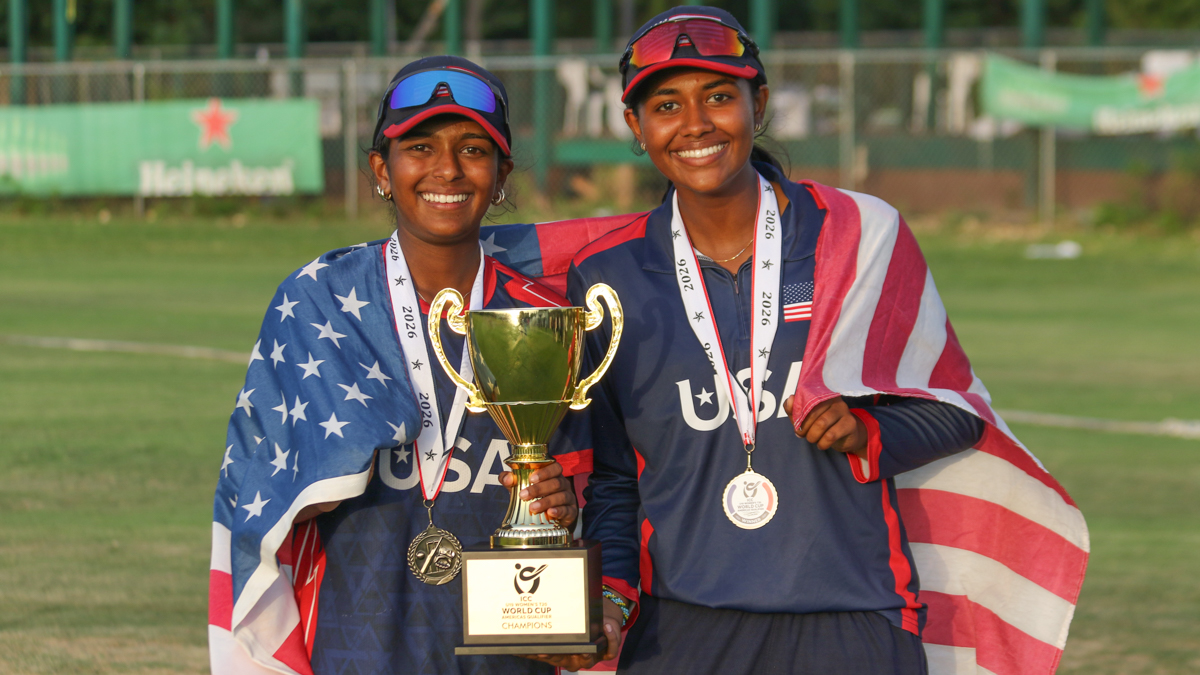
This cycle of USA Women's U19 players is not only good enough to make it back to the Super Six stage like they did in 2025. But a trip to the semi-finals is not an unreasonable ambition to have based on their talent.
Photo credit: Peter Della Penna
By Peter Della Penna (Twitter/X @PeterDellaPenna)
The fact that USA finished the first ever Women’s U19 Regional World Cup Qualifier undefeated should come as no surprise to anyone who has followed women’s cricket in the region for the last decade. USA has had a head start on every other country in the Americas when it comes to women’s cricket development, and the junior level is no exception.
But what made the series of results so impressive was the fact that USA did not just rely on one or two players to bully the opposition. USA came into the tournament with five players in their squad that boasted USA Women’s senior team experience: captain Chetna Pagydyala, Pooja Ganesh, Sainavi Kambalapalli, Maahi Madhavan and Saanvi Immadi.
Yet it was a first-time performer, Mahek Desai, who walked away with Player of the Tournament honors for her dominant display of legspin. To show that it was no fluke, Desai was named Player of the Tournament at the inaugural Seattle Orcas Women’s T20 Exhibition the following weekend where her batting shined as much if not more than her bowling in a tournament field packed with not just USA Women’s senior players but a handful of West Indies and Canadian senior talent as well.
Beyond the aforementioned players, the USA Women’s ecosystem showcased unrivalled depth in the event. It wasn’t just in the USA squad either. The four players picked to play for the ICC Next Gen team – Saanvi Sood, Palak Chauhan, Disha Kaveripakam, Sahasra Gorla – were arguably among the best performers of any of the other three teams in the event after they were deemed not good enough to break into USA’s first-choice squad.
But perhaps the most exciting part of this generation of players is that they appear to be rapidly adapting to the shifting landscape of T20 cricket generally, especially when it comes to women’s cricket. There is a noticeable difference in batting and fielding approach for all of the American players who were in the Cayman Islands. No longer are they content just blocking and tapping and hoping nobody gets them out. USA now has power-hitters at the crease and competent fielders who aren’t scared to go after a skied chance. If you think this is an exaggeration, it was only four years ago that a player was hit in the face by a regulation boundary chance during a domestic national championship tournament at Moosa Stadium in Pearland, Texas.
Starting with the more experienced players in this team, there has been quick and demonstrable improvement from one tournament to the next. Sainavi Kambalapalli was one of several players who struggled to maintain a good scoring rate on the tour of Africa earlier this year when USA’s senior Women won the ICC Challenge Trophy in Rwanda. In the Cayman Islands, she maintained her adventurous risk-taking approach to going for boundaries but meshed that with a stronger tactical approach when it came to reducing dot balls and turning over the strike. In her 64 off 41 balls against ICC Next Gen, she only had four dots. Openers typically have a scoring shot percentage hovering between 50-55%. The fact that she scored off 90% of her deliveries was phenomenal, especially since a case can be made that the ICC Next Gen bowling unit was stronger than either Canada or Argentina. Kambalapalli has shown more progress in one year from 16 to 17 than many other senior players who have been in the USA national team system for more than five years. It is no surprise then that she is the lone USA player who has been picked for the 2026 Women’s CPL where she will be part of the Trinbago Knight Riders next month.
Another one who is a beacon for both the senior team and her junior peers is Ganesh. She may have finished fourth in runs for USA behind Kambalapalli, Pagydyala and Anannya Aneesh, but that was more a consequence of limited batting opportunities because the players batting in front of her were so dominant combined with the fact that USA chased small targets on multiple occasions. However, Ganesh finished with the highest average on the team after only being dismissed once for her 88 runs in four innings. Separate from that is how scores them, with a scoop shot over fine leg rapidly turning into her trademark scoring zone in 2026.
Above all, Ganesh is the gold standard for fitness in the USA Women’s system. Nobody has more stamina and energy in the field, whether behind the stumps or chasing after balls as an outfielder along with a very strong throwing arm. In between the wickets, she is not just a hare but one who anticipates and judges a second or third run exceptionally well. She has come a very long way from the shy and scrawny 15-year-old who was the youngest player for USA at the 2023 ICC Women’s U19 World Cup in South Africa but has since emerged as a leader among her peers by word and by deed. If there’s one player in the USA Women’s setup that female players should be looking up to as a role model for skill and fitness development, ironically it is one of the shortest players on the field yet one who approaches everything in the way that Ganesh does, something a coach can only dream about.
Maahi Madhavan is arguably the team’s most consistent pace bowler and tone-setter with the new ball. The fact that she only took six wickets in six matches is not a true reflection of her skills. This is a player who was an extremely valuable asset at the Women’s T20 World Cup Qualifier in Nepal in January. Spinners dominated for USA in the Cayman Islands because junior batters often struggle far more against slow bowling. But Madhavan still managed to turn in a spell of 4 for 3 in one match against Argentina and also showcased the development of far more polished players coming through the junior setup with the fact that she took a team-leading five catches in the outfield. Though none of them were spectacular, something she has shown she is capable of pulling off on previous tours, they were all the kinds of catches that in the past you had to hold your breath on because completing regulation chances used to be more of a coin flip proposition for USA. That is no longer the case with players like Madhavan in the field.
Captain Pagydyala is cut from a similar mold in the field with regards to catching. She may have only taken three catches, but she is usually patrolling the boundary for the senior team and the majority of players in other teams in the Cayman Islands simply didn’t have the muscle to hit that far and it meant that her value in the field wasn’t highlighted as it is in other senior events. The fact that the team’s leading scorer sets that model in the field is a major bonus.
USA’s spin bowling attack has transformed as well compared to previous years. Looking at the 2023 and 2025 USA Women’s U19 World Cup squads, the team was heavily modelled on finger spinners. Bhumika Badriraju, Aditi Chudasama, Ritu Singh and Chetnaa Prasad were the first-choice slow bowling options in those teams. Compare that to the squad taking shape for what will be turning wickets in Nepal and Bangladesh where USA will most likely continue with their three-header legspin monster of Kambalapalli, Desai and Immadi. Throw in a left-arm wristspinner in Dhanya Mikkilineni and USA may wind up arriving with more wristspinners in their squad than any of the other 15 teams at the event.
Adding up all of these ingredients is a radical, and positive, shift away from the overly bland and conservative approach taken to player and squad development in the past for USA Women at all levels. There were even more signs of it at the recent Seattle Orcas Women’s T20 Exhibition tournament that took place from August 19-22. A number of the ostensibly less experienced players in terms of matches on paper took far more bold strategic approaches to batting and bowling than many of their more heralded senior counterparts who have far more matches under their belt with the USA Women’s senior team. The future is looking much brighter than it did 24 months ago, even if the USA Women are being shut out of playing in the 2028 Summer Olympics.
Having said all of that, there is still definite room for improvement. The running between the wickets was a mix of good and bad. USA’s players have shown tremendous growth in terms of field gap recognition when it comes to tip and run singles inside the inner ring as well as using the pace and angle of the bowler to score runs behind square. Kambalapalli and Ganesh in particular put on a clinic when it came to the drop and run singles if either of them recognized fielders back on their heels.
However, multiple times during the tournament, a wicket or a chance was created just one ball after a moment of slack running resulted in a single instead of a two and theoretically the wrong player being on strike. That included an instance in the final match against Canada where there was major confusion in the official scorebox after they initially showed Chetna Pagydyala as the first wicket to fall rather than Sainavi Kambalapalli caught at deep midwicket. It happened because they assumed that the two USA batters had completed what should have been an easy two runs on a ball that slipped past the wicketkeeper for a bye. Kambalapalli wound up running halfway down the pitch on the way to a second run before being turned back by Pagydyala, who was very casual completing the first and what turned into the only run in the sequence.
Another memorable sequence in a match against Argentina involved the same two players when Kambalapalli hit a ball out toward the deep midwicket boundary and the ball slowed in the grass just short of the rope. The batting pair had completed two runs by the time the ball was collected before the relay fielder, who by day four of the tournament had established herself as having the weakest arm in the event, desperately heaved the ball straight into the air before it ultimately landed five yards short of the 25-yard circle and dribbled to a complete stop before another Argentina player ran out to collect it and throw it in to the wicketkeeper. Approximately 5-6 seconds elapsed from the time the ball was first touched by an Argentina fielder before it arrived back into the wicketkeeper’s gloves, enough time to complete an easy third. Instead, Kambalapalli and Pagydyala stared at the Argentina fielders and watched the scene unfold while standing still. Kambalapalli wound up getting out two balls later when she should have been off strike.
In that sense, USA’s batters are still struggling when it comes to weak fielder recognition on the boundary. Picking out a weak throwing arm is one of the easiest things to do in any sport, whether it is baseball, softball, football or cricket. In baseball, it is knowing that a catcher has a weak arm to understand that a baserunner can confidently steal a base on them, or knowing that a weak outfield arm means a baserunner can advance from first to third or second to home on a ball hit their way. In football, it means a defensive back can jump a route to break up a pass or create an interception if he knows the quarterback doesn’t have the arm strength to zing a throw into a certain window. In cricket, weak throwing arm recognition primarily has two functions: taking an extra run for the throw on a ball hit to a weak boundary fielder, or being able to take on a tight single in the ring because the throw is going to be slow coming out of the hand upon collection. Barring Ganesh, most of USA’s players still struggle with the recognition of weak-armed fielders on the boundary. That is an easy thing to correct, and hopefully one that will happen sooner than later.
As improved as the fielding was compared to the past, there is also definite room for improvement on that front as well. USA missed a total of nine chances in the event out of a total of 42 wicket opportunities in the field (meaning wickets that were not bowled or lbw). It means they were taking their catches or runouts at a 79% clip. That is improvement over the past range of USA Women’s squads, which hovered in the high 60-low 70% range. But realistically the number of bowled and lbw dismissals USA got in the Cayman Islands will be dramatically reduced at the Women’s U19 World Cup against a higher standard of batter. They’ll need to work harder on their fielding and catching in particular to reduce mistakes in matches against Full Members that may have much tighter margin for error.
Another area of concern for USA involves squad selection, specifically in the pace bowling department. Though no official commented on the matter publicly, multiple opposition teams were not thrilled with the fact that two USA pace bowlers were utilizing bowling actions that were suspect from the naked eye and would certainly face more scrutiny at the Women’s U19 World Cup, where there will be a far more sophisticated broadcast camera setup that not only makes for a more enhanced viewing experience, but also doubles as evidence captured by ICC umpiring officials to submit formal reports if a player is found to have an illegal bowling action. In the past, these matters are promptly dealt with on the opening day of the tournament, both at the junior Men’s U19 World Cup and junior Women’s U19 World Cup, when official video footage is captured for the first time on many of these players. If USA management decides to take both of these players to the World Cup, they run the serious risk of effectively having their squad reduced from 15 to 13 players after the opening match if ICC umpires at the tournament call them out on it.
ICC U19 World Cup tournament squads allow for a 15th player to be taken to the tournament, one more than the 14 player squads at the regional qualifiers. If USA management feels like they can gamble with keeping both players with concerns around their bowling action in the squad, the most likely candidate to join the team for the U19 World Cup may be Saanvi Sood. The Georgia allrounder ticks multiple boxes: she can bowl decent medium pace, she is an above-average fielder (who took a couple of outstanding catches in the Cayman Islands) and she can be an explosive power-hitter. Sood opened the batting for ICC Next Gen with mixed results. The moment she got out, a rapid collapse often followed.
Kambalapalli and Pagydyala are firmly entrenched as USA’s first-choice opening combo and Sood’s results on paper do not justify shifting either one of them out of the opening role. However, there appeared to be a hole in a needed finisher role for the USA Women’s U19 squad. In the matches where USA batted first, the lineup tended to stutter after the fourth wicket fell. Sood’s approach was basically to bash every single ball she could in the Cayman Islands. That didn’t change much when she floated up and down the order at the Seattle Orcas Women’s T20 Exhibition. If she is able to harness that fearless approach as a finisher entering at the first fall of a wicket with less than five overs to go, Sood has the raw tools to be a difference-maker with the bat in terms of her power-hitting and explosiveness. It’s just about getting it right in terms of temperament, which she struggled with in the Caymans as part of the ICC Next Gen squad but may be able to adjust to better if she is in a USA team with more talent around her.
Disha Kaveripakam also showed both in the Caymans playing for ICC Next Gen and at the Seattle Orcas Women’s T20 event that she would also be a worthy choice to add to the USA World Cup squad as an allrounder. The main obstacle standing in the way of the 15-year-old from Georgia is the logjam of spin options currently established in the USA squad. She is a reliable fielder and though her batting is solid, she does not currently differentiate herself style-wise from anyone currently in USA’s middle order and she is not nearly as explosive as Sood. If Kaveripakam can’t find a way to squeeze into the U19 World Cup squad for 2027, she looks like she will be a core element of any squad assembled for the 2029 U19 World Cup cycle.
Another thing to marvel at is the geographic spread of USA’s Women’s U19 players compared to the past, when it was heavily dominated by players from Northern California. In this squad, only two players from the San Francisco Bay Area made the cut. The captain is from Southern California. The rest of the squad’s developmental spans across America: Houston, Dallas, St. Louis, Atlanta, Wisconsin, New Jersey. This doesn't even include North Carolina, which has produced several players to the USA Women's senior and junior teams previously but was not represented in the 14-player squad in the Cayman Islands, though they did have Chauhan in the ICC Next Gen squad. No longer is the national team relying on one pocket of the country to produce quality talent.
When looking back at how the 2025 USA Women’s U19 squad performed at the World Cup in Malaysia, they trounced Ireland by nine wickets chasing a target of 76 in just 9.4 overs and came very close to beating New Zealand as well in a match that they controlled for the majority of play before losing their cool and falling short by 18 runs in the end chasing a target of 98 (they were 66 for 4 with eight overs left needing 32 off 48 balls to win). The overarching reason for that result was that USA’s players lacked situational awareness for coping with pressure. This group is far ahead of the 2025 batch not only in terms of skill but also in their situational awareness and tactical approach on field.
If USA winds up with a favorable draw, it is completely within the realm of possibility to see them not only advance to the Super Six stage like they did in 2025, but potentially challenge for a semi-final berth as well if they can come up with at least one more victory in the second phase of the tournament. Some people reading this may roll their eyes while reading that. But USA’s current group of U19 Women’s players are physically stronger than they were when they made their U19 World Cup debut in 2023 and floundered against Bangladesh, Sri Lanka and Australia. Back then, USA struggled to get the ball out of the infield and looked incredibly timid if not outright scared.
Now, the USA squad is blessed with players whose instinctive approach is to attack. Their bowling is more than good enough while their fielding has also improved significantly to be able to compete respectably with Full Members both at senior and junior level. Having as many pure power-hitting options as USA does – Kambalapalli, Desai, Aneesh, Pagydyala, and potentially Sood if they pick her for the U19 World Cup – is something that was a pipe dream a few years ago. Mix that with the flair, creativity and efficiency that Ganesh takes to scoring her runs and it won’t be skill that holds USA back on the batting side but lack of experience compared to their Full Member counterparts. Time will tell if they’re able to improve on their showing from 2025 when they finished fourth in their Super Six group.