Views
USA Cricket: ICC Women’s Challenge Trophy Tour Review Part 3 – Outlook for the Future
2026 May 27 by DreamCricket USA
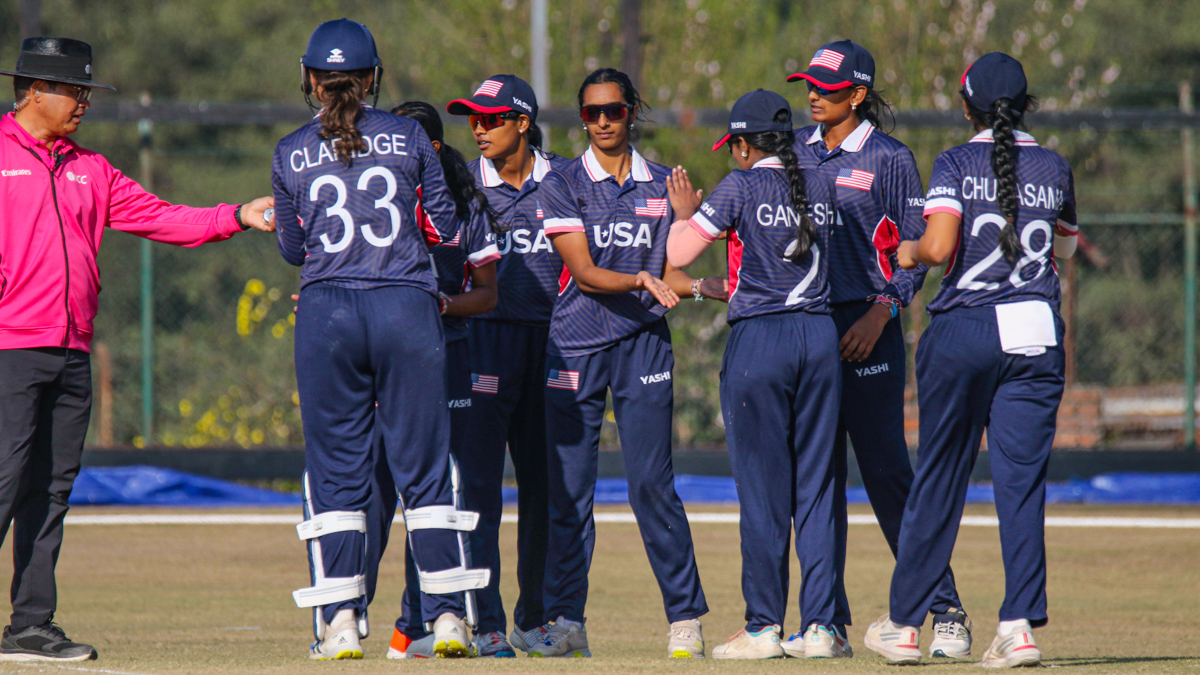
By Peter Della Penna (Twitter/X @PeterDellaPenna)Here's the final part of the USA Women's evaluation and outlook going forward following their tournament win at the 2026 ICC Women's Challenge Trophy in Rwanda.
File photo credit: Peter Della Penna
Better Conditioning – USA’s squad looked a step behind at the start of the tour in Uganda, and arguably were able to compensate for a lack of quality conditioning in Rwanda due purely to being more skilled than their opponents. But it was somewhat concerning to see more than a few players struggling at times to adapt to the warm and humid conditions in both venues when considering that the majority of USA’s squad hails from warm weather states in America.
When also keeping in mind that these players are relatively young compared to most other teams on the international circuit, it points to a lack of general conditioning and fitness being standardized throughout the year. There is some degree of understanding that these players are not fully contracted professionals who would be able to mitigate this by focusing on fitness and training seven days a week under preferred circumstances. But many other teams on both the men’s and women’s sides around the world operate under similar financial and lifestyle constraints yet manage to demonstrate far better fitness standards than USA put forth on this tour.
Regardless of whether or not there is a mandate in place from the national governing body (or what’s left of it) to have fitness standards in place, the players need to take it upon themselves to elevate their own standards if they want to push to a higher place in the ICC rankings and hopefully command the financial incentives that may come with that.
Bring back the intra-regional women’s pathway – One of the consequences of USA Cricket’s perennial legal and financial woes is that the women’s domestic program has become one of the earliest casualties. The pathway was a fairly basic structure: get selected for matches within your zone to play intraregional matches; players who did well would get selected for a regional team in a conference/zonal tournament; and then the best players from the regional event would move on to play in an eastern/western conference national event.
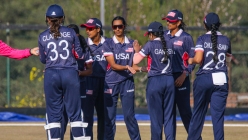
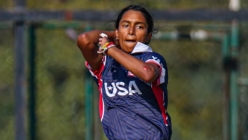
All of that has seemingly fallen into a black hole in 2026. It couldn’t have come at a worse time for the USA Women’s program, having made such positive strides with a Super Six appearance in the Women’s T20 World Cup Qualifier in January followed by their tournament win in Rwanda in April and May.
USA’s junior and women’s setup was already over-reliant on sourcing players from private academy structures. The ceasing of the intra-regional pathway will only further cement that, and not in a good way. Not only is there a danger that fewer girls are going to get opportunities to play, but the lack of outreach to encourage recent high school/university athletes to give cricket a try in the hope of unearthing a hidden gem (the Erica Rendler example has somehow yet to be repeated) continues to be a huge missed opportunity. Female cricket in the USA is not only in dire need of mass participation, it is in dire need of any participation when the official data from USA Cricket’s most recent AGM stated that less than 500 females of any age were registered to play nationwide.
Looking elsewhere for guidance on how to grow participation numbers, one of the most successful initiatives coming out of the UK in recent times is the implementation of the All-Stars and Dynamos introductory programs. The signup fee is 60 pounds for six to eight weeks of clinics for kids from ages 7-11 going once a week on a Thursday or Friday night, all coordinated through local cricket clubs. Each kid gets a free jersey and bat as part of their fee and importantly, many clubs offer a female only program to encourage more girls to play if they are more comfortable playing with female peers rather than be in a co-ed setting.
Thanks to the ECB’s All-Stars and Dynamos programs, tens of thousands of girls are getting introduced to cricket every summer. The athleticism in terms of fielding – tumbling, diving, throwing arm strength and accuracy – can be seen at girls matches all the way up to the domestic professional structures such as the Charlotte Edwards Cup and The Women’s Hundred, because they are encouraged to begin young.
USA has none of that in their cricket structures domestically. That’s not to say that American administrators should just throw in the towel and give up. But something is better than nothing, and nothing is currently what USA has at the moment. The consequence is that the recent gains made by the women’s team may wind up becoming fleeting rather than sustained at a crucial time when more participation programs are desperately needed considering that the LA 2028 Olympics are just over two years away. There’s every possibility that there are athletes, not even current cricketers, that are good enough to play for the USA Women’s cricket team. But nobody will know if the effort is never made to put a bat and ball in their hand and see what they can do.
Keep the dual-passport pipeline open – USA’s selection policy on both the men’s and the women’s side has peculiar double-standards at times where seemingly arbitrary rules or policies are applied at some times for some players but not for others. The England-based pair of Tara Norris and Ella Claridge both provided immense value for the squad at the Women’s T20 World Cup Qualifier, though neither was available for the tour of Africa.
It’s hard to know if the same is true of 20-year-old Artemis Downer. The right-hand bat was included in a USA training camp squad in Florida at the end of 2024, but it’s unclear what kind of communication (if any) has been had between Downer and USA Cricket since then. She has continued to rise up the Middlesex pathway and was named their Women’s Emerging Player of the Year for 2025. She started off the 2026 season with 52 off 40 balls in her first innings of the season on May 17 for Middlesex while opening the batting for them in a Vitality T20 Cup match. She also regularly fields at backward point for them, showcasing a higher level of pedigree than most of USA’s fielding unit employs.
Downer is also currently a teammate of USA Women’s captain Aditi Chudasama where they both attend the University of Loughborough together. Legspinner Sai Eyyunni, who played the last of her six T20Is for USA in 2024, is also a University of Loughborough student involved in the cricket program there as is Mahika Kandanala, who also last played for USA in 2022 at the Women’s T20 World Cup Qualifier in the UAE.
Chudasama was able to get time off from her Loughborough commitments to captain USA in Uganda and Rwanda, and has since been signed as the overseas player for the summer at Phoenix Cricket Club in Dublin, Ireland. Chudasama getting such opportunities is great both for her personal development and that of the entire USA Women’s team for the experiences she can bring back and share with everyone else. It also hints that Downer is playing to an equivalent standard as Chudasama, Kandanala and Eyyunni, yet is not getting the same selection opportunities with USA that they have.
Was Downer available to go to Africa with USA? Who knows, but Chudasama found a way around her Loughborough cricket commitments so it stands to reason that Downer could have done so as well. Was Downer’s availability even sought out? Also unclear. Would Downer even accept an offer if the call came? There’s only one way to find out, but judging by the fact that Norris and Claridge both said yes then it’s hard to imagine Downer would say no to an international call-up.
What is clear is that Downer was sitting at home while lesser players were given an opportunity ahead of her. It would be very hard for a USA coach, selector or administrator to maintain a straight face while explaining to Downer that she was left out in favor of other players who are better or ahead of her in their development. That was clearly not the case based on multiple performances within the squad on tour. USA effectively played the tournament using just 12 players, underscoring that talent depth on the bench within the squad on tour was an issue.
USA’s commitment to try to develop as many homegrown players as possible is commendable. However, that doesn’t mean that overseas-based citizens should only be utilized in desperate scenarios. Integrating someone like Downer into the national team setup will help elevate the overall standards across the board especially in areas where USA is severely deficient such as fielding, fitness, conditioning and power-hitting.