Views
USA Cricket: 2026 ICC Women’s Challenge Trophy Tour Review Part 2 – Player Evaluations
2026 May 08 by DreamCricket USA

By Peter Della Penna (Twitter/X @PeterDellaPenna)Check out part two of DreamCricket's tour review, featuring individual player evaluations for every squad member of the USA Women's champions at the 2026 ICC Women's Challenge Trophy in Rwanda.
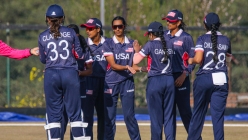
File photo credit: Peter Della Penna
Chetna Pagydyala – The vice-captain turned 18 a few days after USA returned home from tour and impressed with her volume of runs, ending as the tournament’s leading scorer with 261 runs at an average of 37.28 and two half-centuries. She also set the USA Women’s T20I record for highest individual score by batting all 20 overs against Vanuatu to make 81 not out off 61 balls. That innings also featured her first two sixes at international level for USA. Pagydyala was also a part of all four of USA’s 50-plus century partnerships in the tournament, teaming with Isani Vaghela for two of them and splitting the other two with Sainavi Kambalapalli and Pooja Ganesh.
However, there is massive scope for improvement, and possibly a need to shift Pagydyala out of the opening slot and down one to No. 3. Pagydyala’s overall strike rate was remarkably under 100 for the tournament, finishing at 97.75. This is in sharp contrast to her scoring shot percentage of 59%, which is outstanding for an opener when considering the normal range for openers is between 50-55%. The easiest explanation for the disparity between her low strike rate and her high scoring shot percentage is that Pagydyala makes exceptional bat on ball contact, but displays very lackadaisical running between the wickets. She does not look for quick singles in the ring and rarely pushes hard for two, especially if it is for her partner while starting from the non-striker’s end.
Pagydyala only ran 21 twos in the entire tournament, but interestingly six of those came in the final four overs of her 81 not out, including four times in the final over. She was willing to push hard for herself (and also had an excellent partner running twos for her from the non-striker’s end in Jivana Aras), but seemed less motivated to do so for her batting partners.
Pagydyala’s poor fitness also compounded the issue of her running between the wickets that cost her and the team runs, especially in the pair of one-run losses that USA had to Uganda and Rwanda. In USA’s first match on tour in Uganda, a lengthy delay occurred in the eighth over of USA’s chase because Pagydyala needed treatment for dehydration/cramping having only batted for 20 balls, and then she got out playing a meek shot two balls after her treatment concluded. Temperatures were in the low 80s both in Uganda and Rwanda for the majority of the tour, with mid-range humidity making it sticky but not sweltering. As someone who has spent her whole life growing up in the year-round warm temperatures of Southern California, Pagydyala’s difficulty in acclimatizing to the weather conditions on tour and her substandard conditioning when it comes to her running stamina is difficult to compute.
A deeper dive into her batting stats also raises a question as to whether she should be opening the batting. Pagydyala faced more deliveries in the Powerplay than any USA batter in the tournament (92), but scored just five boundaries inside the Powerplay overs (out of the 24 fours and two sixes she hit across the tournament) and had a Powerplay strike rate of 56.62, compared to a strike rate outside of the Powerplay of 117.14. She scored one boundary per 18.4 deliveries in the Powerplay. If openers are generally expected to split the deliveries faced in the first six overs, it means Pagydyala is expected to hit just one four in the Powerplay each match, which is not good enough. In future, she may be better placed to bat at No. 3 where she can still anchor the innings, but it frees up a top-order slot for somebody willing to be more aggressive against field restrictions in the opening six overs.
Where Pagydyala offers exceptional value to USA is in her fielding. She took five catches in Rwanda and dropped none. She is not quick to the ball with her feet, but is very sure-handed both on the ground and in the air and is regularly placed into boundary-catching positions for spin bowlers. USA’s spinners noticeably bowl with far greater confidence if they know they have CRP behind them waiting for a catch.
Pagydyala is a foundational player for USA going forward. She holds multiple records already in the senior team as a teenager and is expected to captain the USA U19 Women’s side on their qualification journey to try to secure a spot in the 2027 ICC Women’s U19 World Cup. She is typically someone who leads more by deed than by word. If that’s the case, she needs to set a better example with regards to increased emphasis on fitness, stamina and aggressiveness when running between the wickets which will benefit both herself and the entire team. If she can do that, she'll transform from being a good player to a dominant player.
Sainavi Kambalapalli – Still only a 16-year-old, the Wisconsin native was one of USA’s most impressive players on tour for her all-round abilities. In terms of her strike rate and scoring shot percentage, Kambalapalli was almost a bizarre inverse of Pagydyala. Unlike many of her teammates who stick to a robotic orthodoxy in terms of hitting the ball, Kambalapalli’s power game was something refreshingly out of the box for the USA Women.
Almost all of Kambalapalli’s boundaries came in one of two ways: walking across her stumps to sweep/pull and access the leg side behind square, or charge down the wicket and loft over mid-on/mid-off. They are two scoring options that are highly productive, yet for some reason they are also two scoring options that few other USA Women’s players are willing to attempt, let alone successfully execute. But Kambalapalli was bold in going for both on a consistent basis, even if it sometimes led to her downfall. On the whole, she demonstrated that she put some thought into where the best boundary options were during the Powerplay in terms of vulnerable areas in the field, and she was able to access them fairly regularly. It helped her notch her maiden T20I fifty during the tournament.
Kambalapalli only scored off 45% of her deliveries, which is significantly below average for most openers as the role typically has players range in the 50-55% range of deliveries scored off. But her Powerplay strike rate was 101.14 and she hit 16 of her 18 boundaries on tour during the opening six overs. She was also averaging one boundary every 5.4 deliveries during the Powerplay, meaning she would be expected to hit on average three to four boundaries during each Powerplay if she lasts the full six overs, by far the best mark in the team.
What all of that also means is that Kambalapalli also chews up an extraordinary amount of dot balls. She’s boom or bust and her overall strike rate of an even 100.00 in spite of her excellent boundary-hitting highlights her extremely poor running between the wickets.
Kambalapalli’s bowling was tremendous in her debut series for USA. She finished tied for the team lead with 10 wickets at an average of 9.60 and an outstanding 3.55 economy rate across 27 overs which also included two maidens. She produced significant turn with both her stock legbreak as well as her googly going the other way. She also had five more chances dropped off her bowling with poor support behind her at times.
In the field, Kambalapalli was a strong catching fielder, taking three catches in the tournament including some athletic takes off her own bowling for return catches during the tour. She also had zero drops during the tournament. However, she is slow along the ground, making her easy to pick on for singles, and has an at best average throwing arm.
On the whole, Kambalapalli showed immense promise for the future during this tour. Her fitness needs to improve dramatically, which should help her score more runs in terms of her running between the wickets as well as contribute to better fielding efficiency. Even if it was against slightly weaker competition than what USA Women faced in Nepal during the T20 World Cup Qualifier, Kambalapalli’s performances on this tour call into question team management’s decision to hide her on the bench for the entire Nepal qualifier when USA was in desperate need of power-hitting options with the bat as well as a wicket-taking wrist-spin threat that was sorely absent in that event in favorable spinning conditions.
Nikhar Doshi – The 18-year-old was born in North Carolina and played most of her developmental cricket there but has spent the last several years in Sydney, Australia in an attempt to get access to better facilities. While there, she originally represented Paramatta CC but has since moved to Penrith CC.
Doshi only got one match in the tournament in Rwanda, out for 6 off 5 balls after entering at No. 3 in a win over Italy. Prior to that, she scored 16 runs off 32 balls in three innings during the Uganda leg of the tour. Each of Doshi’s dismissals exposed major technical issues, in particular playing with very hard hands pushing at the ball well in front of her body. Her running between the wickets was also poor, with one runout against Uganda in which she was out by more than six yards after calling for a single in the ring on a ball she hit straight to mid-off.
Outside of her batting, her fielding was very weak, especially her ground fielding. She took a catch in Uganda, though it was completed after juggling it initially. The only chance that came her way in Rwanda landed at her feet after she reacted slowly to the ball when the top-edged chance floated toward her in the ring at short fine leg (a position where weak fielders are usually hidden by their captains) before she ultimately chose not to dive for it in the end. She did not present the body language of someone who was confident in the field and it showed when the ball came in her direction.
Doshi is one of several players who got an opportunity on this tour in part because several first-choice players were not available. Unfortunately, she was not able to capitalize on the opportunity and needs to work extensively on multiple facets of her game before she will realistically get another call-up to tour with the senior team.
Isani Vaghela – After being banned from bowling by the ICC during the T20 World Cup Qualifier in Nepal, selectors and team management kept faith in Vaghela by not only picking her but moving her up the order to bat at No. 3, with the exception of Doshi’s lone match in which Doshi entered above her and Vaghela played at No. 4. At face value, Vaghela had an impressive tour which included three straight Player of the Match awards. Scratch a little more beneath the surface though and the reality is a bit different.
Vaghela ended as USA’s second-highest scorer in Rwanda with 196 runs off 195 balls at an average of 32.66 with two half-centuries. However, no USA player benefitted more from poor fielding by the opposition than Vaghela. Out of those runs, 88 came after she had been dropped, which happened six times in eight innings. That also included surviving straightforward chances in each of her three Player of the Match performances: dropped on 23 before making 52 v Italy; dropped on 8 and 23 against Nepal before finishing 35 not out (and Player of the Match arguably should have gone to Maahi Madhavan for her crucial bowling to restrict Nepal to just 86); dropped on 33 against Vanuatu before ending with 52. The raw data shows she was USA’s best power-hitter with six sixes, but two of them were directly a result of drops or misjudgements that turned a wicket into a six and two others came after she had survived being dropped earlier.
Compare those innings to Pagydyala and there is a huge gulf in the “how”: Pagydyala was not dropped during either innings in which she made a half-century, including the 81 not out vs Vanuatu, and only gained an extra 44 runs after being dropped during the tournament. Translated a different way, 45% of Vaghela’s runs came after she was dropped whereas just 17% of Pagydyala’s runs came after she was dropped. One way to interpret that is that Pagydyala’s performance in this event is more likely to be replicated against stronger bowling and fielding units whereas Vaghela’s is far less likely to be replicated under better competition. All one needs to do is go back to the qualifier in Nepal where Pagydyala led the team in runs with 159 in seven innings whereas Vaghela managed just 60 in seven innings.
In terms of Vaghela’s running between the wickets, like others she needs major improvement. She is one of USA’s fastest fielders to the ball in terms of her ground speed, so her sluggish running between the wickets is somewhat of a mystery and appears more tied to a lack of confidence in decision-making and she was involved in several runouts on tour. She only completed eight twos and her scoring shot percentage was fractionally above 50%, (having scored off 98 off 195 deliveries overall), which is well below the standard range for international No. 3s of 55-60%.
In terms of her Powerplay batting aggression, Vaghela struck seven fours out of 77 deliveries she faced during the first six overs. One boundary out of every 11 deliveries is a much better rate than Pagydyala’s 1 per 18.4 deliveries, but also significantly behind Kambalapalli’s 1 per 5.4 deliveries in the Powerplay. Vaghela’s Powerplay strike rate of 63.64 was also very poor and highlighted her habit of blitzing balls straight to fielders and playing with very hard hands as opposed to using her wrists to find gaps. One of her most effective shots is an accidental edge through fine leg or third man for four, because most teams set their field for her to hit everything in front of square.
In Vaghela’s final innings of the tour against Rwanda, she started off on 11 off 18 balls but then went through a three-over sequence from the seventh to the ninth which shifted her score to 12 off 29 balls in which she scored 1 run off 11 balls starting with a maiden in the seventh to left-arm spinner Ruth Uwimana. Out of those ten dots, the first was a play and miss while the next nine dots were all deliveries hammered straight to fielders in the ring when the Powerplay restrictions are over and the field is pushed back to the boundary. Not for the first time, the sequence highlighted a severe predictability in her strokeplay in which teams are able to easily plan and set fields against her knowing that she will play the same shot over and over without adapting or adjusting in any significant way.
As for her fielding, Vaghela is a hybrid of very good and very bad. She has one of the strongest and most accurate throwing arms in the team. She also has very good foot speed to the ball compared to her teammates. These two elements contributed to her being a part of two of USA’s four runouts completed in the field. Yet some of these positive traits are neutralized by her sloppy ground fielding when she attacks the ball (especially inside the ring) combined with helter-skelter catching.
Vaghela was the most common offender when it came to extra runs given to the opposition courtesy of ground misfields. As has happened on many previous tours, she frequently misjudges skied chances in which she takes poor angles to the ball and regularly charges in off the boundary only for the ball to land behind her head and bounce over the rope for four or six runs. Out of her four catches, one was a sensational diving effort after running across from wide long-on against Italy. Yet two overs later, she badly misjudged a ball by coming off the rope which wound up landing inches over for six. It’s hard to find a better three-over sequence to encapsulate both ends of the Vaghela fielding spectrum. In total, she missed four chances in the field which cost a total of 43 runs.
The USA administration has invested five years and 53 matches into picking Vaghela for USA at senior level. She may be a serviceable player at times with the bat and fared well against a less challenging set of bowling units in this event. But she will need to dramatically improve several aspects of her batting and fielding if she is going to realistically be picked in first-choice squads going forward because her best value for USA was with her bowling and her action has still not been cleared by the ICC to resume in international cricket.
Pooja Ganesh – The tournament started off with what looked like plenty of promise for Ganesh as she made a career-high 47 in her first innings against Nepal. But she managed to score just 52 runs across her final six innings in the event, and a chunk of those came in a short, sharp burst in the rematch against Nepal when she scored boundaries on her first four deliveries before finishing with 20 off 8 balls, helping USA sprint to the target of 87. Ganesh had premium opportunities in this event moving up the order to No. 4 compared to her role coming in at No. 7 or 8 on the previous tour of Nepal, but she mostly failed to capitalize.
Though her raw stats point to a disappointing tour, the more detailed analytics highlight that Ganesh continues to demonstrate all the key ingredients to be a major impact player for USA with the bat. Despite only facing 93 balls, Ganesh ran seven twos, which is only one less than Vaghela ran in 195 deliveries. She is by far USA’s quickest runner between the wickets and is always pushing hard for singles and turning ones into twos. But she also showed she has power in her game. She scored four boundaries in the Powerplay off 26 Powerplay deliveries (1 every 6.5 balls) and had a Powerplay strike rate of 100.00 (second behind only Kambalapalli’s 101.14). Her overall scoring shot percentage was 60%, which is within the expected range for a No. 4 position batter (60-65%).
Beyond that, it was the situational awareness she has so often showed in previous tours that impressed when she came out to bat. In that burst of four boundaries off the first four balls she faced in the rematch against Nepal, each one used the pace on the ball as she delicately opened her wrists to glide it through the gap between backward point and short third. No other player was doing that on tour, and she showed how much that scoring zone could be maximized with minimum effort.
Taking over the gloves for this tournament, she was okay, but not great behind the stumps. Two missed chances wound up costing nine runs. But she also had three catches and had one of the most alert stumpings seen in international cricket when she caught Italy’s Himanshi Daluwatta napping after missing a shot against Suhani Thadani’s pace.
Ganesh’s deeper analytics show that she may be better placed to open the batting rather than be in the middle order given her boundary rate, creativity to find gaps and hard running between the wickets. But it’s also hard to completely justify such a move when she hasn’t shown the requisite consistency with the bat to stay at the crease for extended periods. Regardless, she is a core player to build around for the future, wherever she fits into the batting order.
Gargi Bhogle – The oldest player in the squad, having turned 23 a few days into the tournament, Bhogle finished with the highest strike rate of any player in the event with a figure of 120.95. Coming in at No. 5, she showed regular flashes of power that USA needed in key situations. Being a left-hander also provides USA desperately needed balance in a right-hand heavy lineup outside of herself and Pagydyala.
In key moments though, Bhogle’s situational awareness was not the greatest. She lost her wicket at a key time in USA’s one-run loss to Uganda to start the tour. Having gotten USA into a winning position in the final two overs in the day two tournament match against Rwanda by reaching 35 off 33 balls, Bhogle subsequently flubbed her lines quite badly at the finish with a pair of swing and misses when USA only needed two singles to tie and extend the match into a super over. Having said that, Bhogle was fortunate to still be batting at that stage, having been dropped twice along the way.
Beyond her raw stats – 127 runs at an average of 42.33 to go with her tournament-best strike rate of 120.95 – Bhogle scored off 60% (within the acceptable 60-65% range for a No. 5) of her 105 deliveries and ran nine twos. She runs hard between the wickets, looks to attack and hit boundaries and also demonstrated creativity to disrupt fields by walking across her stumps to heave to the leg side or alternatively back away from leg stump to go inside out over cover. She has worked hard to transform her game since making her debut as a grafting opener and bats unselfishly in the middle order.
Where Bhogle continues to struggle is in the field. She took just one catch, but was also responsible for one miss and regularly looks timid while being shuffled around into low traffic positions. Even though her running between the wickets is faster than most on the team, her speed to the ball in the field is below average, as is her throwing arm strength and her overall catching. Bhogle is okay when the ball is hit directly to her, but any fielding sequence necessitating quick reaction time lateral movements exposes her frailties. It would be easier to hide Bhogle in a team full of strong fielders, but the spotlight on her becomes increased with multiple weak fielders in USA’s XI.
If Bhogle can continue to expand on her power game, she will become a much more dependable asset for USA going forward. She was not a first-choice player in the starting XI at the qualifier in Nepal, but her performances with the bat in this tournament may push her closer to being a first-choice pick when USA is at full-strength. At the very least, she has pretty much guaranteed her place in USA’s next touring squad, though she would improve her chances of being a regular in the starting lineup if she is also able to improve her fielding.
Aditi Chudasama – The captain had a decent bounce-back tour both with bat and ball. Chudasama led the team batting average chart, scoring 54 runs in five innings and was only dismissed once when she ran herself out by sacrificing herself so that Pagydyala could keep the strike heading into the final over of her 81 not out. She nearly got the team over the line against Rwanda, teaming with Bhogle for a 49-run unbeaten partnership, but they couldn’t get the final two runs to take the team to victory. She scored off 64% of her deliveries, though it was a small sample set, but it fell within the 60-65% scoring shot percentage expected of a No. 6 batter.
With the ball, Chudasama took 7 wickets at an average of 16.28 and a 4.75 economy across 24 overs. She had a best of 4 for 15 against Vanuatu, which was the best haul for any USA player in the tournament, but also went wicketless in three matches. Her best spell was arguably the 1 for 13 off four overs she had in the opening match of the tournament against Nepal, when USA held them to 79 for 9 in a 44-run win.
Fielding wise, Chudasama is slow moving along the ground and has an average arm, but is a very good catching fielder and has figured out where to place herself in the best positions for team success. As such, she is a much better close-in catcher than a boundary catcher, in part due to her poor speed tracking balls down. Taking that into consideration, she was superb catching in the ring and finished tied with Pagydyala for the team lead with five catches while dropping no chances.
As for her captaincy, the biggest area for improvement is where to place fielders for the best chance of taking catches. There were an abnormally high number of boundary chances not converted by USA, with Kambalapalli and Ritu Singh the most severely affected. Pagydyala took five catches and had no drops, but seemingly was often fielding in places where the ball was less likely to go. Rather than have Pagydyala or Singh on the straight boundary at long-on or long-off where most chances went down, they were both often at deep midwicket where fewer chances floated toward them and only occasionally fielded on the straight boundaries. Considering that USA has few reliable boundary catching fielders, it increases the need to pay attention to detail about where to place them. Otherwise, Chudasama’s bowling changes were generally proactive and positive.
Chudasama has shown in the past that she is capable of producing more with the bat and the ball. She was more effective on this tour against slightly weaker competition than she was at the T20 World Cup Qualifier in Nepal. If she can continue performing the way she did at this tournament in a similar manner against higher echelon teams, USA will benefit tremendously.
Ritu Singh – This was a Jekyll & Hyde tour for Singh. With the bat, it was an absolute nightmare. With the ball and in the field, she showcased her all-round value and why she has to be one of the first names on the team sheet even if her form with the bat is faltering.
Coming off the T20 World Cup Qualifier in Nepal where she was by far USA’s most impactful batter, she started the tour of Africa with 4 runs off 21 balls in Uganda across five innings. As a result, Singh’s confidence was clearly dented by the time the team landed in Rwanda. She only came out to bat four times to make 35 runs off 42 balls with a best of 26 off 28 balls in USA’s one-run loss to Rwanda. Even that was a struggle though as she was dropped on 4 and there were multiple instances where she looked ready to pull the trigger on one of her mighty big hits against a spin bowler before changing her mind with the ball mid-flight and opting to defend instead. It looked like the run of quick dismissals in Uganda played on her mind and it showed in the final stat-line she generated in Rwanda. She only scored off 38% of her deliveries (way below the threshold of 65-70% expected for a No. 7 finisher), though it came off a small sample set of just 42 balls. Regardless, it was well below the expectations she has established following her breakout performance in Nepal.
The good news is that Singh didn’t allow the batting pitfalls to affect her bowling and fielding. She took three catches in the field and had zero drops in Rwanda, and was regularly throwing her body around to save runs both in the ring and along the boundary. With the ball, she finished with seven wickets at an average of 16.71 and a 4.87 economy across 24 overs. However, that doesn’t accurately portray how well she bowled. A total of eight chances were put down off her bowling in Rwanda, by far the most for any USA bowler negatively affected on tour, and almost all of them were skied slogs toward the boundary. Singh’s style of bowling means she’s not afraid to dare opposition batters to smash her out of the ground and the reality is that very few are able to do so. What it also means is that she relies on excellent boundary fielders to back her up and USA is not blessed with a top-notch fielding unit from 1 to 11. If Singh was surrounded by more competent catching fielders, her stats would dramatically improve. Until that happens, she will regularly end up with a final stat line like she had in this event which shows a good, but not great impact with the ball.
In spite of her forgettable batting scores on this tour, Singh’s all-round abilities make her a core player for USA to continue to build around. The most important thing for Singh going forward is to have a clear mind with the bat and not let the run of low scores at this event diminish her confidence because few women’s players in the USA possess the destructive match-winning capabilities she can bring to the table with the bat.
Aparna Gurumurthy – The 18-year-old from New Jersey played in two matches against Uganda and Uganda A during the first leg of the tour. She subsequently sat on the bench for the first seven matches in Rwanda before making a peculiar debut in which she didn’t bat and didn’t field due to rain washing out Rwanda’s innings.
In Uganda, she missed multiple chances, whether stumpings or catches. Batting wise, she made 8 off 12 balls in her only innings, though she memorably was called for a short run in which she casually jogged what should have been an easy two but never grounded her bat at the non-striker’s end.
Gurumurthy’s on-field appearances were brief, but she looked mildly overwhelmed in her opportunities in Uganda and it was subsequently not a surprise to see her kept on the bench in Rwanda. Based on her limited opportunities, she needs to show significant improvement behind the stumps in particular to merit future selection opportunities on future tours.
Taranum Chopra – The 19-year-old was used exclusively as an offpsinner during the tournament and finished with very good results taking nine wickets at an average of 6.44 and a 3.62 economy across 16 overs. She took a wicket in all six matches in which she bowled, making her a model of consistency.
In the field, Chopra took four catches and only missed one chance, putting down a sharp slip opportunity. She is a generally above average fielder in all three facets: speed to the ball, throwing arm strength/accuracy and catching, though not exceptional in any of them. However, USA has few players that are good at all three and this makes her an asset.
Chopra is technically USA’s third offspin option behind Singh and Chudasama in terms of overs bowled, but she outperformed both in the wickets column as well as economy rate. Considering USA’s overall lack of good fielders, Chopra will remain a staple of the squad for the foreseeable future.
Maahi Madhavan – The pace bowler turned 17 on the second day of the tournament, but much like Kambalapalli she performed to a level well beyond her years and was arguably the standout player for USA on the tour. Though the stats might not indicate it, Madhavan was invaluable in leading the pace attack.
The most impressive part of Madhavan’s performances was her consistency. She took wickets each time USA was in the field, and they were almost always key wickets. Against Nepal, she bowled four balls to the most fearsome hitter in the tournament, Samjhana Khadka, and got her out off two of the four balls. Madhavan arguably should have been given Player of the Match in the second instance, when she finished with 2 for 16 off four overs with one maiden as Nepal were held to 86 for 6 following her first ball of the match dismissal of Khadka. She took her wickets at an average of 10.10 and an economy of 5.31 in 19 overs.
In the field, Madhavan took one of the catches of the tournament at midwicket against Italy. But similar to Vaghela, she missed as many chances as she took, claiming three and missing three. She is generally good fielding along the ground and is an excellent catching fielder when the ball is hit straight to her, but like a few others can misjudge the ball when a skied chance comes her way.
Madhavan’s rapid growth has been impressive in her first year in the women’s squad. Though she didn’t face a ball in this tournament, she has previously shown promise with the bat as well. If she can stay healthy, she is an extremely bright prospect for USA for the coming years.
Jivana Aras – The 22-year-old pace bowler was rotated in and out of the bowling lineup with Lekha Shetty and Suhani Thadani. She managed just one wicket in nine overs while conceding 50 runs, giving her a 5.55 economy rate. She also had one chance dropped off her bowling.
Though she technically didn’t face a ball coming out to bat, she played a key role as a non-striker running four twos for Chetna Pagydyala in the final over over her 81 not out. In the field, Aras took one catch and had zero drops, but she was often placed at fine leg or short third to cover up for her general weaknesses. Though she didn’t commit any noticeable gaffes, she’s also a fielder that USA’s leadership has to work to put in areas where she won’t be exposed.
Aras didn’t do anything to set the world on fire, but also didn’t do anything detrimental. She needs to keep refining her bowling to push for more opportunities.
Suhani Thadani – The 19-year-old made her first appearance back in the senior team since the summer 2025 tour of the Netherlands. In four matches, she took two wickets, one of which can be mainly credited to the quick thinking of Pooja Ganesh who completed a stumping. She only bowled five overs, but her economy was the most expensive on the team at 8.00 runs per over and played a role in her not being given the ball more often.
In the field, Thadani dropped two chances, and they wound up being expensive costing the team 52 runs. She took one catch and was also involved in one of USA’s four runouts. But on the whole, her fielding was a liability.
After making her debut in 2021, Thadani’s progression has been slow while other bowlers have caught up and passed her. Like a few other players, she got an opportunity on this tour when other first-choice players were not available but didn’t capitalize. She needs to make significant improvements to her fielding in particular to increase the likelihood of future selections.
Lekha Shetty – The 20-year-old pace bowler has shown she has the capability to be a match-winner. However, she also struggles for consistency. She took 4 for 16 against Vanuatu, but also went wicketless in three of the other four matches that she played. For the tournament, she finished with five wickets at an average of 13.20 and a 5.50 economy across 12 overs.
In terms of her fielding, Shetty is energetic sliding and diving to save runs along the ground and has a decent throwing arm, but her throws are often wildly erratic and during the Uganda leg of the tour those wild throws resulted in botched runout opportunities. In terms of the remaining fielding element, she is very weak in the air as a catching fielder. She took no catches and dropped two chances that cost the team a total of 63 runs, turning out to be the most punitive misses of the tournament for the team. She is a capable catcher if the ball is hit directly to her, but anything requiring lateral movements to track a ball in the air is a major challenge and was a role in both misses.
Shetty demonstrates a will to want to constantly improve. There is definitely scope for her to do so in both her bowling with regards to finding greater consistency but also in terms of her fielding. If she can do both, it may allow her to crack the regular starting XI more often rather than being rotated in and out.
[Views expressed in this article are those of the author and do not necessarily represent the views of DreamCricket management. If you have different views, we respect those views and urge you to provide your feedback, both positive and negative. Feel free to respond to the author via Twitter/X @PeterDellaPenna.]