Views
USA Cricket: 2026 ICC Men’s T20 World Cup Tour Review Part 2: Player Evaluations
2026 Mar 25 by DreamCricket USA
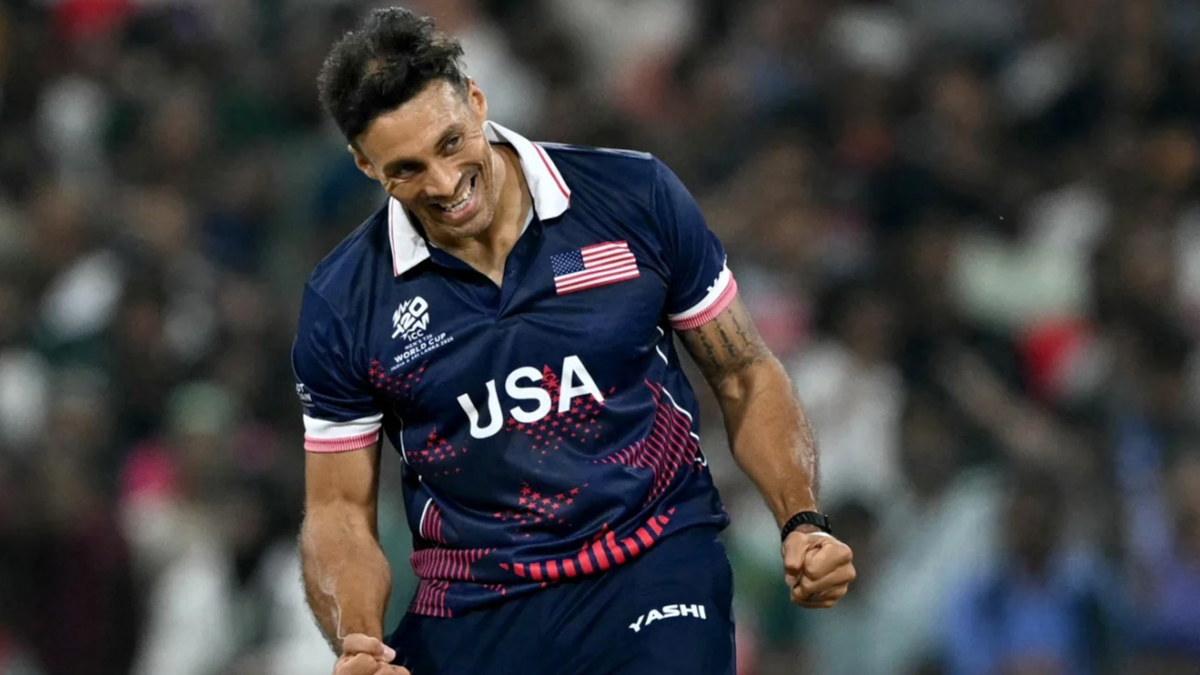
By Peter Della Penna (Twitter/X @PeterDellaPenna)Check out individual evaluations for every player who took the field for USA at the 2026 ICC Men's T20 World Cup in India and Sri Lanka.
Photo credit: ICC via Getty Images
Andries Gous – The opener came into the tournament with big expectations on the back of red hot form for Desert Vipers in the ILT20. Instead, Gous scored 19 runs off 22 balls in two innings against India and Pakistan, then sat on the bench with a stomach bug for the final two games.
Gous scored four fifties in his first ten T20I innings for USA, the last of which in that stretch was his career-best 80 not out against South Africa at Antigua in the 2024 T20 World Cup. He’s since made two fifties in his next 16 T20I innings for USA. He’s had plenty of starts in that stretch without kicking on to bigger scores. On the whole though, Gous’ franchise form has been better than his USA form – literally, his ILT20 and CPL averages are comfortably higher than his T20I average – which is peculiar considering his franchise opposition bowling attacks have often been of a much higher pedigree than his USA opponents.
Reading between the lines, Gous’ franchise setups are often far more settled with regards to daily routines than the sporadic nature of USA tours. If USA team management can find a way to put Gous into the same type of comfort zone he is accustomed to in franchise cricket, that may help unlock his best for USA on a more consistent basis.
Sai Mukkamalla – USA’s leading scorer in T20Is since the end of the 2024 T20 World Cup made 2 off 7 balls against India and then was harshly dropped v Pakistan. Whether it was a team balance issue or giving the 21-year-old a ruthless wakeup call, he came back with a vengeance against the Netherlands, top-scoring with 79 in a performance that would have nabbed Player of the Match honors on most occasions. He ended his tournament with 17 against Namibia.
Mukkamalla’s absence against Pakistan felt especially wrong considering he made 50 off 31 balls in the warm-up match against eventual runner-up New Zealand. Still only 21, he is a core player going forward for USA leading into the 2028 Olympics and next T20 World Cup.
Shayan Jahangir – Started the tournament on the bench against India, then came in and gave a kickstart to a struggling top order with his 49 off 34 balls against Pakistan. Jahangir subsequently made 20 off 14 against Netherlands and 22 off 18 against Namibia, the latter as part of a 68-run opening stand.
Jahangir was also versatile in the field. He took two very good catches out on the boundary against Pakistan, then shifted to wicketkeeper for USA’s final two matches. Considering Jahangir started the tournament outside of USA’s first choice XI, he wound up being one of their top performers.
If there’s a blemish to find, it’s that Jahangir didn’t go on to make a huge score after getting a start in all three of his innings. Regardless of whether or not he remains in the first choice XI going forward, the fact is that he’s putting healthy pressure on his teammates which results in the standard being lifted across the board for the entire team.
Monank Patel – After missing the India match in New York after his infamous injury following USA’s win over Pakistan in 2024, the USA captain failed when given a second chance on opening night of the 2026 T20 World Cup. Getting out second-ball can happen to anyone though, but he followed up with a far bigger stinker against Pakistan when he labored for 3 off 10 balls before playing a desperation shot to get out.
Monank then made 36 against the Netherlands and 52 against Namibia when the pressure was off. Even though his scores in those games contributed to wins, his lackluster showings against higher profile opponents were far more memorable.
Milind Kumar – The 35-year-old’s raw stats may indicate he was a steady contributor, but scratch beneath the surface and the reality is that Kumar’s batting held USA back in both of their failed chases against India and Pakistan. In a chase in which USA needed to score at better than eight per over, Kumar chewed up valuable time at the crease to end with 34 off 34 balls. By the time he got out, USA needed 91 off 48 balls, nearly 12 per over.
Similarly against Pakistan, he entered at No. 4 with USA needing to score at 11.90 per over to chase down the target. He coasted to 29 off 22 balls, showing hardly any sense of urgency. By the time he got out, USA needed to score at 17 per over. He was then moved down the order for USA’s final two matches, and the batting acceleration that happened in both wins was noticeable for his absence.
Kumar bowled four limp overs of offspin. In the field, he was a valuable asset with his catching and finished with a team-leading six catches. If team management places on emphasis on fielding importance building up to the next T20 World Cup, Kumar will probably remain in the picture. He is arguably USA’s best ODI batter and will continue to be a core contributor on USA’s path toward 2027 ODI World Cup Qualification. But when it comes to a T20 lineup for the 2028 T20 World Cup, Kumar’s batting role is far murkier.
Sanjay Krishnamurthi – The 22-year-old looked primed to breakout for USA following two solid innings in USA’s warm-up matches in Mumbai. He kept USA’s chase afloat against India with a battling 37 off 31 balls before getting out in the 16th over to Axar Patel. Had Krishnamurthi come in at No. 4 instead of No. 5, it’s very possible that the right-hander may have turned into USA’s cult hero of the 2026 event in the same way that Saurabh Netravalkar stole headlines in 2024. It wasn’t until USA’s final two matches that a desperately needed promotion finally occurred. After failing against both Pakistan and Netherlands, he turned in a Player of the Match performance with a maiden T20I half-century against Namibia in which he bashed 68 not out off 33 balls including six sixes.
Aside from his electric power-hitting, Krishnamurthi’s presence has resulted in elevated catching and fielding standards for the entire team. He took two catches, both on the boundary, but that doesn’t really tell how much of an impact he has in the field on a match by match basis. Like Mukkamalla, it’s easy to envision Krishnamurthi being a core player for the next decade in USA colors.
Shubham Ranjane – Having made his USA ODI debut on the tour of the UAE in October 2025, the 31-year-old Ranjane made his T20I debut in this event and was USA’s standout batter in the event. Replicating his middle-order finisher role that he has excelled in with Texas Super Kings and other franchises, Ranjane was highly efficient each time he came to the crease.
Against India, he top-scored with 37 off 22 balls. Against Pakistan, he made 51 off 30 balls. Such was his value that his selection in that match as a batter only was fully justified after a leg injury against India ruled him out from being able to bowl. Similar to Krishnamurthi, many fans will forever wonder if either result would have been different had Ranjane not been held back so long and instead been promoted at a time when the required run rate was climbing. Against the Netherlands, he made 48 not out off 24 balls and he even managed to make a tidy impact against Namibia with 5 not out off two balls.
Ranjane took one wicket in four overs of bowling. However, he’ll be most remembered in the field for his dropped chance off his own bowling with Suryakumar Yadav on 15. The India captain went on to make 84 not out as the defending and eventual repeat champs escaped the upset bug on opening night. In general, Ranjane’s fielding was average. He held onto straightforward catches, but shelled anything of moderate difficulty and above. If he can improve his fielding to complement his batting and bowling, he would be totally indispensable.
Harmeet Singh – The left-arm spinner had a somewhat Jekyll and Hyde tournament with the ball. He was arguably USA’s best bowler against India, even more so than Shadley van Schalkwyk, and finished with 2 for 26 off his four overs which perhaps doesn’t do justice to how effective he was. Against Pakistan, he was much more expensive and struggled for control as he delivered just three dot balls while conceding 1 for 41. He then turned in a Player of the Match performance against the Netherlands with 4 for 21 off his four overs before ending with an anonymous spell of 0 for 25 in three overs against Namibia.
In domestic T20 cricket, Harmeet has been a very effective pinch-hitting opener and a destructive finisher. After starting off his T20I batting career like a house on fire in his first six innings, including a pivotal 33 not out off 13 balls in a famous win over Bangladesh in Texas, his batting has cooled off considerably for USA and he was a non-factor with the bat in this T20 World Cup, ending with 7 runs off 15 balls in three innings. He took no catches, but is a generally reliable fielder. At age 33, it will be interesting to see how much pressure he faces to remain USA’s first-choice left-arm spinning allrounder once 27-year-old Hassan Khan becomes USA eligible.
Mohammad Mohsin – The 29-year-old debutant was USA’s most unsung hero during the T20 World Cup. He didn’t fill up the wickets column in the same way that van Schalkwyk did, but Mohsin was consistently USA’s best spin bowler in the tournament. He started off with 1 for 16 in four overs against India, then followed it with 1 for 27 against Pakistan before a best of 2 for 19 in three overs against Netherlands. He bowled a solitary over for 10 runs against Namibia in a chase where he wasn’t needed.
In the field, Mohsin was another definite plus contributor. He ended with two catches, but was extremely sure-handed and saved runs. With the bat, he didn’t get to showcase his full skillset and made 9 runs off 11 balls in three innings. Mohsin is the legspinner USA has been yearning for in their T20 setup ever since the departure of Timil Patel.
Shadley van Schalkwyk – USA’s runaway winner for best individual performer on tour. The 37-year-old continues to defy his age and did so in style in this event, finishing with 13 wickets. Remarkably, he maintained the tournament wicket-taking lead until the final when Jasprit Bumrah and Varun Chakravarthy both passed him.
Van Schalkwyk’s back-to-back 4 for 25 hauls against India and Pakistan were especially captivating because he wouldn’t have played either match were it not for the injury to vice-captain Jessy Singh. The expectations were low in general for van Schalkwyk considering that he took 0 wickets across 10.4 overs in four matches at the 2024 T20 World Cup.
USA management clearly were on the fence about including him at all in this event judging by the fact that he was not included in the squad that was submitted for the ICC’s official media guide. However, his performances in this event showed he still has plenty left in the tank going forward. The one area where he looked his age at times was in the field, where he had some uncharacteristically sloppy fumbles. But otherwise, it’s not out of the realm of possibility to envision him still being part of USA’s plans as a 40-year-old for the next T20 World Cup in 2028.
Ehsan Adil – Coming in as a squad injury replacement for Jessy Singh, Adil made his debut as a 32-year-old against Pakistan, but severely underwhelmed with 0 for 39 off three overs. He didn’t play again in the tournament and has since been dropped by MI New York and subsequently went undrafted in the 2026 MLC domestic draft. It makes one wonder if he’ll be a one-cap wonder for USA.
Nosthush Kenjige – Currently the second-longest tenured player in the USA squad having made his debut in 2017, Kenjige has often been the hard-luck spinner squeezed out by the emergence of Harmeet Singh and others since 2024. He only played one match against Netherlands, taking a wicket on his very first ball before ending with 1 for 20 off three overs.
Being a US citizen, Kenjige is in line to be USA’s first-choice spinner in the 2028 Olympics when he’ll be age 37. But with eligibility rules far more relaxed by comparison in ICC events, Kenjige may struggle to keep his spot in USA’s other squads going forward with ongoing competition from Harmeet Singh and the soon to be eligible Hassan Khan.
Ali Khan – The 35-year-old is USA’s longest serving player having made his debut in 2016, but the cumulative number of matches played in the last decade is comparatively few owing to a variety of factors. Foremost among them is injury, which has been a source of frustration for both Khan and USA fans. That reared its head again in the India match. After a scintillating opening spell in which he took one wicket and had another dropped off his bowling, Khan injured himself trying to make a sliding stop in the field before he could come back for a death spell. It meant he ended with figures of 1 for 13 off two overs and resulted in him missing the match against Pakistan.
Khan came back with figures of 0 for 18 off two overs against Netherlands and 1 for 43 off four overs against Namibia, though he looked less than 100% fit. If it was not a T20 World Cup, it is unlikely he would have played either match, though his willingness to gut it out was another instance of how highly valued he is in the team setup for big matches. The most noteworthy aspect of his performances was the renewed confidence and effectiveness in his slower ball, which was a key component of his breakout T20 franchise success across 2018 and 2019. After seemingly losing confidence in the delivery in subsequent years, Khan bowled it with both confidence and effectiveness in this T20 World Cup and showed what he’s capable of when firing on all cylinders.
Khan’s injury history makes it hard to project how much longer he’ll be a part of the USA setup going forward. But being a US citizen means he must firmly be in USA’s plans for the 2028 Olympics at a minimum.
Saurabh Netravalkar – USA’s all-time leading wicket-taker had the most disappointing tour of his career. Building up to an eagerly anticipated return to his boyhood home stadium, his dream turned into a nightmare when he leaked the most expensive figures in T20 World Cup history with 0 for 65 against India when the rest of the bowling unit returned 9 for 96 across 16 overs. He produced an underwhelming 1 for 41 against Pakistan, then was left out against the Netherlands though its ambiguous if that was due to the stomach bug working its way through the squad or was performance based. He came back into the XI for the last match against Namibia and took 1 for 27 in four overs.
Netravalkar was probably the last player anyone expected to flop in this T20 World Cup. But he ended up with two wickets at an average of 66.00 and an economy rate of 11.00. Part of his struggles were down to the lack of surprise factor he had against the bigger teams. Netravalkar remains process driven, but in part that can make him predictable. Often times that leads to positive results, but it can also make him easy to scout and plan against.
The odds are that this tournament was an anomaly based on Netravalkar’s overall body of work and he should be expected to bounce back. But a tournament performance like this is harder to reconcile at age 34 rather than 24. The older he gets means that a similar performance from Netravalkar in future will result in far less sympathy from teammates and fans.
[Views expressed in this article are those of the author and do not necessarily represent the views of DreamCricket management. If you have different views, we respect those views and urge you to provide your feedback, both positive and negative. Feel free to respond to the author via Twitter/X @PeterDellaPenna.]