Views
USA Cricket: 2026 ICC Women’s Challenge Trophy Tour Review Part 1 – Team Grades
2026 May 06 by DreamCricket USA
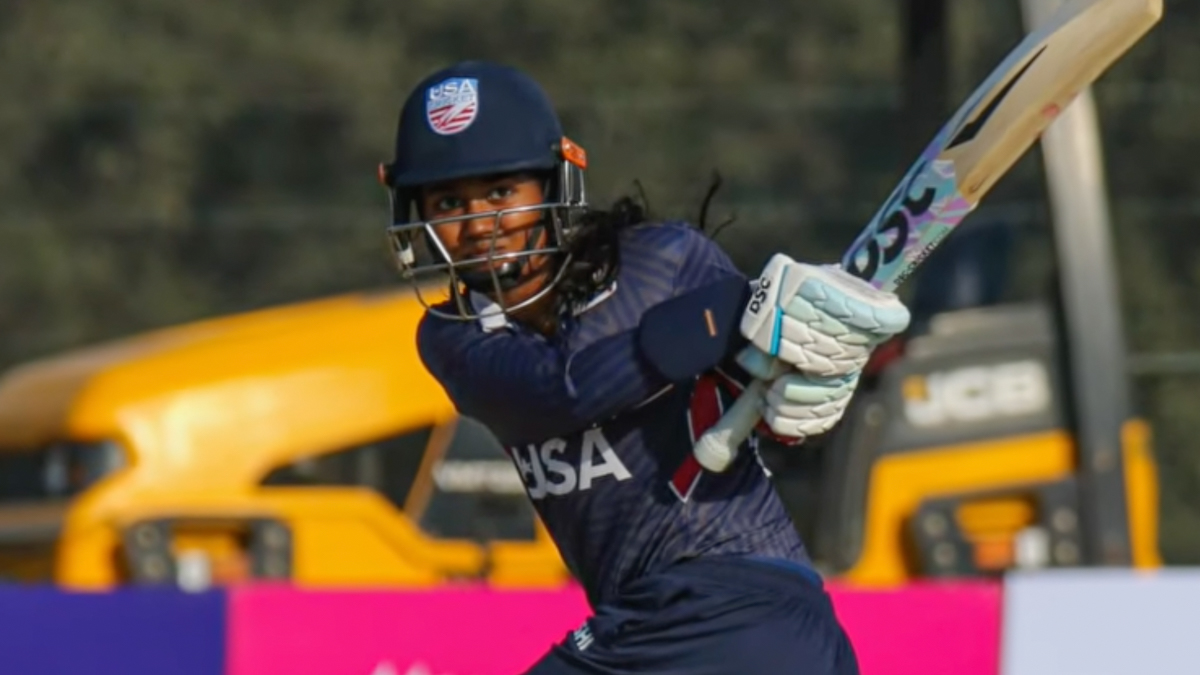
By Peter Della Penna (Twitter/X @PeterDellaPenna)Check out part one of the tour review for the USA Women's title-winning run in Rwanda at the 2026 ICC Women's Challenge Trophy. Up first are grades for USA's batting, bowling, fielding, tactics, and fitness.
File photo credit: Peter Della Penna
Batting: B
USA’s power-hitting is the area where they have made the biggest positive strides in the last 12 months and has led to them being a far more competitive outfit. In this tournament, they had the most fours (98), most sixes (13), most individual half-centuries (five), tied for the team with the most players scoring 100+ runs in the tournament (three, and had one other player finish on 99 runs), and tied for the most half-century partnerships (four).
USA’s power output is especially impressive compared to how far ahead of the other teams they were at the event. Nepal had the next most boundaries, striking 71 of them. The USA batting was paced by 17-year-old Chetna Pagydyala, who finished as the tournament’s leading scorer with 261 runs including two half-centuries. One of those was the 81 not out she made against Vanuatu to break former captain Sindhu Sriharsha’s USA Women’s record for the previous best individual score for USA in Women’s T20Is. The team also produced the three highest ever totals by USA Women in T20Is at this event with the high-water mark being the 162 for 4 they made in the second go around against Vanuatu.
Putting all of that aside, there were still obvious areas for improvement in USA’s batting. USA’s Powerplay segments were average at best, with the exception of their chase against Italy in which they reached 41 for 0 in six overs going after a target of 100. Otherwise, they regularly lost wickets and struggled to make a mark in the opening phase of play as their average score after six overs was 31 for 2.
The most glaring issue for USA was their running between the wickets, which was exceedingly poor. USA never ran a three at all during the tournament, and multiple times on tour in matches played both in Rwanda and Uganda they were called for short runs by umpires in situations where they were not being put under pressure by fielders. It was simply through carelessness and laziness, which embodied much of USA’s running. Whereas other teams were constantly putting pressure on USA’s fielders by stealing tight singles, pushing hard to turn ones into twos and twos into threes, USA never looked to do the same barring some rare exceptions. USA’s poor running was a major factor in the one-run loss they suffered to Rwanda, their only loss of the tournament. However, their strong power-hitting for boundaries compared to other teams meant that USA’s poor running never came back to bite them in other matches.
Other than that, USA’s batting lineup looked too often like they were coasting against what was some of the weakest bowling and fielding they will come across outside of regional ICC Americas events. They never put their pedal to the metal though, and it looked like they lacked any kind of killer instinct and ruthlessness that really sets better teams apart from those ranked below them. Rather than being clinically efficient, USA was allowed to get away with some poor habits and yet still win the tournament going away. That said more about the standard of competition than USA’s superiority.
Bowling: B+
Unlike at the T20 World Cup Qualifier in Nepal, where USA’s bowling performances had a favorable slant thanks to tournament leading wicket-taker Tara Norris, there was far more balance to USA’s bowling contributions in Rwanda. USA had nobody finish in the top three in wickets in Rwanda, but they had players ranked No. 4-6 on the list in pace bowler Maahi Madhavan, legspinning allrounder Sainavi Kambalapalli and offspinner Taranum Chopra.
Madhavan and Chopra were models of consistency, never taking more than two wickets in any match but always making regular contributions. When needed, other players did step up for match-winning hauls as Lekha Shetty and Aditi Chudasama both had four-wicket performances in USA wins. Kambalapalli (3.55 in 27 overs) and Chopra (3.62 in 16 overs) finished with the second and third best economy rates in the entire tournament. Chopra also had the second best average (6.44), though it was the best for anyone who bowled at least one over per match. Meanwhile, Chopra (10.66) and Madhavan (11.40) also ranked No. 3 and 4 in bowling strike rate at the event, a much fairer indication of Madhavan’s impact where she was sparingly used mainly with the new ball and at the death (bowled only 19 overs, only bowled a full four over quota twice) in spin friendly conditions.
When it came to bowling balance, USA’s pace bowlers took 18 wickets compared to 33 by the spinners. However, the pacers only bowled 45 overs whereas USA’s spinners sent down 91 overs. If strike rate is analyzed, the spinners took a wicket every 16.55 deliveries (or just under once every three overs) whereas the pace bowlers took a wicket once every 15 deliveries, or once every 2.5 overs. In essence, even though the spinners were bowling in favorable conditions, the pace bowlers marginally outperformed them in some ways. However, the spinners were generating far more chances and arguably would have finished with better numbers had USA’s fielders not let them down so badly. USA missed out on 19 chances in only seven innings in the field. All but three of those chances were missed off of USA’s spinners.
In terms of making consistent breakthroughs, USA’s bowlers only allowed one partnership of 50 or more runs during the tournament. It was the 77-run opening partnership put on by Rwanda in USA’s only loss of the tournament. Otherwise, the ability to take wickets regularly was a key reason USA kept sides pinned down. Statistically, only Nepal’s bowlers performed better. Only one USA bowler had an economy in which she conceded runs at a rate of more than a run a ball.
Fielding: C-
USA’s collective fielding was slightly below average in this event. USA took 55 wickets off a combination of 51 bowling dismissals and 4 runouts. USA also missed 19 chances, all of them off missed stumpings or catches. So they converted 55 of a possible 74 chances, meaning they only converted 74% of their wicket-taking opportunities.
USA’s fielding was still favorable compared to their opponents. USA’s opposition were only able to take 35 wickets and missed 22 chances, meaning their fielding was demonstrably worse in terms of converting just 61% of chances. USA’s missed chances cost them 198 runs in the field, or an average of 14.14 runs after the first missed chance if the same player was missed multiple times or finished not out. Comparatively, USA’s opponents gave away an extra 327 runs, and the average after the first missed chance was 27.25. So USA had a +13 average net positive per missed chance compared to their opponents.
When looking at the frequency of misses for overs spent in the field, USA missed a chance once every seven overs in the field, or essentially they were averaging three missed chances per match in the field. Their opponents were missing a chance once every five overs in the field, or four times per match.
USA’s other major issues are cutting off singles in the ring, slow footspeed to the ball and weak arm strength and accuracy when it comes to relays from the boundary. The collective fielding unit is a mix of very reliable fielders and some frustratingly inconsistent fielders. Pagydyala, Chudasama, Kambalapalli and Ritu Singh combined for 16 catches and zero drops. Madhavan and Vaghela each took an outstanding catch, but they also both dropped or misjudged multiple straightforward chances that resulted in misses. Madhavan took three catches but also missed three others. Vaghela completed four catches but also dropped or severely misjudged four other chances resulting in misses. With the exception of Taranum Chopra, who took four catches and had one tough chance put down while she was fielding at slip, most of the other players in the squad dropped more chances than they converted.
Following on that point, USA also suffers from the fact that they are regularly sending out an XI in which there are anywhere from three to five weak fielders that need to be hidden. Only one player can be placed at fine leg at any given time. The result is that means other players who could be more easily hidden in a collectively stronger fielding unit get exposed way more often because of the other weak links around them that make it more difficult to stay anonymous.
Tactics: B
USA’s bowling changes were generally very sharper in terms of doing what they could to not let opposition batters get settled. The only two bowlers who regularly bowled multiple overs consecutively were Kambalapalli and Chopra, and they were very effective. Others were able to adapt in spite of constantly being rotated in and out of the attack with good effect.
Earlier in the review, a point was made about USA’s lack of killer instinct on the batting side. An example of this was the reluctance to push more aggressive power-hitters up the order when there were less than five overs remaining. USA essentially kept the same batting order fixed the entire tournament without ever using floaters to move up the order when time was running out. It wound up not mattering much in terms of overall results, but it was a departure from their approach in the Women’s T20 World Cup Qualifier in Nepal when they were more dynamic in their approach to the batting order depending on match situations.
Some of this may have been a function of the poor form of Ritu Singh on tour. She had a miserable time in Uganda in the lead-in to this tournament in Rwanda, and the times she did bat in Rwanda she appeared to have lost confidence and was gunshy about pulling the trigger on her favored shots when the ball was in her favored lengths. Regardless, there could have been more proactivity in terms of attacking from strong positions whereas USA mostly laid back and coasted.
Fitness: C
The fitness levels for USA during the tour were okay, but not great. The temperatures were in the high 70s to low 80s in Rwanda daily with some humidity added in as well due to sporadic rain. USA’s energy levels generally looked about where they should be while fielding. But their energy levels were poor when it came to running between the wickets. This was highlighted during their one-run loss to Rwanda. USA lost that match because of fundamentals tied to poor running and weak fielding, and both issues could be traced back to players looking sluggish or energy-sapped. Again, USA could not complete a three at any point in this tournament whereas multiple opponents were able to.
The poor conditioning was especially peculiar considering that half of the squad was coming out of warm-weather climates for this tour, yet some of those players looked to be among the weakest when it came to stamina and conditioning out in the field and running between the wickets. Keep in mind that most of these players are also teenagers who are meant to be having gym classes as part of their regular high school curriculum. So they have multiple outlets to maintain physical fitness standards to a higher level than others yet appear to be unable to achieve or maintain the requisite standard needed to be an international cricketer. Rwanda's team was full of teenagers and their comparative fitness levels were superior to USA. That needs to improve and there’s no reason why it can’t be done in quick time.
[Views expressed in this article are those of the author and do not necessarily represent the views of DreamCricket management. If you have different views, we respect those views and urge you to provide your feedback, both positive and negative. Feel free to respond to the author via Twitter/X @PeterDellaPenna.]
Recent Views