USA Cricket: 2026 ICC Men’s T20 World Cup Tour Review Part 3: Outlook for 2028 Summer Olympics
2026 Mar 26 by DreamCricket USA
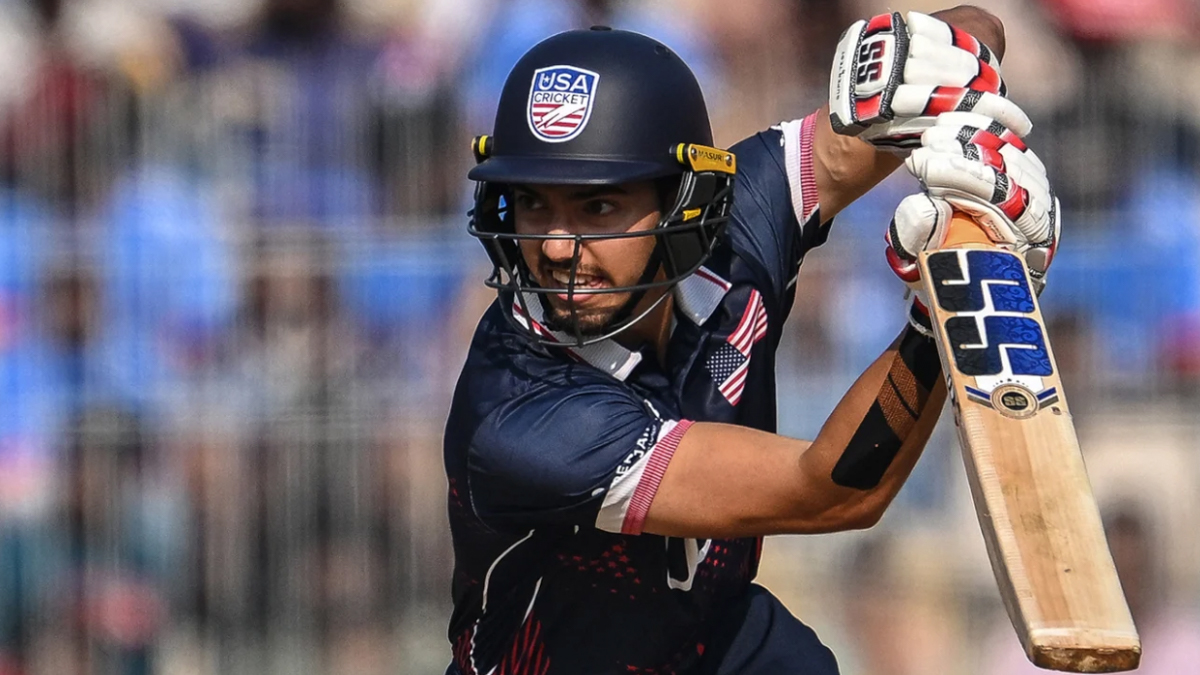
The time is now to start building toward the 2028 Summer Olympics, and that means focusing on US citizens like Sanjay Krishnamurthi as the nucleus of USA's T20 squad for the next 28 months.
Photo credit: ICC via Getty Images
By Peter Della Penna (Twitter/X @PeterDellaPenna)
Don’t burn bridges with USA’s overseas-based passport holders – One of the more peculiar aspects of USA’s selection policy for this T20 World Cup was team leadership’s stubborn refusal to even consider overseas-based citizens. It’s especially jarring because it is in sharp contrast to the USA Women’s management’s willingness to pick England-based players like Tara Norris and Ella Claridge for their Women’s T20 World Cup Qualifier held in Nepal in January.
The same players that the USA Men’s management harshly ignored – the likes of Ian Holland, Brody Couch, Cameron Steel – are precisely the kinds of players USA may need to call upon to field a competitive outfit for the 2028 Summer Olympics in Los Angeles. According to International Olympic Committee eligibility guidelines, each member of a representative squad must be a citizen for the country they represent.
Did team management even consider this situation when making decisions for the 2026 T20 World Cup squad? It would be gross mismanagement if players like Holland, Couch and Steel subsequently withdraw themselves from consideration for Olympic selection if they feel that USA management has treated them poorly and made them feel like the national cricket setup is not a group worth associating with.
One thing to keep in mind is that unlike many foreign Olympic entities, the USOPC does not pay athletes for appearing in the Olympics. All money earned by US athletes is achieved by personal endorsements and medal winnings. In the 2026 Winter Olympics, the USOPC paid gold medal winners $37,500, silver medal winners $22,500, and bronze medal winners $15,000. But the fame and recognition for being an Olympic medalist lasts a lifetime, whether it is future endorsements, public speaking fees, book deals or other financial opportunities.
There’s also the intangible quality of creating new fans for the respective sport when people can see that America has a winner and the financial trickle down effect that can have. Take a look at the surge in social media following that someone like figure skating gold medalist Alysa Liu received, not to mention any of the USA Men’s or Women’s ice hockey gold medal winners.
These are just some of the benefits that USA athletes can enjoy by being part of the cricket squad in the 2028 Summer Olympics and the impact they can have on generating a greater fan following and building more participation for the sport in the USA. So it would be foolish to not pick the best available and eligible squad, regardless of where they are residing.
Playing for USA in the Olympics is a far more tangible reality for a kid growing up in America than the possibility playing for USA in a World Cup, based on the difference in eligibility rules between the IOC and ICC. Much like any kid who watched USA ice hockey or USA figure skating in the 2026 Winter Olympics, there may be kids in different parts of America who are watching on TV two years from now and may be inspired to pick up a bat and ball believing that they too can play cricket for USA one day in the Olympics.
Put more faith in USA’s up and coming talents – When Jessy Singh went down injured, USA had two options to go to for a replacement. One was a 32-year-old who had already reached the end of his rope in Pakistan and has come to the USA hoping to squeeze a little more juice out of his career orange peels. The other was a ripe 22-year-old US citizen who has limited experience internationally but has stepped up and passed every challenge with flying colors when given an opportunity. So of course, team management opted for the former instead of the latter.
What was especially disappointing about the decision by USA leadership to go with Ehsan Adil instead of Rushil Ugarkar was not just the fact that Ugarkar had outperformed Adil on a consistent basis over the previous nine months. It’s the fact that by virtue of being a US citizen, Ugarkar is firmly in the picture for USA’s squad for the 2028 Summer Olympics whereas Adil is completely ineligible. This would have been the perfect opportunity to build up Ugarkar’s confidence and expose him to higher echelon players and situations as a stepping stone to the Olympic tournament in two years. If he can stand toe to toe with Glenn Maxwell in an MLC Final, there’s no reason why he wouldn’t have been able to rise to the challenge of a T20 World Cup.
A source of inspiration for Steven Taylor? – One of USA’s most talented allrounders of the modern era is currently a long way off the USA radar. Not only is he out of the USA national team setup, but he’s gone from being a first-round draft pick in MLC 2023 to being completely off the list of rosters for MLC 2026.
However, IOC guidelines mean that numerous current first-choice players will be non-participants for USA at the 2028 Olympics. That includes opener Andries Gous, and offspinning allrounder Milind Kumar. Taylor filled both roles for USA in the past. Can the dangling carrot of a place in a US Olympic squad motivate Taylor to train at an elite level again? Even though he debuted for USA in 2010, he is still only 32 years old and hopefully still has some fuel left in the tank for a career resurgence.
When Taylor is at his best, there are few more destructive players in the Associate world. He’s also one of a handful of players to have multiple five-wicket hauls in their bowling careers for USA. As for his fielding, one of the catalysts for USA’s upset over Pakistan in 2024 was his highlight-reel one-handed diving catch at slip. Taylor is a true triple-threat, and USA was spoiled having him in the lineup because he took on the role of multiple players at once, something that he can hopefully do again.
But that’s only if he can get his act together over the next 24 months to warrant selection. Taylor arguably coasted in his final years in the USA setup when his spot was never under threat from internal competition. In the MLC era, with merit-based financial decisions ever present, his non-performance for his franchises has provided ammunition for USA selectors to leave him out. He has still maintained a decent record in Minor League Cricket, tying for most half-centuries in 2025 with four in ten innings, but this highlights the gulf in class of bowlers he is able to bully at that level compared to what batters face when making the step up to Major League Cricket.
The time for picking Taylor on reputation alone has come and gone. If he’s going to get into the Olympics, it will be something he’s earned. But if he can earn it, it will be a big boost for the squad and may be the ticket to get him back into the squad on a regular basis heading into the 2028 T20 World Cup due to be held toward the end of that year.
Like for like replacements for ineligible players – If the Olympics began today, USA would be without Andries Gous, Milind Kumar, Shubham Ranjane, Shadley van Schalkwyk, Harmeet Singh, Mohammad Moshin and Saurabh Netravalkar. In other words, USA needs to replace the majority of their current first-choice starting XI with US citizens.
Some of that isn’t so hard to forecast. Nosthush Kenjige would come straight into the XI in place of Harmeet as a left-arm spinner. Ian Holland would be a perfect fit to take over from Shadley van Schalkwyk as a change of pace slower ball seamer.
Other roles are not as straightforward. Yasir Mohammad was booted out of the T20 squad after struggling to catch on and has had limited opportunities in ODI cricket as well. It would not be out of the realm of possibility to see Hayden Walsh Jr requalify to play for USA. His last appearance for West Indies was in October 2024, meaning he could potentially be clear to play again for USA by October 2027. He’s been there, done that with USA in terms of ICC matches, having played for the last time for USA in 2019. But would the lure of an Olympic appearance be enough to get him to recommit to USA colors? They certainly could use him not just for his bowling, but especially for his fielding.
In terms of a left-arm pace option, Ayan Desai has shown promise in limited opportunities for USA and was retained by Seattle Orcas for 2026. Conversely, Stephen Wiig followed up his USA debut in February 2025 by playing just one match for Texas Super Kings in MLC 2025 and was not retained for MLC 2026. Will he still be pushing for selection to be in the Olympic discussion?
Here’s what a projected USA Men's XI at the 2028 Summer Olympics might look like:
1 – Sai Mukkamalla
2 – Smit Patel
3 – Monank Patel
4 – Sanjay Krishnamurthi
5 – Shayan Jahangir
6 – Ian Holland
7 – Steven Taylor
8 – Nosthush Kenjige
9 – Ali Khan
10 – Ayan Desai
11 – Rushil Ugarkar
Reserve Options – Ali Sheikh, Brody Couch, Cameron Steel, Nitish Sudini, Yasir Mohammad, Rahul Jariwala, Hayden Walsh Jr, Vatsal Vaghela, Jessy Singh, Abhishek Paradkar, Stephen Wiig.
Pick players for upcoming T20 events based on the Olympic criteria – It’s no good waiting until July 2028 to start identifying roles for USA in the Olympic squad. For the next 28 months, picking players for any USA starting XI in subsequent T20 tours who are not going to be eligible to play for USA in the Olympics amounts to a wasted opportunity. USA has delayed, deferred and stalled with regards to this strategy for the last several years. But they can no longer afford to do so. US citizen players need as much exposure and opportunity as possible in the T20 squad to figure out who measures up to the standard required to take on the opposition USA will be expected to face in the Olympics.
By all means, continue to utilize Major League Cricket as the battleground for continuing to develop and evaluate domestic players who are ICC eligible but not IOC eligible to represent USA. The same goes for USA’s ODI squad in Cricket World Cup League Two. It would be unthinkable to leave out the likes of Andries Gous, Saurabh Netravalkar, Milind Kumar from USA’s ODI journey as they attempt to qualify for the 2027 ODI World Cup for the first time.
However, it’s important to not conflate the ODI squad with the T20 squad. Gous is a genuine Associate star on the T20 franchise circuit, but continuing to pick him in USA’s T20 squads for the next two years when he can’t play for USA in the Olympics serves little if any purpose. The same goes for Milind Kumar, Saurabh Netravalkar, Shubham Ranjane, Harmeet Singh and other non-citizens who won’t be Olympic eligible for USA.
This isn’t a skill issue. It’s a philosophical issue about how best to prepare USA for the 2028 Olympics. There are many reading this who will point out that the 2028 Men’s T20 World Cup will take place three months later in October 2028 and that USA may have a tricky task of trying to prepare two different squads simultaneously. Again, there is a case to be made that MLC will play a major part in fulfilling that role for T20 World Cup preparation. The only other exception that should be made in terms of picking the best ICC eligible players for USA in T20Is (rather than the best USA passport holder players for Olympic eligibility) would be for the 2027 ICC Americas T20 Regional Final, which is the event that USA will have to qualify out of to make it back to the 2028 ICC Men’s T20 World Cup.
T20 World Cups also come around every two years. Yet, the Olympic opportunity may never come around again for USA, considering that they are projected to be included in the Olympic cricket tournament by virtue of being the host country in 2028, and realistically they may not be in another Olympic cricket event for a very long time afterward if Olympic slots for non-hosts in 2032 and beyond are decided based on ICC rankings. That underscores the importance of giving the best Olympic eligible, emphasis on Olympic eligible, players every opportunity to prepare for success over the following two years leading into the 2028 Summer Olympics.
The squad for the Olympic cricket event has to be chosen by building around a nucleus of Sai Mukkamalla, Sanjay Krishnamurthi, Monank Patel, Ali Khan, Rushil Ugarkar and Nosthush Kenjige. The next 28 months cannot be wasted when it comes to figuring out who will be playing alongside them for USA in Los Angeles.
[Views expressed in this article are those of the author and do not necessarily represent the views of DreamCricket management. If you have different views, we respect those views and urge you to provide your feedback, both positive and negative. Feel free to respond to the author via Twitter/X @PeterDellaPenna.]
Recent Views