Views
USA Cricket: 2026 ICC Women’s T20 World Cup Qualifier Tour Review Part 3 – Outlook for the Future
2026 Feb 23 by DreamCricket USA
By Peter Della Penna (Twitter/X @PeterDellaPenna)The USA Women made great strides in Nepal at the most recent T20 World Cup Qualifier. But there's still some glaring holes that need prioritized attention to maximize results for USA going forward.
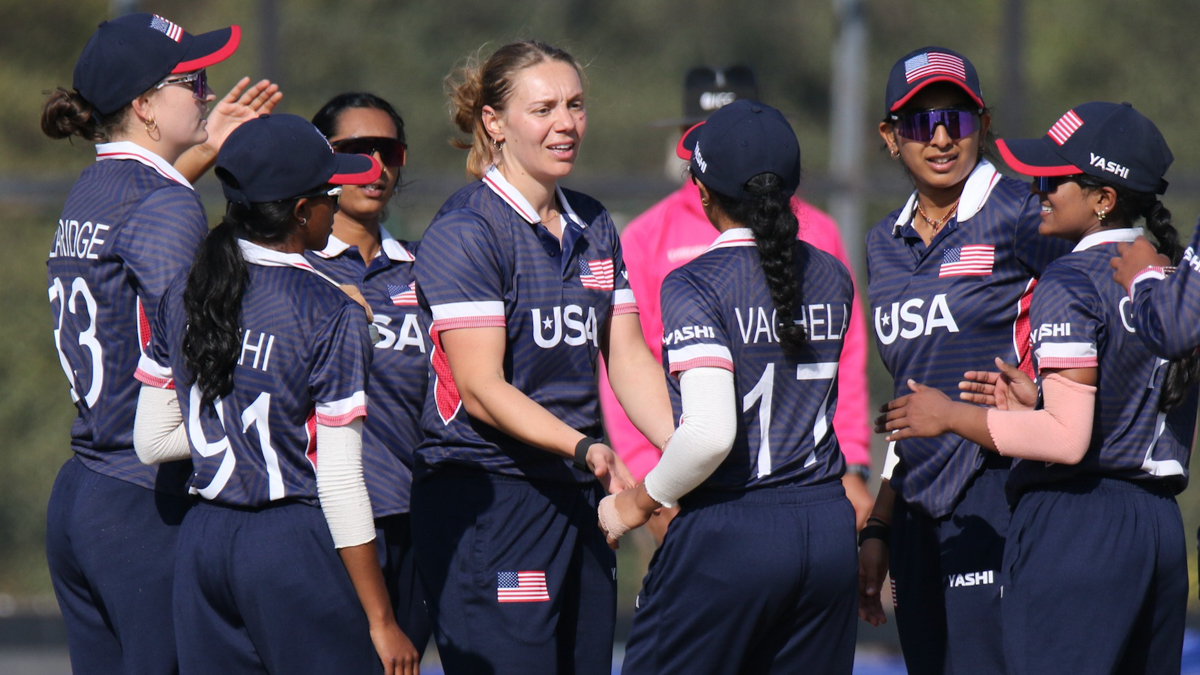
Photo credit: Peter Della Penna
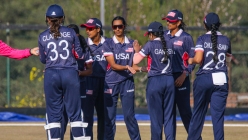
Continue to improve fielding standards – It’s hard to quantify how dramatically improved the overall performance of the team was by having even just a few good fielders in this squad compared to previous T20 World Cup Qualifier squads. But the best piece of evidence is that Chetna Reddy Pagydyala took seven catches in the tournament. For context, that is more than the entire USA team catching output in 2024 (one), 2022 (five) and 2019 (four) for all non-wicketkeepers.
Yet, there were still numerous weak links that were hard to cover for in the field. USA might be able to come up with excuses for why their batting or bowling is behind other teams in the tournament, in particular the four squads who clinched World Cup berths, but there is no convincing reason why the team should still be deficient in the fielding department as a collective unit compared to other teams.
USA had a very good fielder in their U19 pipeline in Tya Gonsalves, who was part of their 2023 ICC U19 World Cup squad in South Africa. But following that year’s U19 World Cup, she chose to pursue university in Australia in part because opportunities for advancing her cricket ambitions within the USA at that point in time were limited. Because she is not an American citizen (she is an Australian citizen), it also means that she is highly unlikely to return and can be added to the list of what if players (Lisa Ramjit, Snigdha Paul) that have been lost to the US women’s system.
Placing a higher emphasis on fielding could see players like the 20-year-old pair of Chetnaa Prasad and Pooja Shah reemerge as options. Shah’s only T20I for USA came in 2024 when she made 20 not out off 15 balls against Sri Lanka at Women’s T20 World Cup Qualifier in the UAE. Prasad debuted for USA at the 2021 ICC Americas Regional Qualifier held in Mexico in 2021 and was a key figure in USA’s undefeated champion squad at the 2025 ICC Americas T20 Regional Qualifier in Argentina. She last played for USA in May 2025 during the home ODI series in Texas against Zimbabwe.
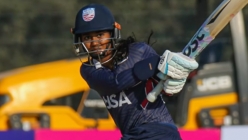
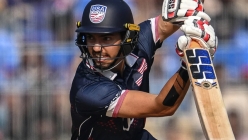
Continue to emphasize six-hitting – In addition to USA’s upward trend when it comes to fielding, the other factor that put them in position to win matches in this event compared to their dismal record in the past was their new-found power-hitting. One only has to look at their previous results against Thailand compared to the win USA had over Thailand in this event to show the current disparity between the two sides. In this way, few players had a greater batting impact on USA’s results than Ritu Singh and her flurry of sixes as a finisher.
Singh’s approach is something that other players should be looking to emulate going forward. She has described herself as someone who started off primarily as a bowler before her batting has begun to take precedent. Singh is far from the first who has seen one skill overtake another when transitioning from junior to senior level.
In men’s international cricket, three fairly prominent examples at Associate level are Ireland’s George Dockrell, Netherlands’ Pieter Seelaar and Bermuda’s Delray Rawlins. All three of them made their senior team debuts as teenagers batting at No. 11 for their respective countries while playing as specialist left-arm spinners. All three later on transformed into menacing power-hitters in the middle order. Seelaar’s career-best T20I knock came against Scotland in 2019 when he made 96 not out off 49 balls at No. 4 with nine fours and five sixes. Dockrell showcased his power-hitting in the 2026 Men’s T20 World Cup against Oman when he bashed five sixes in an unbeaten 35 off nine balls. Rawlins made 70 off 42 balls with six sixes against Canada in the Men’s Regional Qualifier last summer.
The phenomenon is not limited to men’s cricket alone. Just looking at the Scotland Women’s team, Katherine Fraser made her international debut in 2019 as a scrawny 14-year-old offspinner batting at No. 11. In the Women’s Qualifier in Nepal, the now 20-year-old was opening the batting alongside Darcey Carter and provided some explosive starts with her six-hitting. Three times she made 40 or more at a strike rate of better than 130. Her 36 off 26 balls against Ireland featured four fours and two sixes in a win that played a significant role in helping Scotland secure a second consecutive Women’s T20 World Cup berth and she capped off her tournament with a handy burst of 17 off 10 balls against USA.
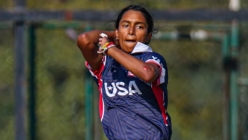
In a similar vein, there are several USA players who focused on one skill set at U19 level who may provide more value if they can develop serious power-hitting at senior level. At the top of the list is Jivana Aras. The Seattle native is still only a few years into playing cricket after transitioning from soccer and most of her early appearances in the senior team have been as a specialist bowler. However, she has the height and raw physical strength to clear the boundary with the same regularity as Singh. If Aras is able to hone her power-hitting skills, that may be the 21-year-old’s ticket into a return to the USA squad having not played since the June 2025 tour of the Netherlands.
The bottom line is that Singh has provided a blueprint of power-hitting batting success for others to emulate. Whether or not anyone else follows suit remains to be seen.
Keep overseas passport holders involved – One of the encouraging parts of the different philosophical selection approach to the USA Women’s squad is that they have not turned away overseas-based passport holders. While those involved in the USA Women’s setup should be commended for following through on a commitment to develop majority homegrown squad (especially in contrast to the men’s squad), that doesn’t mean that USA can afford to overlook overseas-based passport holders who can strengthen the quality and depth of the squad.
To be fair, those in charge have done a reasonable job to ensure overseas-based players are still considered for selection in the women’s eligibility pool. The England-based pair of Tara Norris and Ella Claridge made invaluable contributions to the squad on this tour.
There is another player currently worth keeping an eye on though. Artemis Downer, a 20-year-old in the Middlesex system, was named the county’s Women’s Emerging Player of the Year for the 2025 season after making 327 runs in the Women’s One-Day Cup including a best of 106 not out against Gloucestershire as a 19-year-old. Among her teammates are Scotland Women’s players Saskia Horley and Pippa Sproul. For transparency’s sake, Middlesex were playing in Division Two of the competition, which is a step below the top-tier England Women’s domestic franchise competition in which Norris (Thunder) and Claridge (The Blaze) are contracted to play in. Still, it’s a better standard that anything currently on offer in terms of a summer-long competition within the USA.
Norris made her USA senior team debut at age 23 while Claridge got her first USA cap at age 22. Downer made an appearance at a squad selection camp in Florida during the winter of 2024-25 but hasn’t been seen around the USA setup since then though that happened before her breakout season last summer for Middlesex. However, if Downer continues on the same trajectory from last summer, it will become much harder to ignore her going forward if she is capable of scoring centuries in domestic cricket in England whereas few players in the USA setup have shown capability of crossing 50, let alone 100.
Get more fixtures! – As has been the case with the men’s team, one of the major hurdles to continued improvement is the lack of fixtures that the team plays in between ICC T20 World Cup Qualifiers and/or T20 World Cups. USA’s next scheduled event is a newly designed ICC Women’s Challenge Trophy in Rwanda coming up in April. USA will be joined there by the hosts, Nepal, Italy and Vanuatu. Beyond that, there is a black hole on the USA Women’s fixture calendar.
Part of the reason why the USA Women lost ODI status in 2025 is that it was linked to their T20I status. Because their ranking was so low, primarily due to lack of fixtures, it meant that not only did USA lose Women’s ODI status but the hefty six-figure annual ICC performance payment linked to it. USA’s Women’s T20I ranking is far below what it should be, and there are zero USA players to be found in the ICC Women’s T20I Batting, Bowling and Allrounder Rankings. All of these things are important markers when it comes to selling sponsorships and cultivating interest and it all starts with playing more matches.
The big question mark in all of this revolves around who is in charge of trying to facilitate such fixtures now that USA Cricket doesn’t technically exist following a federal judge’s ruling in January. Does the ICC want to take a more active role? Or will another caretaker administration be the ones who are shouldering the responsibility to follow through? Whatever the case may be, it would be a sad outcome if the women’s administrative setup don’t learn from the mistakes of the men’s side who failed to schedule enough T20Is between the end of the 2024 Men’s T20 World Cup and the start of the 2026 Men’s T20 World Cup to keep the players sharp and engaged enough push harder for wins against an elevated standard of competition.
Recent Views