Views
USA Cricket: 2026 ICC Women’s T20 World Cup Qualifier Tour Review Part 1 – Team Grades
2026 Feb 04 by DreamCricket USA
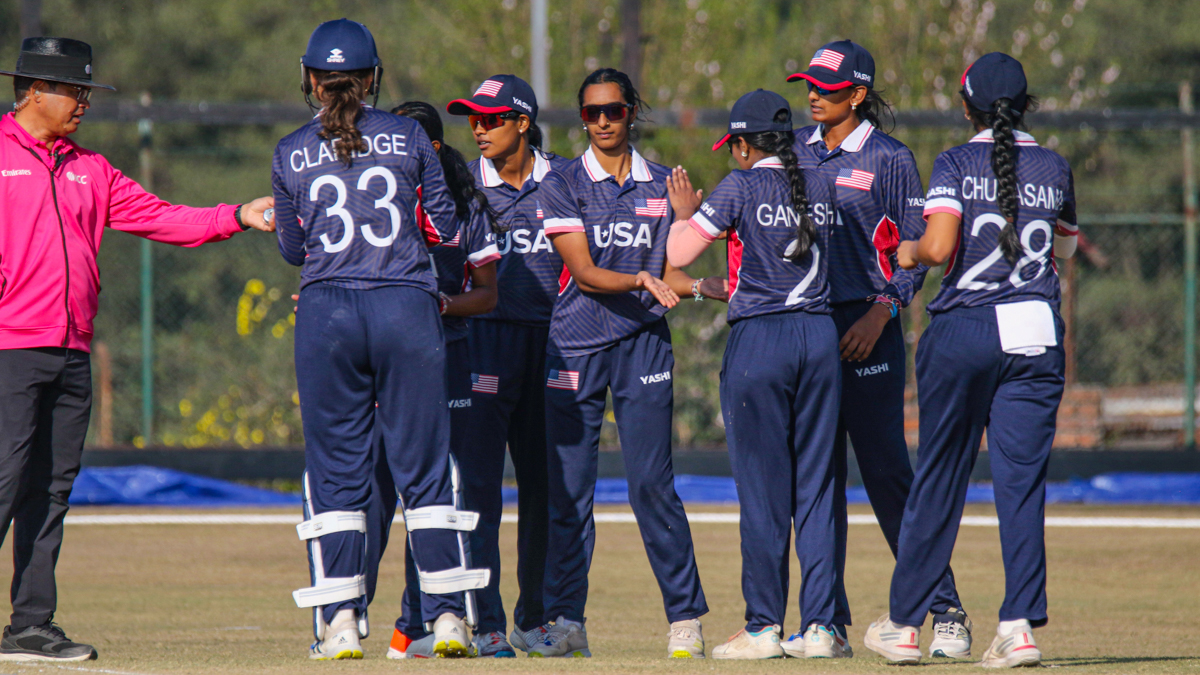
By Peter Della Penna (Twitter/X @PeterDellaPenna)Here's another round of evaluations for the USA Women's team category disciplines on the Women's T20 World Cup Qualifier tour of Nepal, including batting, bowling, fielding, tactics and fitness.
Photo credit: Peter Della Penna
Batting: B-
There are two ways to measure USA’s batting progress. One is weighed against their performances in previous editions of this tournament. Another is weighed against their opponents within this year’s edition of the tournament.
At both of the Women’s T20 World Cup Qualifiers held in the UAE in 2022 and 2024, USA did not hit a single six. Stunningly, they finished with the second-most sixes of any team in Nepal, ending with 15 behind Bangladesh’s 31. Ritu Singh contributed the most in this regard, finishing with the second-most sixes in the tournament (9) and the second highest strike rate (165.51). USA also tied with Ireland for the second-most number of players in their team to hit a six, with six different USA players clearing the ropes. Again, that was second only to Bangladesh who had seven different players contribute to their tally of 31.
A USA team that also struggled mightily to cross 100 in each of their previous three appearances at the Women’s T20 World Cup Qualifier – USA’s average completed innings score was 77 in 2019; 88 in 2022; 94 in 2024 – now had the ability to make 137, 138, 129 and 137 in very respectable displays against the four teams that qualified for the World Cup, and could chase down targets of 145 and 111 in wins over Namibia and Papua New Guinea before posting a total of 128 against a historically miserly Thailand bowling and fielding unit. Again, their lowest total in a completed 20-over innings in this event was still better than their highest completed innings total in any match between 2019 and 2024 at this same tournament, when they made 117 in the last place playoff against UAE in 2022.
The success of USA’s newfound power-hitting allowed them to accumulate a total of 29 double-digit impact scoring overs across their seven matches. Essentially, they averaged four per match whereas they could only produce a grand total of six such overs across four matches in the 2024 edition of this tournament in the UAE.
USA’s batting lineup collectively was better than the sum of its parts. USA only had one half-century scored by an individual in the tournament, Ella Claridge’s 70 in a win over Namibia. That was tied for the second-fewest ahead of only PNG, who recorded none. They also only had two half-century partnerships: Pagydyala and Bhogle’s 69-run opening stand vs PNG; Pagydyala and Claridge making 61 together vs Scotland. That was the fewest number of half-century batting partnerships of any team who made it to the Super Six stage. Thailand, Scotland and Ireland each had three, Netherlands had five, and Bangladesh had five half-century partnerships plus two century stands.
However, all of this is balanced against USA’s frailties in other areas, specifically in the Powerplay. Nowhere was this highlighted more than in the Scotland match where Scotland blasted 10+ runs in every over of the Powerplay to have a blistering start of 75 for 2. By comparison, USA shuffled along to 44 for 1, securing just one double-digit over in that sequence. It highlighted USA’s overall struggle to build early momentum in the Powerplay, something they glaringly failed to do in the match against the Netherlands when they stumbled to 23 for 1, which was the fifth-worst of the 58 Powerplay batting innings in the tournament.
Across the tournament as a whole, USA’s average Powerplay score was 37 for 1. That put them seventh of the 10 teams, ahead of only Namibia (36/2), Zimbabwe (33/2), and Thailand (31/1). At the top of the list was Scotland, whose 75 for 2 against USA was the best Powerplay of the tournament and they topped the Powerplay averages as well at 46 for 2.
One of the most peculiar nuggets within this is that USA’s highest Powerplay score was also the match in which they lost the most wickets, reaching 49 for 3 against a solid Ireland bowling attack. The same Ireland unit strangled the Netherlands batters into submission by wrecking the Dutch lineup to leave them at 21 for 4 before eventually bowling them out for 45. The figures show that when they wanted to, USA’s top-order had it within themselves to take risks and have a measure of success. But more often than not they defaulted to a conservative approach.
That conservative approach was most evident in team leadership’s stubborn refusal to move Isani Vaghela out of the No. 4 slot for the entire tournament. Other players were punished more for failing less often in their respective batting roles. Time and again, USA’s scoring approach turned from relative hares to tortoises the moment the second wicket fell.
Looking at the contributions of the No. 4 position across the tournament, USA had the third fewest runs (60 in seven innings), the lowest average (10.00), the fewest fours (4), fewest sixes (0) and the fourth lowest strike rate (81.08). All of the teams that had worse output in each of these respective categories compared to USA were teams that did not reach the Super Six. Namibia and Zimbabwe both produced more runs at No. 4 than USA did, meaning they scored more runs in four matches at that position than USA managed in seven matches. See below for a more detailed breakdown.
2026 Women’s T20 World Cup Qualifier batting output at No. 4:
Bangladesh - 207 runs at 41.40, 118.97 S/R, 25x4, 4x6
Thailand – 205 runs at 41.00, 91.51 S/R, 19x4, 2x6
Scotland – 168 runs at 28.00, 124.44 S/R, 23x4, 2x6
Ireland – 168 runs at 28.00, 123.52 S/R, 23x4
Netherlands – 154 runs at 30.80, 104.76 S/R, 22x4, 1x6
Zimbabwe - 95 runs at 31.67, 106.74 S/R, 12x4, 2x6
Namibia – 75 runs at 18.75, 75.00 S/R, 5x4
USA - 60 runs at 10.00, 81.08 S/R, 4x4
PNG - 58 runs at 14.50, 79.45 S/R, 5x4, 1x6
Nepal – 40 runs at 10.00, 75.47 S/R, 5x4, 1x6
On the whole, USA’s batting has improved dramatically since this same tournament in 2024 and is the biggest reason why USA won three matches, advanced to the Super Six and went into the final match with T20 World Cup qualification still very much within reach. They really only need to tweak a few things on the batting side to close the gap between them and the four teams that qualified ahead of them.
Bowling: C
USA’s bowling was hard to grade because they were never outright embarrassed in any match. However, there was a massive drop-off between everyone else in the bowling lineup compared to Tara Norris, who took home the Best Bowler award after finishing as the leading wicket-taker in the tournament with 15 wickets in just six matches. She also had the fourth-best average in the tournament of 8.60. USA’s next best wicket-taker was 16-year-old pacer Maahi Madhavan, who claimed seven in five matches.
In spite of Norris’ brilliance with the new ball, she had little support in the Powerplay as any pressure she managed to apply was frequently released by her bowling partner at the opposite end. Four teams in the tournament produced their highest Powerplay total against USA: Bangladesh – 54 for 1; Namibia – 45 for 2; Netherlands – 57 for 1; and Scotland – 75 for 2. USA’s bowlers allowed four half-century partnerships to develop as well, tied for the second-most out of all the Super Six teams. Only Scotland conceded more with five, but their batting unit was strong enough to bail them out if their bowlers conceded a big total. Of the half-century partnerships conceded by USA’s bowlers, one each came against Bangladesh, Namibia, Ireland and the Netherlands. All but the one against the Netherlands – it was their first-wicket partnership – unfolded straight after Norris’ opening spell had ended.
In what are traditionally spin friendly conditions in Nepal, USA’s slow bowlers were a humongous disappointment. Out of the 41 wickets USA took in seven matches, just nine were taken by spinners. Similarly, USA’s spinners did a poor job of containing or slowing down opposition lineups. USA’s spinners had a 7.53 economy rate in 60 overs and an average of 50.22. Contrast that with USA’s pacers, who had a 6.63 economy in 71 overs and an average of 14.72. Quite often it was USA’s pace bowlers who helped pull back the scoring rate in the middle overs, rather than the spinners.
The biggest issue USA has on the bowling side is depth. When Norris is not around, the team’s standards fall off a cliff. They must have better and deeper options so that the squad is not so heavily depending on one player to shoulder the load when it comes to tying down the opposition.
Fielding: C+
USA’s fielding was upgraded significantly in this tournament compared to previous editions. The biggest addition was Chetna Reddy Pagydyala, who was inexplicably left out of USA’s 15-player squad in 2024 when she had been a core member of the successful qualifying group at the Americas Qualifier held in Los Angeles in September 2023. Despite being a 17-year-old, she has the calmness and assuredness taking catches on the boundary of many Full Member fielders. She led the team with seven catches, and probably should have had at least three more if the fielding placements were not lax at pivotal times which resulted in Pagydyala being placed in the wrong position only to have another fielder drop a chance on the straight boundaries in the slog overs where Pagydyala had taken most of her catches. The next most catches for any outfielder in the USA squad was two, further highlighting her value.
The presence of Ella Claridge behind the stumps was a further upgrade compared to options in the past. Sindhu Sriharsha was more than adequate behind the stumps for USA and Anika Kolan has done a serviceable job too. But seeing Claridge opens everyone’s eyes as to the difference in standards between okay, good and excellent. On the tournament she had three catches and eight stumpings. Two of the stumpings she completed standing up to Norris (one to dismiss Namibia’s Yasmeen Khan and the other to get Thailand’s Sunida Chatturongratana) were world-class. She did have a pair of missed stumpings, but those two fumbles still make it hard to take the shine off the superlative job she did behind the stumps because it wasn’t just the dismissals but also her speed and athleticism getting out from behind the stumps to deny quick tap and run singles, something Kolan in particular struggles mightily with.
One of the running gags from previous tournaments was USA’s lengthy streak of matches in the field without completing a runout. USA completed two runouts in the tournament, both in the death overs against Ireland when batters were running on contact. Although USA’s fielding is vastly improved, they don’t have anyone to fear taking a single on in the ring, nor anyone to fear taking on their arm for a second run from the boundary.
More problematic is that teams routinely take on USA’s boundary riders for a second run because the collections by fielders are often bobbled. That pressure from opposition batters running between the wickets also caused multiple rushed or panicky attempted collections in which the ball went straight through the hands or legs of fielders turning a single or a two into a boundary. Simply put, USA’s fielders do not collect the ball crisply on a consistent basis. At a minimum, it opens up the door for a cheap second run to allow the striker to maintain strike while at other times the striker benefits with a boundary from a sloppy effort. USA’s selection balance is also often impacted by having to leave out certain players because they are weak in the field and there are only so many weak fielders that USA can hide at any given time.
In terms of missed chances by USA in the field compared to their opponents, USA actually missed half as many chances as their opponents, but the chances they missed proved to be costlier on average. USA’s opponents missed 26 chances in seven matches to allow USA 293 unearned runs with an average score of 18.31 extra runs made after the first dropped chance. USA’s fielders conceded fewer unearned runs as their 13 missed chances resulted in 223 unearned runs, but the average score after the first missed chance was an extra 27.88 runs on average. It means USA averaged a net minus-9.57 runs per game in the field. Considering they lost tight matches to Bangladesh by 21 runs and Ireland by 16 runs, fielding had a very significant impact on those results.
In simpler terms, USA’s drops came against better players who went on to make a bigger impact when given a second life. The best example of this was Namibia’s Yasmeen Khan, who was dropped on 14 and 53 and wound up ending with 74 off 47 balls. That was the second-highest individual score of any player in the tournament only behind Netherlands batter Sterre Kalis’ 87* off 60 balls v Scotland. Among the others that were costly for USA were missing two chances on Ireland’s Leah Paul on 31 and 51, who wound up being Player of the Match with 67; Konio Oala being dropped on 2 and making 41 off 40 for Papua New Guinea; Naruemol Chaiwai being dropped on 8 and making 31. USA had to sweat far more than was necessary for the wins against Namibia and PNG when they should have coasted had their fielding been better.
Tactics: C-
USA usually employed very good tactics in terms of their pre-match plans, but often struggled to adjust their tactics on the fly during in-progress match situations. Having Ritu Singh come in as a middle-order finisher in most matches was USA’s most effective tactical decision in terms of pre-match planning. Keep in mind that Singh has been used as an opener before for USA and in an infamous loss to Uganda at the previous T20 Qualifier in the UAE, she was sent in at No. 3 and hogged 10 overs at the crease to crawl to 16 off 29 balls before she was runout. Sending her in generally with about five overs ago cleared her head and reduced her role to the most simplistic terms: just go out and bash it and she wound up arguably having the most success and most consistent positive impact on the batting side for USA.
On the flip side, the refusal to shift Vaghela out of the No. 4 slot by the end of the group stage when it was clear she was not fit for the role turned out to cost the team in the Super Six stage. As part of this, it was a head-scratching decision to hold back Pooja Ganesh against Scotland when she had excelled brilliantly one match earlier with 35 not out off 25 balls after being promoted to No. 5 against Thailand. Or even before play began, a better risk-reward option would have been to play Gargi Bhogle, who had made scores of 35 and 36 in her two innings, in place of Vaghela who had been reduced to a specialist bat after the ICC announced she had been banned from bowling. Not only does Bhogle offer more power, but is also left-handed and would have introduced matchup problems.
Not only did USA go the conservative tactical route pre-game by keeping Vaghela in over Bhogle, but they stayed conservative with the match in-progress by refusing to promote someone else above Vaghela. The strategy was almost a polar opposite of the famed Netherlands chase against Ireland in the 2014 Men’s T20 World Cup when captain Peter Borren moved himself up from No. 5 to open the chase and swing for everything knowing they needed to track down Ireland’s 189 in just 14.2 overs to pass them on net run rate and advance into the main draw of the tournament. Borren wound up hitting 31 off 15 balls as part of a 91-run Powerplay that set them on course for one of the most famous chases in T20 World Cup history.
USA could have moved Claridge up one spot to open, or Norris to open as a pinch-hitter, or even Ganesh up to open. Singh has failed as an opener in the past for USA, but sending her up to access the Powerplay was also worth a risk in an all-or-nothing chase rather than hold her back until the required run rate had spiraled out of reach. Instead, they stayed with the status quo top 4, took few if any risks, and the result was anti-climactic. USA’s players frequently speak about how the new team batting mantra under head coach Hilton Moreeng is all about “Being Brave”. But the tactical approach in the Scotland chase was anything but.
USA’s situational awareness, particularly from tailenders, see-sawed back and forth between good and bad. The fact that they helped ensure USA batted a full 20 overs and added crucial late runs against Bangladesh and Ireland was pivotal in the context of the net run rate tiebreaker later in the tournament. However, there was also the befuddling approach taken by Geetika Kodali after entering at No. 10 against Thailand, trying to play glory shots rather than tap a single to get Ganesh back on strike.
Some of the other tactical in-game issues were down to field placements and not having the best fielders in the best positions, or on the flip side allowing vulnerable fielders to be placed in high-traffic positions where missed chances or fumbles turned singles into fours. USA botched the fielder placements (as in, having weak fielders in what turned out to be catching chance positions) late in the first innings of the Ireland match, something that may have cost them 10-15 runs in a match with a 16-run margin. Some of these things are quite subtle compared to more obvious things like bowling changes, which were generally not an issue. But all added up it can make a difference in matches decided by small margins.
Fitness: B-
The core of USA’s squad first picked as teenagers in 2021 have finally started to adjust to the pace of international cricket. The running is better, the strength is better, the conditioning is better than it was in 2021-22 when USA were thoroughly outclassed by teams at this event. USA picking a slew of ageing and unfit 30-40 somethings (or even a few 50-year-olds) as was the case in the 2010s has more or less vanished in the rearview mirror.
Still, USA lacks a degree of overall athleticism. Their awareness and aggression when it comes to running between the wickets is comfortably behind other teams. Their first reaction step and footspeed to the ball in the field has improved with a handful of players, but collectively it is way behind other teams and is a reason for so few runout opportunities. The same goes for their arm strength in the field.
The contrast of all of these things was highlighted in jarring fashion by the runout of Ritu Singh by Darcey Carter in the final match against Scotland. The runout was initially created by a superb effort made by Kathryn Bryce at the long-off boundary to dive and stop the ball from going over the rope for four. Carter then backed up coming across from long-on and fired in a rocket of a relay to the bowler Abtaha Maqsood. There were three elements in that sequence that Scotland executed perfectly – running to stop ball with a diving stop at the boundary, backup relay with strong arm, clean collection over the stumps to get the bails off – that USA consistently struggles with when they are in the field. Combine that with the fact that USA’s runners slowed down momentarily – possibly expecting the ball to go for four – when in reality they should still have been able to complete two runs comfortably exposed the difference in fitness and awareness between the two sides. Scotland is always switched on whereas USA is prone to lapses in concentration in a variety of ways. Most often those lapses can be traced back to fitness. It’s better for USA than it was in the 2010s, but still has a long way to go.
[Views expressed in this article are those of the author, who was present in Nepal for all but one of the USA Women’s team’s T20I matches on tour, and do not necessarily represent the views of DreamCricket management. If you have different views or viewpoints, we respect those views and urge you to provide your feedback, both positive and negative. Feel free to respond to the author via Twitter/X @PeterDellaPenna.]
Recent Views