Views
USA Cricket: 2026 ICC Women’s T20 World Cup Qualifier Tour Review Part 2 – Player Evaluations
2026 Feb 11 by DreamCricket USA

By Peter Della Penna (Twitter/X @PeterDellaPenna)Check out part two of the tour review of the USA Women's side at the 2026 ICC Women's T20 World Cup Qualifier in Nepal featuring detailed performance evaluations for all 15 players in the USA touring squad.
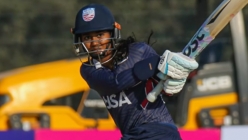
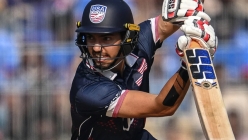
Photo credit: Peter Della Penna
Disha Dhingra – The right-handed opener is one of the more perplexing ones to analyze. She made 61 runs off 59 balls in five innings. In all but the final match against Scotland when she got out for a second-ball duck, she got promising starts and looked set to take off for something bigger before getting out. After scoring 57 off 45 balls in a one-run loss to Zimbabwe at Grand Prairie in April 2025, Dhingra’s batting has stagnated.
Dhingra is terrific at punishing the short and wide ball for four behind point. But when she’s not getting a filthy half-tracker, she struggles to rotate the strike and dot balls tend to pile up, evidenced by 54% of her deliveries being dot balls. A bare minimum scoring shot percentage for any international opener is in the 50-55% range, though elite openers are scoring off 60% of their deliveries or higher. Dhingra is scoring off 46% of her deliveries, which further highlights how she gets bogged down, leading to losing her wicket when she goes for a pressure-release shot.
As an U19 player, she showed immense promise with her fast bowling to possibly develop into an allrounder. The fact that she no longer bowls for USA is a mystery, because she can generate more pace than most of the current pace options used by USA in Nepal. As for her fielding, few players have improved more in the field than Dhingra has since her first tour with the senior team in September 2022 for the Women’s T20 World Cup Qualifier in the UAE. Dhingra is often sent to field on the straight boundary adjacent to Chetna Reddy Pagydyala, a sign that she is a reliable and trusted catching fielder in the slog overs, though she is not as impactful as a ground fielder inside the circle.
If Dhingra can expand her range of shots to reduce the number of dot balls, she will develop into a far more consistent and potent top-order option.
Chetna Reddy Pagydyala – The 17-year-old has quickly turned into a core figure in the USA lineup. Since her ODI debut century against Zimbabwe, she has been a staple across formats, though the left-handed opener has frustratingly not achieved the same match-winning impact with the bat in T20Is. In 20 T20I innings, she averages 20.52, but has somehow managed a best score of only 36*.
Her stats from this event mirror that: she ended as USA’s leading scorer with 159 runs in seven innings, but her high score equaled her career-high coming into the event making 36 against Bangladesh. She made 41 and 56 not out in USA’s two official warm-up matches, indicating that she might be getting over the hump when it comes to converting starts. But that didn’t wind up being the case. She made sequential scores of 36, 15, 22, 32, 12, 18 and 24. In other words, she got a start in every single match without going on to post a significant score. At least one of those realistically had to turn into a half-century.
Those short bursts are more palatable if they’re coming at a strike rate of 125-150. But Pagydyala finished the tournament with a strike rate of 87.84, very low for someone who faced by far the most deliveries of any USA batter in the tournament with 181, 53 more than Claridge. While she scored the most fours for USA with 21, she managed to complete just two twos, by far the fewest of any USA player who batted in the top eight despite having faced 53 more deliveries than the next closest player. Part of this is a function of her batting partners, because Pagydyala is by no means slow and completed way more twos for her opening partners from the non-striker’s end, but she also has to do a better job of seizing on opportunities for a second run and there were multiple instances where she was very casual completing the first run off her own batting rather than pushing harder to put pressure on fielders.
In all, Pagydyala scored off 52% of her deliveries, so her dot ball % of 48% is reasonable for an opener. But her sub-100 strike rate is a function of her slowing down significantly outside of the Powerplay rather than continuing to accelerate (or at least maintain her scoring pace) the longer she was at the crease. Outside of her innings against Bangladesh, when she struck four boundaries outside of the Powerplay overs, Pagydyala struggled to score when the field was back and managed just two fours outside of the Powerplay overs in USA’s other six matches. If she’s not scoring boundaries with the field back on the rope, then she has to do a much better job of rotating the strike.
Pagydyala started the tour showcasing a bit of flair going after the bowling with scoops and reverse/switch hits over backward point and short third. But by USA’s final match against Scotland, those shots had been shelved, indicating a temporary loss of confidence.
Where Pagydyala arguably had the most influence was in the field for USA, especially patrolling the boundary in slog scenarios. She took seven catches, five more than the next closest outfielder for USA. None of them were particularly difficult takes, but one has to remember that USA used to regularly have fielders who would turn simple chances into theatrical and embarrassing drops. Having Pagydyala on the boundary for catching opportunities has meant that bowlers can lay catching traps and have confidence the fielding on the boundary will support them rather than being forced to rely purely on bowled or lbw to get people out.
The greatest example of this was when Geetika Kodali dismissed Ailsa Lister in the Scotland match by sending down what was obviously a hit-me sucker ball half-tracker that Lister swiped across the line straight to deep midwicket where Pagydyala hardly moved to take a chest high catch. Kodali would have had zero confidence bowling that ball in the past, knowing that other fielders in that position would have dropped it for four or six unlike the Venus Fly Trap that is Pagydyala.
Curiously, Pagydyala has not bowled her left-arm spin since her first tournament for USA in September 2023 in Los Angeles. If she were to develop that into a reliable option, it would open up other selection avenues and combinations to use her as an all-round threat rather than a specialist batter. On the whole though, 17-year-old Pagydyala is not only one of USA’s best statistical performers in her third year of being in the national team, she still has a very high ceiling to continue developing into a dominant force.
Gargi Bhogle – The third opener utilized by USA at times in the tournament, Bhogle finished with 71 runs in two innings. She scored 36 off 37 balls in a loss to the Netherlands and 35 off 39 balls in the win over Papua New Guinea. Those were USA’s joint third-best and joint fifth-best individual innings scores in the tournament.
And yet, Bhogle was kept on the bench for the finale against Scotland. She had two sixes, making her the only player besides Ritu Singh to hit more than one six for USA at the event. She ran five twos and had a scoring shot percentage of 50%, which is right on the bottom end of the acceptable range for an opener, but better than what was produced by Dhingra in the tournament. Her strike rate of 93.42 was comfortably below Dhingra among the three openers, but above Pagydyala. It was surprising that she was not given an opportunity to come into the lineup in the final match against Scotland in place of Vaghela, especially because Bhogle has previous experience batting in the middle order and offered USA far more power as well as a left-hand option to keep bowling units off balance.
The area that holds Bhogle back from more opportunities though is her fielding. Ever since she needed surgery to correct a broken finger suffered during USA National Championships in the 2022-23 timeframe, Bhogle’s fielding has taken a sharp downturn. She suffered the injury when diving on the outfield at Moosa Stadium outside of Houston and there is a general reluctance to dive at stopping balls that is evident in her recent performances. Beyond that, her reaction time and first step to the ball coming off the bat is very slow and she rarely fields on the boundary due to a weak throwing arm. When all these things are added up, it is hard to find a place to hide her in the field and it becomes a liability for the entire team.
Bhogle’s gateway to getting more consistent playing time in the starting XI is to improve her fielding and regain some of the confidence that has been lost after the hand injury from a few years ago. When she is in the lineup, she offers the team far more versatility and flexibility with batting options than when she is out of the lineup.
Ella Claridge – In some ways, Claridge is a victim of her own success. Contracted to The Blaze franchise in English Women’s County cricket, Claridge has performed reasonably well in that unit in a much different role (usually coming in between No. 6 and 8) than she was used in for USA. The Blaze lineup is stacked with both of Scotland’s Bryce sisters, Tammy Beaumont and Georgia Elwiss, among others. It means there is far less pressure on her to perform with that much talent in the squad and it allows her to play with a greater level of freedom.
Comparatively, USA’s batting lineup doesn’t have the same depth and so there was perhaps an unreasonable expectation on Claridge to score heavily for USA as their No. 3 batter. She showed flashes of being able to do it, in a Player of the Match performance against Namibia as well as in the finale against Scotland when she entered after just two balls and admirably kept USA afloat in the first half of the chase with 35 off 26 balls. But she also struggled to get starts in the majority of other matches. It’s hard to say how much of that was a function of trying to rein herself in knowing the shaky middle-order that followed her if she were to get out. The reality is that she has some of the most dynamic strokeplay in the team with an array of sweeps and scoops to disrupt bowling rhythm and open up scoring options not just for herself but her partners.
On the whole, Claridge finished with 149 runs at a strike rate of 116.40. But nearly half those runs came against Namibia, arguably the weakest bowling team USA faced, and she was dropped three times during that innings. She scored off 58% of her deliveries. The general average for No. 3s is to score off of 55-60% of deliveries so she trends toward the higher end of that range.
Similar to Pagydyala, Claridge arguably had a greater impact for USA in the field than as a top scorer. She finished with three catches and eight stumpings, many of them standing up to pace bowlers. Her keeping was of a much higher standard than any other USA Women’s wicketkeeper since the first ICC tournament for the national team in 2009. When available she should be one of the first names on the team sheet, and the preferred option behind the stumps no matter who is available.
Isani Vaghela – When Vaghela made her debut as a 15-year-old in 2021, she looked like an allrounder of immense promise. That was predicated on her ability to continue developing on an upward trajectory. While her bowling became more consistent and her stronger forte over the last five years, her batting has never progressed in any meaningful way.
Vaghela’s approach to batting is orthodox, robotic, unimaginative, straight out of the MCC coaching manual from 1877. If the USA Women maintained their ODI status rather than having it stripped by the ICC, she would be an ideal ODI middle-order batter knocking the ball around at a 55-70 strike rate to make 40 off 70, 50 off 85, 60 off 100. Unfortunately, USA’s fixture list in the foreseeable future will be comprised entirely of T20I cricket, and her lack of adaptability, flexibility and dynamism in terms of her batting means she is ill-suited to taking up any spot above No. 9 in a T20I batting lineup. Her technique is sound enough that she would be useful as a tailender in support of an explosive set top-order batter who needs a partner to hang around in the final overs. Otherwise, her batting approach taking up a place in the middle order in the way that she did in Nepal had a significantly detrimental impact on USA’s results.
As was detailed in Part 1 of the tour review, no team had a worse batting output at the No. 4 position in Nepal than USA: lowest average, fourth-lowest strike rate, fewest fours, fewest sixes. Five players in the tournament all won a Player of the Match award by scoring a half-century at No. 4, including Leah Paul for Ireland against USA. Three other players scored a half-century at No. 4 without winning Player of the Match. The point is that No. 4 is a pivotal position for momentum-shifters and match-winners. Vaghela did neither, ending with 60 runs in seven innings at an average of 10 and a strike rate of 81.08. And 26 of those runs (43%) came after she had been dropped (on three occasions in the tournament).
On the whole, Vaghela scores off 58% of her deliveries. The common range of scoring percentage for an international No. 4 is 60-65%. She is below the acceptable standard for such a key batting position when it comes to scoring balls vs dot balls, strike rate, boundary hitting, batting average… basically every single measurable batting metric. This tournament was not an anomaly either. In 30 career innings, she has a best of 32*, an average of 11.54 and a strike rate of 77.54 with 16 fours and one six. That’s roughly one boundary for every two innings for someone who has occupied prime batting order real estate her entire career (22 of her 30 innings have been at No. 3-6, with four innings at No. 7 and four at No. 8).
The most obvious part of Vaghela’s batting is that her scoring zones are entirely predictable so she is easy to set a field against. The majority of her shots are played in the V. The few times she plays anything behind square on either side of the wicket is usually due to an edge past the wicketkeeper. Otherwise, fine leg and third man are never in play, let alone backward point or backward square leg. Vaghela plays with extremely hard hands and has no touch or fluidity in her wrists to place and guide the ball into gaps.
Despite always trying to muscle the ball down the ground, Vaghela has what would be termed in baseball/softball as warning-track power. So keeping fielders on the rope at a standard setting – long-on, long-off, deep cover and deep midwicket – ensures she will rarely beat them for a four, let alone six. No opposition captain is going to lose sleep worrying about her being disruptive or forcing a change in strategy. The field that is set when Vaghela comes out to face her first ball does not change until the time she gets out.
The one area that Vaghela could fall back on as a steady contributor to the USA team was with her bowling. It has earned her Player of the Match awards in the past. She bowled two terrific spells against Bangladesh and Namibia to take 2 for 26 and 2 for 15, got hit hard by Ireland to concede 0 for 41 and bounced back with a disciplined display against Papua New Guinea to finish with 0 for 14 off four overs including a maiden. But that was the last time she would bowl in the tournament after the ICC announced she was suspended from bowling due to an illegal bowling action.
As for Vaghela’s fielding, she has a comparatively strong throwing arm, at least when measured against her teammates, so she is often placed on the boundary. Yet she is a poor catching fielder and frequently misjudges high chances on the boundary with countless historical instances of a ball landing over her head but bouncing inside the rope for four. She did it once again in the opening match against Bangladesh as Ritu Singh’s first ball of the 15th over to eventual Player of the Tournament Sobhana Mostary should have been caught at long-on by Vaghela for 13 off 21 balls, but instead it just barely cleared the rope for six after Vaghela misjudged it and ran in off the boundary rather than stay on the line. Instead of a wicket, it turned into the start of an 18-run momentum-shifting over and Mostary went on to make 32 off 29 balls, effectively adding 19 off 8 from the point that she should have been out.
Considering she did not get a hand to that ball against Bangladesh, the biggest official drop that Vaghela had was when she grassed a basic skied chance in the ring at extra cover off PNG’s Konio Oala on 2, who went on to make 41. The issue is that if she’s a poor catching fielder on the boundary, but she has a strong arm, it creates a puzzling decision on where to place her. In recent times, it has meant she has been placed as a cover sweeper where a catching chance is unlikely to come but a consistently good arm is required to prevent twos.
The reality is that if Vaghela is not allowed to bowl, then she is going to be fighting to keep her spot in any touring squad going forward, let alone a starting XI. Her batting contributions do not justify being picked as a specialist batter alone. And her fielding is average at best. Unless she develops more dynamic and creative shots to access a wider variety of scoring zones, it is hard to justify maintaining her place in the squad.
Aditi Chudasama – The captain had an underwhelming tournament to put it mildly. With the bat, she occupied the No. 5 position for five out of seven matches and totaled 57 runs in seven innings at an average of 8.14 and a strike rate of 81.42.
The costliest performance Chudasama had was against Ireland when she entered at the end of the Powerplay, which was USA’s highest scoring of the tournament at 49 for 3, and then played a role in grinding USA’s momentum to a near halt with 14 off 25 balls before getting out in the 16th over at 95 for 6. In her other innings, she didn’t hurt the team, but also didn’t help much either. She also had the sense to move herself down the order against Netherlands and Scotland to allow others better suited to the situation to come in and try to have a go. Her best batting performance wound up being against Scotland, hitting 13 off 7 balls at No. 8, but the match was gone by that stage.
Her running between the wickets is also slack at times, which was exposed by the runout she had against Thailand when Naruemol Chaiwai produced an athletic effort at midwicket to catch Chudasama sleeping with a direct hit on what should have been a straightforward single. Her scoring shot percentage was just 51%, way below standard for the common range of 60-65% for a No. 5. It was disappointing considering she came into the tournament with a career-best 60 not out off 54 balls against the Netherlands in USA’s most recent T20I series.
With the ball, she was arguably more disappointing. Not only did she struggle to take wickets in spin friendly conditions – she finished with two at an average of 84.50 – but she was wildly expensive in conceding her runs at 8.45 per over across 20 overs, second-worst on the team behind fellow offspinner Taranum Chopra’s 8.50 in six overs. Finger-spinners have to offer control and containment as much if not more than taking wickets, but she did neither. Her best figures came against the weaker batting sides in the event: 1 for 19 in three overs v PNG, 1 for 20 in four overs v Thailand. However, she was rocked by Bangladesh (0 for 35 in three overs), Netherlands (0 for 26 in two overs) and Scotland (0 for 20 in two overs).
As for her fielding, Chudasama had a drop at extra cover in the Namibia match which cost 15 runs and made the subsequent chase more stressful than necessary. On the flip side, she took two outstanding catches diving forward at backward point and short third in the Scotland match.
Regarding Chudasama’s captaincy, her bowling changes and plans were generally sound. The problems she ran into happened when she lost track of where to place fielders in high traffic or high probability catching positions. Several times, a weak fielder was in the wrong position only for a chance or a misfield to go from a wicket or a dot into four or six runs. It may not have been as obvious watching on television but a more switched on captain would have been more keenly tuned into the subtle things that require attention to detail.
The full-time captaincy for USA is in a vague state in the wake of the qualifier. Anika Kolan had been named captain replacing Chudasama for the regional qualifier in early 2025 held in Argentina, only to suffer torn knee ligaments in USA’s final match that required reconstructive surgery that has kept her out of action for the last 10 months. Kolan herself was not an automatic selection based on her previous record when she was announced in the role, and Chudasama’s performances in Nepal also do not scream automatic selection. Time will tell who captains USA going forward.
Pooja Ganesh – The 18-year-old was the most underutilized resource USA had in Nepal. Since making her senior debut in the 2024 Women’s T20 World Cup Qualifier, Ganesh has stood out as someone with a creative range of strokeplay that is full of adventure and risk-taking. It also means she keeps the opposition bowling attack off balance because they’re never sure what she’ll do and consequently how to set a field to her. In this way, Ganesh is perhaps the most cerebral batter with the best situational awareness in the USA Women’s squad because she always has an eye for where the best accessible scoring gap is and generally goes for that option as her best avenue for scoring runs, whether it requires a conventional shot or something much more unorthodox.
Her stats may say she only scored 69 runs in seven innings on tour, but that does not paint the full picture. In the Namibia chase, she entered at No. 7 after the wicket of Ritu Singh with Ella Claridge at the opposite end and USA needing 37 off 24 balls to win. Rather than try to play a bunch of glory shots, Ganesh used her wrists to glide easy singles to deep third recognizing that Claridge was the well-set batter on 45 and better placed to time the ball for boundaries. Claridge did just that, hitting three fours in the 18th and two more in the 19th overs. The scorecard shows a 33-run partnership between the pair with Ganesh only contributing 6 runs, but she scored off every ball and did not absorb any dots, played intelligently for the situation and didn’t get overwhelmed as USA eventually got over the line with four balls to spare.
Similarly in the PNG chase, she recognized that singles were the best thing to offer with Singh at the opposite end in order to get a power-hitter on strike. Singh duly responded by bashing four and six to turn a semi-nervy end of match scenario into one where USA got over the line with two overs to spare. It may not look like much, but Ganesh was paying attention in situations where some of her teammates have historically been absent-minded.
When she got opportunities to do a bit more, she shined. First in the Netherlands match where she carved 15 runs off seven balls of a seemingly hopeless scenario in the final four overs to at least give USA a glimmer of hope. The six she slashed over deep third against Hannah Landheer was arguably USA’s best shot of the tournament.
Against Thailand, she arguably would have won Player of the Match were it not for Tara Norris’ back-breaking spell in the second innings. But USA would not have won the match without Ganesh’s career-best 35* off 25 balls after she entered a situation where USA were clearly floundering and needed a spark. In that innings, Ganesh routinely accessed gaps with ingenuity, whether it was driving down the ground or walking across her stumps to scoop over fine leg. Entering at 50 for 4 in 10 overs, she scored just under half of USA’s runs the rest of the way and only had five dot balls, scoring with incredible efficiency.
Those two back-to-back innings made it all the more disheartening to see her buried at No. 7 for the Scotland chase. At a time where USA needed a spark plug early in the chase, team leadership kept her back until the chase had already fizzled out. She eventually entered with USA needing 69 off 31 balls. Wickets quickly fell around her until she was ninth out having made 6 off 7 balls.
For the tournament, Ganesh scored her runs at a strike rate of 121.05. She scored off 72% of her deliveries, which is tremendous for a player coming in at No. 6 or 7 as the typical range in that role is between 65-70%. Her speed between the wickets is not only evident in the number of quick singles and twos she took, but by the fact that she completed the only three scored by a USA player in the tournament.
In the field, Ganesh only took one catch. She also put down a very tough chance in the Thailand match at backward point that most other players in the USA squad wouldn’t have even gotten a hand to. She is athletic in the field with a solid but not powerful arm from the boundary. She saved countless runs for USA in the field with her speed to the ball and ability to dive and slide.
Ganesh emerged from this tournament with her reputation strongly enhanced. If she keeps building off this event, she’ll be an extremely valuable player for USA going forward.
Ritu Singh – Going back to the 2023-24 Women’s T20 World Cup Qualifying cycle, Singh showed flashes of her power-hitting capability with a Player of the Match performance at the regional qualifier in Los Angeles against Canada when she struck a then career-best 37 off 16 balls that included two fours and three sixes after entering at No. 5. But by the time the team got to the global qualifier in Abu Dhabi, Singh was in a funk, playing a directionless 16 off 29 balls in a loss to Uganda, then was out first ball to Thailand and rode the bench for the rest of the tournament.
Coming into this event, it’s hard to say that much was expected of her considering she scored 62 runs across 11 innings in 2025. Whatever mental block she had that prevented her from replicating that memorable 2023 knock against Canada in Los Angeles finally became cleared up by the time she got to Nepal. In 24 career innings entering the tournament, Singh had scored 157 runs at an average of 7.47 with 13 fours and four sixes at a strike rate of 87.70.
By the end of the tour of Nepal, Ritu Singh version 2.0 had emerged: a fearless, power-hitting, momentum-shifting menace who wreaked havoc on opposition bowling attacks. Singh tore up her previous stat sheet and left Nepal with eye-catching numbers: 144 runs at an average of 24.00, a strike rate of 165.51, 11 fours and nine sixes. Her strike rate and sixes placed her second overall across the entire tournament in both categories. Despite the devastating impact she had for USA with the bat, she was interestingly never a Player of the Match winner. But it would be wrong to say she didn’t have a major impact on USA’s wins, or in keeping USA in the hunt during their series of hard-fought losses.
Perhaps the biggest achievement on her record is that she hit Ireland’s Orla Prendergast and Scotland’s Kathryn Bryce for six. Only one other player was able to do the same against both bowlers during the tournament: Sarah Bryce against Prendergast, and Bangladesh’s Dilara Akter against Kathryn Bryce. The six against Prendergast was especially impressive because it came off a slower bouncer in which Singh adjusted to flat bat smash it back down the ground over the rope. It showed she was not a one-trick pony who could only heave sixes on balls pitched up in the slot.
The one slight bit of immaturity in Singh’s batting was that at times she lacked the awareness of conditions to maximize her innings output. Her clarity of thought helped her in the majority of situations when her approach was simplified to see ball, hit ball. But in the Namibia chase for example, she threw her wicket away on the final ball of the 16th trying to stubbornly hit into a fierce wind blowing in from midwicket at Mulpani after having already taken a six and a four off the over straight down the ground where the wind wasn’t as disruptive. She had also just been dropped on the previous ball trying to hit into the wind in the same spot on the leg side, but obviously did not learn her lesson and played the same shot again to get out into the wind.
Had Singh simply tapped a single to keep strike for the start of the 17th over, she would have had the wind at her back hitting to her favored leg side/midwicket boundary for the next six balls. She had already cleared that side of the ground comfortably for a six in the 15th over and there’s every reason to believe she would have hit multiple sixes in the 17th if she’d only given herself the opportunity to attack with the wind at her back rather than trying to unnecessarily and unwisely hit into the wind on the leg side in the even numbered overs. Subtle bits of awareness regarding the ground conditions and which end to attack from, be it a particular bowler or because of a more favorable directional wind, can be the difference between winning and losing in a tight match. It wound up not costing USA a win in this instance, but such decisions could be heavily influential in the final result in future.
Singh was also arguably at fault for being runout in the Scotland chase. As aggressive as her running between the wickets is – her unwavering commitment to dive across the crease to complete tight singles and twos contributed significantly to numerous extra runs for USA over the course of the tournament – it is unfortunate that she got herself out rather than force a bowler to dismiss her. Ironically, USA’s most fierce runner between the wickets was runout by Scotland’s Darcey Carter in part because Singh momentarily took her foot off the gas pedal when going for a second run. It was a harsh lesson learned.
Having said all of that, Singh completed more twos (8) than anyone else in the USA lineup during the tournament, a tangible source of evidence backing up the visuals that she continuously ran aggressively between the wickets and was never shy of putting in a dive to get across the line. Singh scored off 67% of her deliveries in the tournament, which falls right in the middle of the typical scoring shot percentage of 65-70% for players in the No. 6 or 7 role.
With regards to her bowling, Singh’s worst over of the tournament came against Bangladesh when a considerable amount of pressure that had been building with the score at 91 for 3 after 14 overs was released when Singh gave up 18 in the 15th, though she was also the victim of poor fielding behind her when a first-ball that arguably should have been a wicket instead ended up as a six courtesy of a severe misjudgment from Vaghela at long-off.
But Singh bounced back from that immediately against Namibia to concede 0 for 15 off four overs including a maiden. She then took 1 for 16 vs Netherlands, 2 for 13 in two overs vs Thailand and 1 for 27 in three overs against Scotland on a day when several other teammates had significantly worse economy rates. For the tournament, Singh finished with 4 for 100 off 15 overs with a very respectable 6.66 economy rate.
As for Singh’s fielding, it can be Jekyll & Hyde. She is outstanding at sliding and diving to save runs on the edge of the ring and along the boundary and has a respectable but not overwhelmingly strong throwing arm. However, she only took one catch and spilled two other relatively straight forward chances, at least for someone trusted with fielding at long-on or long-off. The first one came against Yasmeen Khan on 14 in the Namibia match and Khan went on to make 74. The second came against the Netherlands with Heather Siegers on 3, and she went on to make a rapid 28. Both chances were spilled over the rope for six, both should have been taken comfortably.
No player made bigger strides than Singh did from her previous tours to this one. If she can maintain consistency by replicating her performances on this tour in future tours, she will not only be a player to watch for USA, but possibly one to get offers in T20 franchise leagues because devastating six-hitters are worth their weight in gold in women’s cricket.
Tara Norris – This was the first time that Norris was available for USA in their four appearances at the Women’s T20 World Cup Qualifier. Not coincidentally, this was USA’s best result as a team and the player who collected the Best Bowler Award in the tournament played an outsized role in putting her stamp on the team’s results.
Norris finished as the leading wicket-taker in the event with 15 wickets in six matches at an average of 8.60 and a 5.86 economy. The only bowler who had a better average who played more than one match in the tournament was Isabel van der Woning of the Netherlands, who took nine wickets at 6.33 in four group stage matches. Norris had the best economy rate of any USA bowler.
The greatest “what if” of the tournament is what if Norris had been healthy enough to take the field for USA in the opener against Bangladesh? They only lost by 21 runs, though her expected replacement in the lineup, Maahi Madhavan, took 3 for 23 in four overs. Arguably, USA missed her more for her batting in the latter stages of that match, especially considering the middle-overs stall that USA had.
Perhaps the best way to measure the value of Norris’ wickets was by looking at who she got out. Norris claimed the No. 6 ranked T20I allrounder/No. 27 ranked batter, Ireland’s Orla Prendergast out first ball; the No. 30 ranked T20I batter, Ireland’s Amy Hunter; the No. 32-ranked T20I batter, Thailand’s Nattakhan Chantham out third-ball; the No. 67 ranked T20I batter, Ireland’s Leah Paul; the No. 69 ranked T20I batter/No. 22-ranked allrounder, PNG’s Pauke Siaka; the No. 64-ranked T20I allrounder, Scotland captain Kathryn Bryce; the No. 22-ranked allrounder/No. 93-ranked T20I batter, Scotland’s Katherine Fraser. Norris was not taking cheap tailenders to pad her stats. She made key breakthroughs in every match, especially with the new ball.
With the bat, Norris played key roles in multiple wins for USA, first with the warm-up match win over Scotland prior to the first official match. When the tournament began, she was at the crease when USA scored the winning runs against Namibia. In the Super Six stage, her 18 off 13 balls against Thailand came at a crucial time that led to USA posting their first ever total in excess of 100 in the history of their rivalry vs. Thailand and laid the platform for victory.
Norris ended with 56 runs at an average of 14.00 and a strike rate of 121.73, second on the team behind only Singh. It would have been positive to see Norris promoted up the order earlier in the chase vs Scotland but that didn’t happen. However, Norris’ scoring shot percentage of 61% was well below the 70% threshold preferred for someone coming in as a finisher in the No. 7 or 8 slot. Yet, she ran five twos despite only facing a total of 46 balls, which highlights her aggressive running between the wickets. That’s especially true when weighed up against Pagydyala who only completed a pair of run twos in 181 balls at the crease.
The only blemish on Norris’ record was her habit for rushing too quickly to the ball while fielding on the boundary. Multiple times she wound up giving away a boundary purely out of haste in trying to limit a two into a single by cutting off the second run with a quick collection and relay. Otherwise, she was superb sliding along the ring and the outfield to save runs, as well as her strong arm relaying the ball in. She only took two catches despite somehow always being in a catching position, and she dropped one very hard one-handed chance. But otherwise the only fielder who arguably outshined her was Pagydyala.
Norris was USA’s MVP in this event. If she doesn’t get the top order breakthroughs which she did in every match, it’s hard to believe USA would have won three matches and been as competitive as they were in their four losses. She is vital to USA’s success going forward in future events, though her County commitments at Lancashire mean that her availability to USA is limited. It’s essential that more depth is developed around her to reduce the overreliance on Norris for future team success.
Geetika Kodali – The 21-year-old was the longest tenured player in this touring squad, having been the only player remaining from USA’s group that played at the 2019 ICC Women’s T20 World Cup Qualifier in Scotland and is the only player to play in all four T20 global qualifiers that USA has been a part of. Debuting as a 14-year-old in 2019, Kodali was one of the most promising players in the USA Women’s U19 pipeline whether for batting, bowling or fielding. That was underscored by her presence in the short-lived Fairbreak T20 events. Seven years later, Kodali has seemingly lost her way in all three facets of the game.
First off, Kodali’s bowling is wildly inconsistent. In her formative years in the team, her inconsistency looked like it was down to a lack of experience and a teenager still adapting to growth spurts. But Kodali’s bowling spells as an adult still resemble a game of shaking the Magic 8-ball. On some days, the answer comes up with an “outlook good” or “you may rely on it”. On others, “don’t count on it” or “outlook not so good”. Like a Forrest Gump box of chocolates, you never know what you’re gonna get.
Against Bangladesh, she bowled two poor overs for 24 runs and was promptly dropped for the matches against Namibia and Ireland. After Maahi Madhavan struggled, Kodali was recalled for the final four matches of the tournament. Against Thailand, she was outstanding in taking 2 for 13 with a maiden in four overs. But two days later vs. Scotland, she came on in the third over and gave away the most expensive over of the match, 17 runs, and then another 11 in the fifth over as Scotland raced away to the highest Powerplay total of any team in the tournament. She came back later and took a wicket at the death but by that stage the match had been lost and the Powerplay was where it happened.
With her batting, Kodali looks hopelessly lost and without any serious plan when she comes to the middle. She scored five runs off seven balls in three appearances. The most shocking part of the deterioration in her batting is that she was the fifth highest scorer for the team at the 2023 ICC Women’s U19 World Cup, and the only player to hit a six. Yet in her senior team career, she somehow is averaging 6.36 in 27 innings with eight fours and zero sixes.
The most obvious display of her lack of any sort of situational awareness when batting happened when she came out to bat at No. 10 against Thailand in the final over with Pooja Ganesh on 35 not out at the non-striker’s end. Rather than tap a single to put Ganesh on strike for the final two balls, Kodali played a reckless reverse/switch hit and was out lbw.
In terms of her fielding, Kodali took one boundary catch but otherwise she has progressively gotten worse in the field over the years. Her first reaction step is poor, often misjudging balls when they come off the bat. Her throwing arm has never looked the same since a shoulder injury that she sustained in late 2022 into carried into early 2023. At times she is protected in the field by being placed into low traffic areas.
Above all else, Kodali needs to improve her consistency with regards to her main skill set as a bowler. Otherwise there are a number of up and coming players who will be putting more and more pressure on her to keep her spot in the squad.
Maahi Madhavan – The fast bowler was USA’s youngest player in their touring squad at the same event in 2024, having been 15 years and six days old at the start of the event in the UAE. She never saw any action then, but she has progressed at an extraordinary rate since then and wound up as USA’s second-highest wicket-taker in Nepal despite playing just five matches.
Madhavan might have missed the opening match were it not for the injury concern to Norris. It resulted in the 16-year-old playing and turning into USA’s best bowler on the day. Madhavan claimed 3 for 23 in four overs, including the wicket of eventual Player of the Tournament Sobhana Mostary.
However, she took a rapid step back in the following two games, sending down a pair of very poor spells against Namibia (0 for 22 in two overs), and Ireland (0 for 17 in one over). It resulted in her being dropped for USA’s next two matches against PNG and the Netherlands.
But Madhavan was given another chance against Thailand and she rewarded team management for it in a big way. She finished with 2 for 19 in four overs in USA’s first ever win over Thailand, then stayed in the lineup for the match against Scotland where she was arguably USA’s best player in the match, ending with 2 for 23 including the wickets of top-scorer Darcey Carter and Megan McColl. Madhavan ended with seven wickets at an average of 14.85 and an economy rate of 6.93.
Batting wise, Madhavan has a sturdy technique and contributed a very handy 12 not out off nine balls against Bangladesh, which came in handy for the net run rate tiebreaker later on. Her fielding is good at times, shaky at others. She is very reliable when the ball is hit straight to her. But her lateral movement is weak and she cost USA a key catching opportunity fielding on the straight boundary at the death against Ireland. She ended the tournament with one catch, again an opportunity hit straight to her at a comfortable height that presented no difficulty.
Still, the overall future is very bright for Madhavan. If she continues progressing on the path she currently is on, she’ll move from being a sometimes starter to a regular in the USA XI.
Lekha Shetty – The 20-year-old has been on the fringes of the squad for the last two years since making her debut against Zimbabwe at Harare in October 2024. After spending the first three matches on the bench, team management decided to gamble with putting her into the XI against Papua New Guinea.
That gamble paid off in a big way as Shetty picked up a Player of the Match award with 3 for 27 to set up a big USA win, their first over PNG and one that propelled them into the Super Six stage. That included the big-hitting Hollan Doriga as well as captain Brenda Tau and Sibony Jimmy, who can also strike hard.
Shetty was dropped for the next match against the Nethelands with USA preferring an extra spin option. But when she was recalled to play against Thailand, Shetty sent down a very nervous-looking over that was lucky to end with just conceding 13 runs and she was never used again for that match, then dropped for the finale against Scotland.
Shetty only faced one ball in the tournament, bowled for a golden duck after entering at No. 11 v Thailand. So there’s not much to evaluate on that front. As for her fielding, part of the reason she was kept out of the lineup for other matches is her ground fielding, which is very weak. Team leadership tried to hide her in low traffic areas, but somehow the ball had a way of finding her and she routinely cost the team runs by taking very poor routes and angles to the ball to turn ones or twos into fours. She did manage to take one catch in the win over Thailand, holding onto a simple catch at short fine leg where the team had tried to hide her for large chunks of play.
Shetty showed against Papua New Guinea that she can be a valued contributor with the ball in hand. But her lone over against Thailand demonstrated the need for greater consistency as well as a need for major improvement in her fielding in order to get more regular opportunities.
Saanvi Immadi – The 17-year-old has been part of two Women’s T20 World Cup Qualifier squads. However, it does not appear that she has shown much if any progression from one tournament to the next.
At a tournament in favorable spin conditions, Immadi claimed just two wickets at an average of 66.00 and an economy rate of 6.94 across 19 overs, third most on the team at the event. She claimed a very respectable 1 for 25 against Ireland in four overs which included the wicket of former Ireland captain Laura Delany, and prior to that 1 for 29 in four overs against Namibia. Both wickets were out stumped when batters charged down the wicket and were beaten in flight far more so than any turn on offer.
A more accurate reflection of Immadi’s ability to challenge batters is in her figures against Netherlands (0 for 14 off two overs) and Scotland (0 for 34 off four). At no stage did Immadi ever realistically look like taking a wicket. Instead she looked like she was bowling to contain, but wound up leaking runs anyway. The video footage on offer throughout the event showed that she rarely turned the ball either way, whether for a legbreak or a googly. Her bowling was basically flight and accuracy. However, there was very little evidence of revolutions on the ball to produce spin and turn to beat the edge, which is a red flag for a wrist-spinner.
Immadi scored three runs off seven balls in two batting appearances as a tailender. There’s not much to go off to evaluate her batting in that regard.
However, the biggest area of concern for Immadi is her fielding. Her style of bowling often produces return chances, but she is far and away USA’s weakest fielder. She is ill-equipped to take a catch off her own bowling, especially if it is a firm drive rather than a miscued floater. No bowler concedes more runs driven straight back down the pitch off their own bowling because she is constantly slow to react and demonstrates a low degree of athleticism to be able to dive laterally to her left or right to stop the ball.
That is also abundantly clear when the team attempts to hide Immadi by placing her at short fine leg or short third, where she also has extraordinary difficulty stopping the ball on what should be straightforward efforts to limit the ball to a single but instead result in a boundary. Her ground speed is also exceptionally slow, which results in few balls successfully chased down when running back from the ring to stop them from going over the rope. Unsurprisingly, her throwing arm is also the weakest in the team. In a team with multiple weak fielders, she still manages to stick out like a sore thumb.
Immadi’s role in the team has a big question mark on it going forward. Usually young wristspinners can turn the ball loads but struggle for control. Immadi’s issue is the opposite in that she has a good measure of control, but doesn’t turn the ball much, if at all. She doesn’t bowl rank half-trackers that go for boundaries, but also rarely bowls wicket-taking balls. If she’s not a wicket-taking threat and is the team’s weakest fielder, it is hard to justify her continued selection. Improving her fielding has to be priority number one.
Taranum Chopra – The 19-year-old was recalled for this tour having not appeared for USA since she was in their Women’s T20 World Cup Qualifier squad in 2022 in the UAE. On that tour, she took a key catch at deep square leg to help spark an upset of the UAE in a quad series prior to the actual qualifier in a match where she also took a career-best 2 for 8.
Chopra only took one wicket in this tournament in Nepal across four matches. It wound up being the wicket of the highest ranked Women’s T20I batter at the event, Ireland captain Gaby Lewis who is ranked No. 15 overall. But as has been said of the other spinners, taking one wicket for 51 runs across six overs in four matches is not a ringing endorsement in terms of consistency. Chopra also conceded her runs at an economy rate of 8.50, worst on the team and especially poor for a finger-spinner.
Chopra offered modest value with the bat as a tailender, scoring on 20 off 18 balls in three innings while only being dismissed once. She is also an above average fielder in the context of the USA squad. She took two catches and was responsible for limiting runs when tracking the ball along the boundary where she usually fielded as a sweeper owing to her reasonable footspeed along the ground. However, she also missed a chance in the match against Namibia against top-scorer Yasmeen Khan while fielding on the boundary that opened the door for a more stressful chase in the second innings than was necessary.
At the moment, Chopra offers a little bit of value in all three facets of the game. The problem is that she does not command selection based on one specific skillset. Though she has been picked primarily as a spinner for USA until now, there is a logjam of spinners all fighting for attention in the USA Women’s setup. It’s possible that she may be more useful on the batting side going forward if she can enhance that part of her game.
Sainavi Kambalapalli – The Wisconsin legspinner took two wickets in USA’s final warm-up match against Nepal, but never took the field during any of USA’s seven official tournament matches. Considering the ineffectiveness of Immadi during the tour, it would have been interesting to see if USA took a gamble on Kambalapalli at least once. As a 16-year-old, she remains a prospect to return to Nepal for USA at the 2027 ICC Women’s U19 World Cup.
[Views expressed in this article are those of the author, who was present in Nepal for all but one of the USA Women’s team’s T20I matches on tour, and do not necessarily represent the views of DreamCricket management. If you have different views or viewpoints, we respect those views and urge you to provide your feedback, both positive and negative. Feel free to respond to the author via Twitter/X @PeterDellaPenna.]
Recent Views